Keywords- Why are They Important

Day 11:  

All Bloggers are, theoretically, familiar with the term keywords. If you’re like me, understanding what they are and what they do for our blogs is still a mystery. I’ll admit, this is one area of blogging, I haven’t gotten a complete grasp on, yet.
Keywords are words or phrases used in search engines to find the information we’re seeking. For example, place any word or phrase (best is 3-5 words) into Google, Bing, or Yahoo and a list of content reflecting your topic will appear. Keywords are either short tail (one word) or long tail (a phrase). Every article or blog content can be reduced to a few key topics. The trick is to choose your keywords carefully. Common keywords will receive thousands of clicks per day, others a few. As a blogger, you want the find and use the keywords that increase traffic to your site.

How to Find the Right Keywords:images-15
  1. Research keywords.
  2. Keep track of your keywords in a spreadsheet – include the number of clicks per day.
  3. Don’t spam – using keywords arbitrarily.
  4. Write great content that people want to read.
  5. Once you find relevant keywords, place them where they’ll give you the biggest bang.

4 Keyword Mistakes:

  1. Too many keywords – best for search engines to use one per post.
  2. Using exact phrases – Google understands related words and phrases. Don’t be so rigid.
  3. Not using keywords in photos – photo optimization is essential.
  4. You don’t research keywords

Resources for Finding Trending Keywords:

Hubspot Download your SEO template to organize keywords
Google Adwords Keyword Tool
SEMrush.com & Market samurai – find out what keywords are competitive.
Keyword Finder

Where to place the keywords:

  1. Title.
  2. Heading and subheadings.
  3. Introduction sentences.
  4.  Concluding paragraphs and meta descriptions.
  5.  Title tag.
  6. In the text, you hyperlink to other pages.
  7. When you use photos, include keywords in the file name
  8. When you reference other links.

Want more information on keywords? Check out these articles:

  1. Blogtyrant : How to Easily Find the Best Keywords to Write About (and How to Activate Them).
  2. HubspotHow to Do Keyword Research for SEO: A Beginner’s Guide by  Rachel Sprung | @
  3. Shout Me Loud: The Importance of Keywords in SEO: A Beginner’s Guide by 
  4. Moz: Is Optimizing Photos More Important Than You Think?

So, what about you? Do you have a grasp on keywords?

A2Z-BADGE 2016-smaller_zpslstazvib

I’d love to hear your comments. Talk to me. Tell me your story and look for me on Facebook at SheilaMGood,  PinterestBloglovinTwitter@sheilagood, and Contently


Jargon – How and When to Use it in Writing

Day 10: 
Jargon vs Slang copyJargon – What is it and when is it okay to use it in writing?

Jargon is a literary term defined as a use of specific phrases and words by writers in a particular situation, profession or trade.” It is deliberately developed and used for a particular occupation or businesses. Consider legal or medical terminology.

Even though I retired from nursing twenty years ago, I still use medical jargon. Old habits die-hard. For example, a medication taken as needed is, in medical jargon, referred to as a PRN medication.

Twitter has brought the use of jargon into the mainstream. Here are a few examples:

  • BTW – By The Way
  • IMHO – In My Humble Opinion
  • FAQFrequently Asked Questions
  • CYA – See You Around (most of us know of another favorite phrase)
  • FYI – For Your Information
  • LOL – Laugh Out Loud

Jargon is not the same thing as slang. What’s the difference?

Slang, more often spoken than written, is a type of informal category of a certain language developed within a certain community and consists of words or phrases whose literal meanings are different from the actual meanings.” Think about the South. We have quite a few slang words and phrases. I’m sure you’re aware of the Southern slang expression, Y’all.  

When is it appropriate to use jargon in writing? 

Jargon is used in non-fiction, academic papers, professional documents, essays, and fiction. There’s a place for its use, but you most know the audience you’re writing for and provide enough explanation that the reader will understand.

Want to know more about when and how to use JargonCheck out Write it Sideways article, How to Use (not abuse) Jargon, Slang and Idioms.

What about you? Have you used jargon in any of your writing? A2Z-BADGE 2016-smaller_zpslstazvib

I’d love to hear your comments. Talk to me. Tell me your story and look for me on Facebook at SheilaMGood,  PinterestBloglovinTwitter@sheilagood, and Contently.

Inspiring Quotes for Writers and Other Fun Stuff

Day 9#atozchallenge

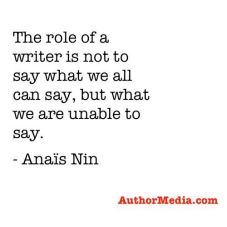
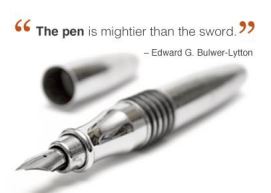
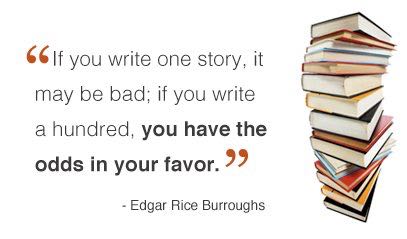
Who doesn’t like a bit of fun inspiration once in a while? Here are a few of my favorites.


11050785_10155144947899619_4192118523407330551_n

IMG_1405

559483_387131724662601_305404162835358_1077312_1972159805_n

562110_303232749771499_128864133875029_665926_165366626_n

538974_291003524340854_896837391_n

418704_298297203611486_93639470_n

541142_307332179374655_737526435_n-1

Woolf_200x150

Thoreau_200x150-95


407195_185015211606353_920812907_n420591_195459443895263_1704490087_n423890_186320168142524_2117752171_n546760_320224311386850_165535573522392_784888_800024718_nreikland_paper-1th_walker003thesilverstrand399621_300416713399535_1193231558_n64184_202644149843459_476382434_n

Do have favorite quotes that inspire you? Add them below in the comment section.

I’d love to hear your comments. Talk to me. Tell me your story and look for me on Facebook at SheilaMGood,  PinterestBloglovinTwitter@sheilamgood, and Contently


How to Write Headlines that Stand Out in Search Engines

Day 8: 

Writing the headline for an article or blog post seems easy, but easy doesn’t always get you the response you want.

Headlines play a significant role in how your posts rank in search engines. Some will get more social shares and click-throughs than others. Why?

It’s all in the words you choose. Think keywords, common, uncommon, and power words.

Statistics reveal lists, and how-to headlines get better traction while emotional or positive headlines get shared more often. Having the right combination of words and the right length will make your headline stand out.

The free headline analyzer from Co-schedule will help you learn to write the best and most compelling headlines.

Coschedulescreenshot

In addition to the analyzer,  CoSchedule provides word lists that will help drive traffic to your blog. Download your copy here.

Headline words

The headline for this post scored –  70 A+

What do you think? Do you think headlines make a difference? Do you think about your headline?  I’d love to hear your comments. Talk to me. Tell me your story and look for me on Facebook at SheilaMGood,  PinterestBloglovinTwitter@sheilamgood, and Contently.