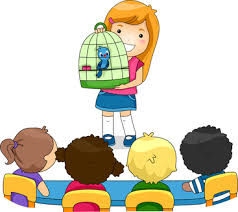
Show, Don’t Tell (unless you’re in Kindergarten).

Another guest-post by K. Alan… sort of. The thing about sudsy water is that it keeps clothes from growing diseases, but causes timber floors to grow them. With apology, I only have time for a reblog.

This is one of the posts from my series exploring some of the most common (and sometimes baffling) advice that writers hear. The other posts in the series are about Writing What You Know, Starting in the Middle of the Action, and Knowing your Target Audience.

Let me know your thoughts!

kalanleitch's avatarWords from K. Alan

Continuing my series, ‘How to Follow Writing Advice that Makes No Sense,’ please comment with your ideas of when it is better for writers to ‘show’ and when to ‘tell.’

showntell Children were never expected to interpret the trauma in a budgie’s past.

Do you remember your favorite part of kindergarten? While I am tempted to name ‘Nap Time,’ memory forces me to acknowledge that naps only became precious to me later in life. No, my favorite part of kindergarten—and probably yours—had to be ‘Show and Tell.’ These were the moments that I could bring in my tricycle, greeting cards or guinea pigs, and allow my classmates to gawk enviously at them while I supplied detailed narrative about their mechanical, emotional or bodily functions. In kindergarten, detail and clarity were rewarded, and Mrs. Arbuthnott would confirm with her warmest smile as she fought to keep from nodding off during the fourteenth minute…

View original post 486 more words

Constant Change

This is a guest-post by K. Alan Leitch: another attempt to express what has been troubling me about the friction between creativity and social media. Please visit my blog for tips that have helped me to write, and look for  samples of my fiction from the menu of my projects page.

oceanThe ocean is constantly changing.

It churns millions of gallons between continents every year, and each cupful of water on one beach could well have visited another. Enslaved to tidal forces even greater than itself, movement and change are essential to the ocean; they keep the life underneath it thriving, and sculpt the land between it. A still ocean, one imagines, would surely herald a dying world.

Of course, the ocean isn’t all that changes. Timber wheels evolve into rockets so powerful that they break the force of the very gravity holding that ocean here, so that we can watch a privileged few explore the distant force of those tides. Literature changes, from just a few men being watched playing women on a small wooden stage, to women directing masterpieces that are watched on screens worldwide. And communication changes, too, perhaps most of all; a single letter that was once an act of true devotion is now a daily expectation, to be read and discarded with a swipe.

All the while, the ocean keeps churning, its water travelling the world and pausing only to freeze, for a time, near one pole or the other. Inky around life we have yet to discover, the ocean feels just as playful stippled with tattoos of sunlight at its surface. Millennia past the time that its depth began to vary, the ocean continues to vary it; those depths crush crust beneath it, and the shifts in that crust make it quake.

From some change in pride, though, we no longer allow ourselves to quake. The fears we once held—fears of heights, and of speed, and of demons—have been transferred to entertainment, with roller-coasters and cinemas the only places left we allow ourselves to scream. Where darkness once drove us to cower with our families, it now invites us out into cities to seek some sense of family from strangers. The only fear we have now—the only real fear, that we feel every day—also comes from a change in us.

Where most of us once feared being watched, we now crave it. We crave it so badly that we fear the moment it stops.

So we tweet shrilly when once we pondered, and our walls are now for posting instead of for privacy. We journal, and we blog, then we wait and we waver and we watch, until a message appears that makes us feel like someone might be watching us back. Our philosophy of existence has moved from ‘I think therefore I am,’ to believing that ‘I am’ only when the opinions that ‘I think’ appear on the devices of others. Thought has become the effect rather than the cause.

Still, the ocean keeps changing, too. That cupful of water that travelled and froze—then thawed, so it could travel again—has come all the way back to the beach where it started. The churning waves roam from the same deep blue across the same stripes of green as they shallow, foaming into the familiar bronzed shores that they always have.

Perhaps water doesn’t recognize where it is, where it’s been, or when it’s returned. Perhaps people don’t, either.

But the ocean, at least, is constant.

– More Words from K. Alan


SaveSave

Harnessing the Absurd

timesarrow

A  guest-post by K. Alan:

“When authors refer to their own writing, is it metafictional or just silly?”

I’ve  become a bit choosy about my metafiction. I find myself wading through piles of recommended readings that are meant to be metafictional, only to find that the author appears in his own story, or pulls it apart at the end sometimes detracting value from the themes.

Even, my own attempt at writing a metafictional short story, Metavoice, ends in a “cheat;” while my protagonist solves a mystery by listening to what the narrator is saying, I couldn’t bear to leave it at that in my ending.

That is, nonetheless, the essence of metafiction: blurring the lines between the readers’ world, and the worlds that we read. It’s the literary equivalent to the theatre breaking down that infamous “fourth wall,” but without the benefit of having an audience right there in the room. Readers need to feel that they are intersecting with a story that is on the page.

It’s ironic that the best example I can use to illustrate has illustrations. One of the earlier entries in a surge of popular metafiction was Grant Morrison’s now-legendary revival of Animal Man, a formerly silly superhero published by DC Comics in the late 1980s.

animal-man-grant-morrison

In Morrison’s graphic novel (dare I say, ‘comic books’?) the protagonist, Buddy Baker, comes home to find his family brutally murdered, and—perhaps like most of us—can not accept this as reality. Consequently, he becomes sensitive to clues that his world is fiction—the heroes never age, nobody ever stammers, bathroom breaks are rare—so he uses his superpowers to break out of the frames surrounding his artwork, and into the studio of Grant Morrison himself. Buddy objects that Morrison has no right to ‘play God’ with his family, so Morrison alters the story to restore them to life… and they all live arbitrarily ever after, with Buddy no longer concerned about the reasons they are alive.

Of course, more went on in the story than this; like any good superhero comic, it is filled with… well, ‘superheroics.’ Those details, however, don’t matter right now. The point is that this was metafiction with a purpose:  the reader is forced to question the value we place on free will, and whether we abandon that value at times when we happen to approve of controlling powers. It’s a startling realization that confronts us about our gods and our governments.

Startling realizations are a good reason to use any technique: even metafiction.

Of course, critics have panned literature like this again and again, and, based on my reading, I can see why. Asimov, by his own admission, wrote himself into  Murder at the ABA because he needed something fun to get it finished in time. Even respected works, such as Atwood’s The Handmaid’s Tale trouble me, because readers of the story undo it completely in the epilogue: they step in to make sure that we stop suspending our disbelief.

On the other hand, Amis’ masterpiece, Time’s Arrow, uses metafiction without us realizing it, resulting in a shared value being shaken to its core. He does not do it because it’s ‘cool’ (even though it is) but to amplify the themes of his work. Read it. Read it now.

I think that’s as effective a definition as any of good metafiction: fiction that blurs the lines between realities in order to amplify the themes of a piece. I’m not convinced, however,  that 90% of the “metafiction” out there attempts to achieve this.

That reaction makes me very cautious about attempting it myself. I softened the ending of Metavoice because I realised that I’m still waiting for that truly metafictional inspiration to strike.

If you liked K. Alan’s post, leave a comment and as always, I’d love to hear from you; so talk to me. Tell me your story and look for me on Facebook at SheilaMGood,  PinterestBloglovinTwitter@sheilamgood, Contently, and Instagram. You can follow my reviews on Amazon and Goodreads

SaveSave

Is it Time to Stop Blogging?

Check out my post on WOW – Women on Writing’s – Friday Speak Out!: Is It Time to Stop Blogging?


What are your thoughts? Leave a comment on WOW or here and let me know.

I’d love to hear your comments. Talk to me. Tell me your story and look for me on Facebook at SheilaMGood,  PinterestBloglovinTwitter@sheilamgood, Contently, and Instagram.


TheMuffinBanner