You Asked: How To Stop Overusing Pronouns

despicablememminions.org

Welcome to another, You Asked, the Experts Answer, segment. This week ‘s question is: How can I stop overusing pronouns?

Pronouns: a word that can functions by itself as a noun/phrase and refers either to participants (e.g., I, you) or to someone or something mentioned elsewhere in the discourse.”  

Words such as I, he, she, you, it, we, or they are examples of pronouns used instead of a noun or noun phrase.

We overuse pronouns because we get attached to a character or the name is often easier. I can relate to this problem. However, easy doesn’t always translate to better writing.

Norma crept by the sofa where Adam had passed out after Adam’s little welcome home. The kitchen looked like one of those Norma had seen on TV after a tornado. Norma opened the cabinet, pulled out a trash bag, and began picking up the scattered groceries.”

I tend to write like I talk and as a result, overuse pronouns especially in the draft stage. But, there is a method to the madness and used correctly, pronouns will enhance your writing. The paragraph above reads like someone in love with the name Norma or had an aversion to pronouns.

Tweet: “Pronouns are those clever little inventions that allow us to replace nouns and avoid clunky repetition.” K.M. Weiland

“Norma crept by the sofa where Adam had passed out after his little welcome home. The kitchen looked like one of those she had seen on TV after a tornado. She opened the cabinet, pulled out a trash bag, and began picking up the scattered groceries.”

Repeating the characters names, once introduced isn’t necessary. We understand Norma is the “she” picking up groceries and “his” refers to Adam.

Used Incorrectly Pronouns:

  • Creates choppy and boring sentences.
  • Pulls the focus away from the action in the scene.
  • Confuses the reader as to the who or what.
  • Pulls the reader from the story.
  • Tells rather than shows who and what is taking place.

Used correctly Pronouns:

  • Prevents repetition.
  • Creates a realistic flow of the narrative.
  • Keeps the focus on what’s happening in a scene.
  • Provides a sense of intimacy between characters.
  • Provides invisibility – like the tag “said,” readers process but don’t notice them.

When to Use Pronouns:

  • When only one character is present.
  • When two characters of opposite gender are present.
  • The pronoun’s reference is clear to the reader.

Tweet: “Ensure your pronouns have an unambiguous antecedent that is both before and near each pronoun.” Grammar Girl

Use Names:

  • To introduce your character, item, or event
  • To ensure clarity between characters when there are more than two characters in a scene.
  • To emphasize a character or his name.

No matter what your grammar sin may be, get your story down first. The revision stage and a good editor will help you make the necessary corrections. Below you’ll find a wealth of knowledge from the experts.

Resources:

  1.  Janice Hardy from Fiction University will help you Clarify Ambiguous Pronouns.
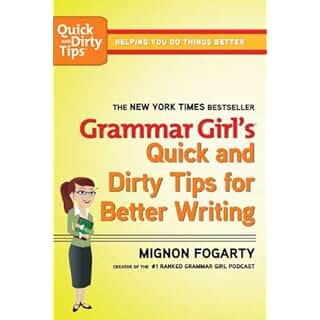
  2. Grammar Girl’s Quick & Dirty Tricks explains how to avoid the three most common errors in Pronoun and Antecedents.
  3. Writing World’s offer us, Crafting Fabulous Fiction: Pondering Personal Pronouns by Victoria Grossack

What about you? I’d love to hear your comments. Talk to me. Tell me your story and look for me on Facebook at SheilaMGood,  PinterestBloglovinTwitter@sheilagood, and Contently.

 

Confessions of a Comma Whore

Do you have a grammar sin? You know, that one irritating grammar rule, you consistently get wrong. Well, I do. I’m a comma whore.  I tend to place commas the way I speak and not according to accepted grammar rules.

I first wrote about this issue in 2012 and since that time believed  I’d conquered that grammar demon (for the most part). Unfortunately, I’m sad to report, she’s reared her ugly head again and in the most  humiliating way.

I’m in the process of publishing a collection of short stories and when I received feedback from my editor, I almost fainted (not really). The comma whore had dance all through those stories as if designing a roadmap.

Needless to say, I had revisions to do. In the spirit of helping others who suffer with me, here are some helpful resources. Beyond that, it might take counseling.

Resources for the Comma Challenged:

Strunk & White’s, The Elements of Style is the number one grammar book recommended for writers everywhere. The Kindle edition available on Amazon for free.

Want something more? Check out the power point presentations from Guide to Grammar and Writing. Here you can find everything you need to bone up on your grammar.

Available on Kindle: $9.99

I had the pleasure of winning a copy of the book, Grammar Girls Quick & Dirty Tricks For Better Writing, from 101Word.org. Thanks, Shannon and I encourage all of you to check out the stories shared at 101 Words.

And finally, don’t forget about the software editing tools that are available.

Grammarly 

  • About: Corrects over 250 types of grammatical mistakes,  catches contextual spelling errors, poor vocabulary usage, and enhances clarity and meaning.
  • An automated proofreader and grammar coach.
  • Windows compatible.
  • Can be downloaded as an office add-in to your WordPerfect.
  • Now fully compatible with Mac computers.
  • Offers a browser extension for Safari, Chrome, and Firefox browsers.
  • Desktop App
  •  Cost/Membership:  $29.95/month; $59.99/quarter, and $139.99/annual.

EditMinion

  •  About: A copy editor that helps refine your writing. A copy and paste Beta program, it is word limited.
  • What it Does: Identifies common mistakes, such as adverbs, passive voice, weak words, ‘said’ replacements, ending with prepositions and often-misplaced words.
  • Cost/Membership: Free 

Writer’s Diet:  Is your writing flabby or lean?

  • About: Designed by Helen Sword, this program evaluates writing samples of   100-1000 words.
  • What it Does: Looks at each category: verbs, nouns, adjectives/ adverbs, prepositions, and waste words (is, that, this, there) and scores the work from lean – to heart attack.
  • Cost/Membership:  A great, free tool!

So, there you have it. This comma whore is headed to school.What about you? Do you have a grammar sin?

I’d love to hear your comments. Talk to me. Tell me your story and look for me on Facebook at SheilaMGood,  PinterestBloglovinTwitter@sheilagood, and Contently.

Want to Know How to Write Realistic Internal Dialogue?

images-29

Clipart

As a writer, we want our characters to come across as credible and believable. Internal thoughts are part of bringing our characters to life. So, what is the correct way to write  what characters are thinking?

Reasons to Use Internal Dialogue:

  1. To make  characters real to our readers.
  2. Show vulnerability – to help connect readers to the character.
  3. For dramatic effect – when you want to emphasize something important. Readers tend to remember emphasized moments.
  4. To show the character’s motivation.
images-33

Courtesy of Quick & Dirty Tips

Ways to Show Internal Dialogue

  1. Using the tag, “He thought.”   I wish Stephen would leave well enough alone, she thought.
  2. Italics:  Why can’t Stephen leave well enough alone?  Italics are  my favored method to show internal dialogue.
  3. Intermingling thoughts with narrative.  Claire stared out the window. Why couldn’t Stephen be happy with the status quo? She didn’t have a clue what answer she’d give him this weekend.
  4. Using quotations – for the most part,  is not recommended, even single quotations. Because quotations denote dialogue, it can confuse to the reader.

Do you find one method preferable over another? Why?

I’d love to hear your comments. Talk to me. Tell me your story. And as always, you can follow me on Facebook at SheilaMGood, Pinterest, Bloglovin,  Contently, and  Twitter @cofcmom.

Coutresy of zazzle.com

Courtesy of zazzle.com

Want more on Formatting Internal Dialogue? Check out Grammar Girl’s, Quick and dirty Tips.com


Editing Tools at Your Fingertips


I get the hibbie-jibbies every time I finish a work in progress, whether it’s a short story, flash fiction piece or blog post. Why? Because I’m convinced, the truth will come out and everyone will know I’m not a real writer. I mean, a real writer wouldn’t make stupid grammar mistakes, would they?

The truth is every writer makes grammar mistakes. Fortunately, successful writers can afford a proofreader and editor. Me? I rely on my fading memory and a few favorite editing tools.

Here are my top favorites:

1-  AutoCrit: Updated with fiction writers in mind, this program tops the list of  favorites editing tools. This program evaluates pacing, repetition, redundancies, dialog, and much more. It is my go-to editing program. Prices range from $5/month for  Gold membership to $12/month for professional. Check out this link for the different options available. You can, of course, give the program a free, but limited try. In my opinion, professional membership is the only way to go.

2- Grammarly: Is just what the name implies. It evaluates your writing for over 250 grammatical errors. Including punctuation, spelling, word choice (making suggestions), and detects plagiarism. This program is often used in colleges and universities for that purpose. Compatible with Word and Outlook, is is less friendly with a Mac product. Cost ranges from $29.95/month to $139.95 annually.

3- EditMinion: Simple to use, this free robotic copy editor pinpoints areas of weakness in seconds. The program highlights Adverbs, Weak Words, Said Passive Voice, Prepositions, Homonyms, and Clichés. A favorite of mine, its a fun way to tighten your prose.

4- ProWritingAid: Is a free online editing tool, similar to Grammarly‘s program. It checks for grammar, overused words, repetition, spelling, consistency, Clichés, and redundancies. It works with Word and Google Docs. I admit I haven’t used this tool as much but have heard favorable reviews. Cost for Premium program is $35/year; $55/2 years,$70/ 3 years, or $120/ Lifetime.

silverbirchpress.wordpress.com


In addition, to these editing tools, I have a quick find folder on my desktop with the following sites:

Grammar Girl: Quick and Dirty Tricks

Words Writers Should Delete/Word Sharpeners

The Chicago Manual of Style Online

Elements of Style

Guide to Grammar and Writing