One of the suggestion I received this past week was to write something about Seasonal Affective Disorder (SAD). Since we are just now starting to come out of the darkest days of winter, it’s an appropriate topic for today’s Friday Depression post, which I’m going to start categorizing simply as “Counseling Issues.”
I remember my parents mentioning someone being “shack happy” or having “cabin fever.” We’ve all heard of “being in the Doldrums,” which relates back to the days of sailing ships that would be caught sometimes for weeks in a completely still part of the tropics–not a wisp of a breeze, like being caught in an endless moment of time. Hot sun, no clouds, no rain, no wind, and a ship that wasn’t nearly large enough to keep men from grinding on each other’s last nerve.
The other two terms, cabin fever and shack happy, derive from a…
My mother once told me, the older you get, the faster time flies. She was right. The time between October 1st and the New Year gets shorter every year. It’s as if I blinked and we’re on the precipice of Valentine’s Day.
This is my first real post since taking a medical leave just after Thanksgiving. I owe big thanks to all my Cow Pasture Contributors and guest authors for helping to keep the conversations going while I was away. I hope you enjoyed their excellent posts.
I’m not at a hundred percent, but I’m getting there. In the meantime, I thought the best way to get back into the groove was to take a look back at 2016 in the Cow Pasture.
For the last couple of years, WordPress did a great job sending out an annual year-end review for WordPress bloggers. However, this year, they decided against it. So, I decided to do my own.
Mine isn’t as artistic as the one offered by WordPress, but it was definitely enlightening.
The Numbers:
In 2016, there were 167 posts published; growing the total archive of this blog to 480 posts. The most popular day for posting- Friday and the most popular time – 9:00 am.
Traffic to the Cow Pasture almost doubled with 10,086 views; 5,543 visitors. My longest streak was in the month of April when I participated in the A-Z Blogging Challenge – posting daily for 30 straight days. The busiest month of the year was July with 2062 views.
To all my readers, Thank you, and, particularly, those who took the time to comment, interact, and share. Feedback is the lifeblood of the blogging community. I encourage each of you when you read something helpful, inspirational, or thought-provoking- speak up, say something, comment and even debate. Communication, after all, is what brings us together.
Here’s to an even bigger and better year for all of us.
I’d love to hear your thoughts on the subject. Join the conversation. Talk to me or tell me your story. I’m all ears.
I believe this will be the final Friday Depression post. I’m thinking of moving on to other counseling topics, and I would love your input. If there is something you’d like to suggest as a future post, please comment here, or on my page, or via Facebook or email. I really hope you’ll help me out with some ideas. The response to these Friday posts has been so encouraging to me. I’d like to continue with something else that will be helpful.
Today, I want to address how depression and grief are closely related. In my practice, I often see widows or widowers who are so deeply grieving that they can hardly function in their daily lives. They come to counseling hoping to find out what is wrong with them, and when I say, “There is nothing wrong with you. You are experiencing a normal grief reaction to the deepest…
Yes, I believe Facebook (FB) has become to relationships and society as a whole. I think it’s time for an honest evaluation of our social media. Before I get into why let’s look back at the origins of this social media conglomerate.
Origins
It may surprise you to know that the original idea behind Facebook was, shall I say, less than admirable. In fact, it was a bit self-serving. In 2003, Mark Zuckerberg thought it would be a great way to identify the “hottest” girls on campus. He fashioned this first attempt after a similar site, Hot or Not where users rated photos of women in terms of the most attractive. Nice, Zuckerberg! To generate the list, this enterprising entrepreneur hacked into the college system and stole the private, dormitory ID images of students. Called Facemash, the site had more than 22,000 photo views within the first four hours online. A couple of days later, the school shut it down.
Although, the site seemed like a good idea, at the time, Mr. Zuckerberg soon discovered stealing private information for the purpose starting a babe site had its drawbacks and consequences. Yet, in spite of the threat of expulsion and legal trouble, he was not to be dissuaded. Instead, he went back to the drawing board, wrote another program and in 2004, TheFacebook.com (later shortened to Facebook) was up and running. This time with a different or more expanded purpose — a place where the brilliant students of Harvard could connect and share notes (sure).
Initially, the program remained restricted to the Harvard campus, but soon expanded to all Ivy League schools. The site grew faster than kudzu in the South and By 2006, anyone over the age 13 could join, create a profile and start socializing — making “friends,” uploading pictures, videos, comment, and “liking” whatever suited their mood at the time.
Pinterest
The company went public in 2012 and in July of 2015, Standard & Poor’s 500 Index listed Facebook as the fastest growing social network in the world with a market cap, of $250 billion.
The Dark Side
There’s a dark side to Facebook that few want to acknowledge or discuss; but, with 1.65 billion active, monthly users, members have the ear of the world and little if any accountability.
What began as an avenue to share class notes, make new friends, and score a hot date, soon evolved into much more — a popularity contest of sorts. Young members started measuring their self-worth based on the number of friends, or likes they received. Pictures started pushing the boundaries with the express purpose of gaining more friends and “likes.” Bullies used it to wreck havoc on vulnerable teenager. Bullying had a new, secret and sinister avenue and pedophiles a picture gallery from which to choose and parents, far behind in technology, were clueless.
According to The Best Degrees, the seven most common FB crimes include: 1) Scams — enticing members to click on a link designed for the purpose of stealing private or financial information. 2) Cyberbullying — a particularly vicious crime against the youngest and most vulnerable with harmful and even deadly consequences. 3) Stalking — you know, repeatedly visiting ones profile, leaving or harassing messages, or threats often progressing to actual in person stalking and to the point the victim is terrorized. 4) Robbery — it never ceases to amaze me how often people on FB announce to the world they are going on vacation. With Google maps, it doesn’t take a rocket scientist to locate your home address. 5) Identity theft — hackers are more proficient than you can imagine. Opening the wrong link can provide all your vital statistics necessary to steal your identity. “More than 600,000 Facebook accounts are compromised very day.” 6) Defamation– posting false information about a person or business that affects them negatively. It’s more difficult that you think to prove an untruth. 7) Harassment– persistent messages, inappropriate comments, or threats (a common FB occurrence).
Seeds of Division
What began as a bridge connecting people has, instead, driven a wedge between us. Status updates have become soapboxes for the latest cause, opinion, or outright voice of animosity. Language once frowned upon in civil society is now commonplace, as is name-calling and shaming. Labels like bigot, racist, homophobe, xenophobe are thrown at each other as easily as hello. Family, friends, and even strangers, routinely find themselves in pissing contests over someone’s status update or comment. Emotions, raw with exaggerated or misplaced passions expose skin so thin, we’re offended at the slightest word. Trust is at an all time low and fear of saying the wrong thing at an all time high. The rancor and animosity expressed on FB throughout the presidential campaign and still, have left friendships strained and users frustrated. According to the Pew Research Center,
“More than one-third of social media users are worn out by the amount of political content they encounter, and more than half describe their online interactions with those they disagree with politically as stressful and frustrating.”
Facebook has evolved from its questionable “hot babes” startup to come full circle as an instrument of misinformation, bias, hatred, and where crimes are now streamed live, including rape, murder, suicide, and acts of terror. Connections between people have become tenuous, eroded trust, and created confusion. We no longer know whom or what to believe or how to differentiate between truth and lies. We reached out to connect with others but are find ourselves further apart than ever.
Without the nuances of genuine face-to-face conversations (facial expressions, tone, body language) we lose true connections. Our words become more about being right than connecting. When we can hide behind a user name, or don’t have to face the confusion and hurt on another’s face, words come easy regardless of the consequences.
Yes, I believe Facebook has become toxic to each other, our kids and society. We’ve lost the thread of common decency, civility, the ability to disagree or demonstrate old-fashioned manners.
Personally, I think it’s time we did something — perhaps sign off, pick up a phone, invite someone to lunch and start connecting face to face, again.
I’d love to hear your thoughts on the subject. Join the conversation. Talk to me or tell me your story. I’m all ears.


 My mother once told me, the older you get, the faster time flies. She was right. The time between October 1st and the New Year gets shorter every year. It’s as if I blinked and we’re on the precipice of Valentine’s Day.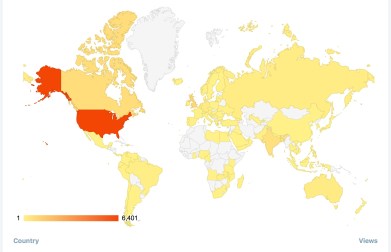


 COW PASTURE CHRONICLES