You Asked: How to Start an Online Writers Group?

Welcome to another, belated, You Asked, the Experts Answer, segment. This week’s question: How do you start an online writer’s group?

I’ve been a member of the South Carolina’s Writer’s Group, which met monthly at our local library, but haven’t participated in an online group before and I’ve certainly never thought about starting one – until now. So, what does it take to start a group?

Where to Begin:

  1. Establish your goals -What do you want to offer or accomplish with your members? Is the group a support network, forum for learning, an opportunity to share, or provide critiques of each other’s work?
  2. Determine membership -Is the membership voluntary or fee based? Is it open to experienced, emerging, or writers at all levels? Will membership be limited or open to all?
  3. Member participation –  How will you recruit or encourage member participation? Offer live or Twitter chats, tutorials, or run contest? Do you want to require weekly or monthly check-ins and forum discussions or leave it up to the member?
  4.  Identify the Roles of the Host(s)– Is this your brainchild or a joint venture. If a joint venture, designate responsibilities up front- maintaining membership rosters and participation, as well as, administrative duties and who will address technical issues that might arise.
  5. Create a venue – A private blog through WordPress or Blogger is an easy way for members to ask questions or hold discussions. Private forums on Google Groups and Yahoo Groups is another option. These are particularly useful when sharing files.
  6. Dedicate the Time – This is a biggy. It takes a lot of time to build members and relationships. A good place to start is to have each member introduce themselves, including their level of experience as a writer, and what they hope to gain from the group.

Understand an online group requires commitment and continuous engagement. Setting weekly goals or making a to-do list will help you keep on task. Establishing a regular schedule and dedicating time specifically for the group will create the right environment for a successful online group. Interested in more information?

Check Out These Resources:

What about you? Do you belong to an online writer’s group? Have you found it helpful? Interesting is starting a group?  I’d love to hear your comments. Talk to me. Tell me your story and look for me on Facebook at SheilaMGood,  PinterestBloglovinTwitter@sheilamgood, Contently, and Instagram.

Blogging for the Beginners

Day 2: 

There are as many types of blogs on the internet as names in a baby book. The most common, by far, are personal or niche blogs. These cover a gambit of topics including, healthcare, family, travel, book reviews, writing and cooking (to name a few).

Cow Pasture Chronicles has evolved into a blog mostly about writing, tips and resources, and a place to share my stories and on occasion an opinion piece.

images-14When I began blogging more than three years ago, I knew little to nothing about how to blog. Along the way, however, I’ve picked up a few tips I’d like to share.

  1. Determine what type of blog you want – personal, business, or niche (a themed blog).
  2. What’s the main topic?
  3. What do you want to be known for in the blogging community? Expert, Reviewer, Personal blogger, or reporter?
  4. Choose the 3-4 main topics you plan to blog about.
  5. Research the best platform for your blog. WordPress, Blogger (Google’s), and tumbler are some of the most popular.
  6. Research your top competitors. What do you like about their blogs?
  7. Decide how much time and effort you want to put into your blog. Do you want to write content weekly, daily or whenever?
  8. Select the name of your blog carefully. Consider what your blog is about, who your target audience is, and whether you want to make it into a brand. You can read more about selecting a name here. How To Come Up With A Blog Name: 10 Effective Ways To Choose a Name For Your New Blog  from Successful Blogging

Want to know more about starting a blog – check out these articles. Blogpress has an excellent post, 3 Quick Tips To Start A Blog The RIGHT Way, and of course, WordPress support is my go-to resource. There you will find video tutorials on just about everything.

It’s by no means all the things you need to know. Developing your blog is an ongoing process of learning, but I hope this will help.

How long have you been blogging? What type of blog do you have and how did you come up with the name?

I’d love to hear your comments. Talk to me. Tell me your story and look for me on Facebook at SheilaMGood,  PinterestBloglovinTwitter@sheilagood, and Contently.


You Asked: How To Stop Overusing Pronouns

despicablememminions.org

Welcome to another, You Asked, the Experts Answer, segment. This week ‘s question is: How can I stop overusing pronouns?

Pronouns: a word that can functions by itself as a noun/phrase and refers either to participants (e.g., I, you) or to someone or something mentioned elsewhere in the discourse.”  

Words such as I, he, she, you, it, we, or they are examples of pronouns used instead of a noun or noun phrase.

We overuse pronouns because we get attached to a character or the name is often easier. I can relate to this problem. However, easy doesn’t always translate to better writing.

Norma crept by the sofa where Adam had passed out after Adam’s little welcome home. The kitchen looked like one of those Norma had seen on TV after a tornado. Norma opened the cabinet, pulled out a trash bag, and began picking up the scattered groceries.”

I tend to write like I talk and as a result, overuse pronouns especially in the draft stage. But, there is a method to the madness and used correctly, pronouns will enhance your writing. The paragraph above reads like someone in love with the name Norma or had an aversion to pronouns.

Tweet: “Pronouns are those clever little inventions that allow us to replace nouns and avoid clunky repetition.” K.M. Weiland

“Norma crept by the sofa where Adam had passed out after his little welcome home. The kitchen looked like one of those she had seen on TV after a tornado. She opened the cabinet, pulled out a trash bag, and began picking up the scattered groceries.”

Repeating the characters names, once introduced isn’t necessary. We understand Norma is the “she” picking up groceries and “his” refers to Adam.

Used Incorrectly Pronouns:

  • Creates choppy and boring sentences.
  • Pulls the focus away from the action in the scene.
  • Confuses the reader as to the who or what.
  • Pulls the reader from the story.
  • Tells rather than shows who and what is taking place.

Used correctly Pronouns:

  • Prevents repetition.
  • Creates a realistic flow of the narrative.
  • Keeps the focus on what’s happening in a scene.
  • Provides a sense of intimacy between characters.
  • Provides invisibility – like the tag “said,” readers process but don’t notice them.

When to Use Pronouns:

  • When only one character is present.
  • When two characters of opposite gender are present.
  • The pronoun’s reference is clear to the reader.

Tweet: “Ensure your pronouns have an unambiguous antecedent that is both before and near each pronoun.” Grammar Girl

Use Names:

  • To introduce your character, item, or event
  • To ensure clarity between characters when there are more than two characters in a scene.
  • To emphasize a character or his name.

No matter what your grammar sin may be, get your story down first. The revision stage and a good editor will help you make the necessary corrections. Below you’ll find a wealth of knowledge from the experts.

Resources:

  1.  Janice Hardy from Fiction University will help you Clarify Ambiguous Pronouns.
  2. Grammar Girl’s Quick & Dirty Tricks explains how to avoid the three most common errors in Pronoun and Antecedents.
  3. Writing World’s offer us, Crafting Fabulous Fiction: Pondering Personal Pronouns by Victoria Grossack

What about you? I’d love to hear your comments. Talk to me. Tell me your story and look for me on Facebook at SheilaMGood,  PinterestBloglovinTwitter@sheilagood, and Contently.


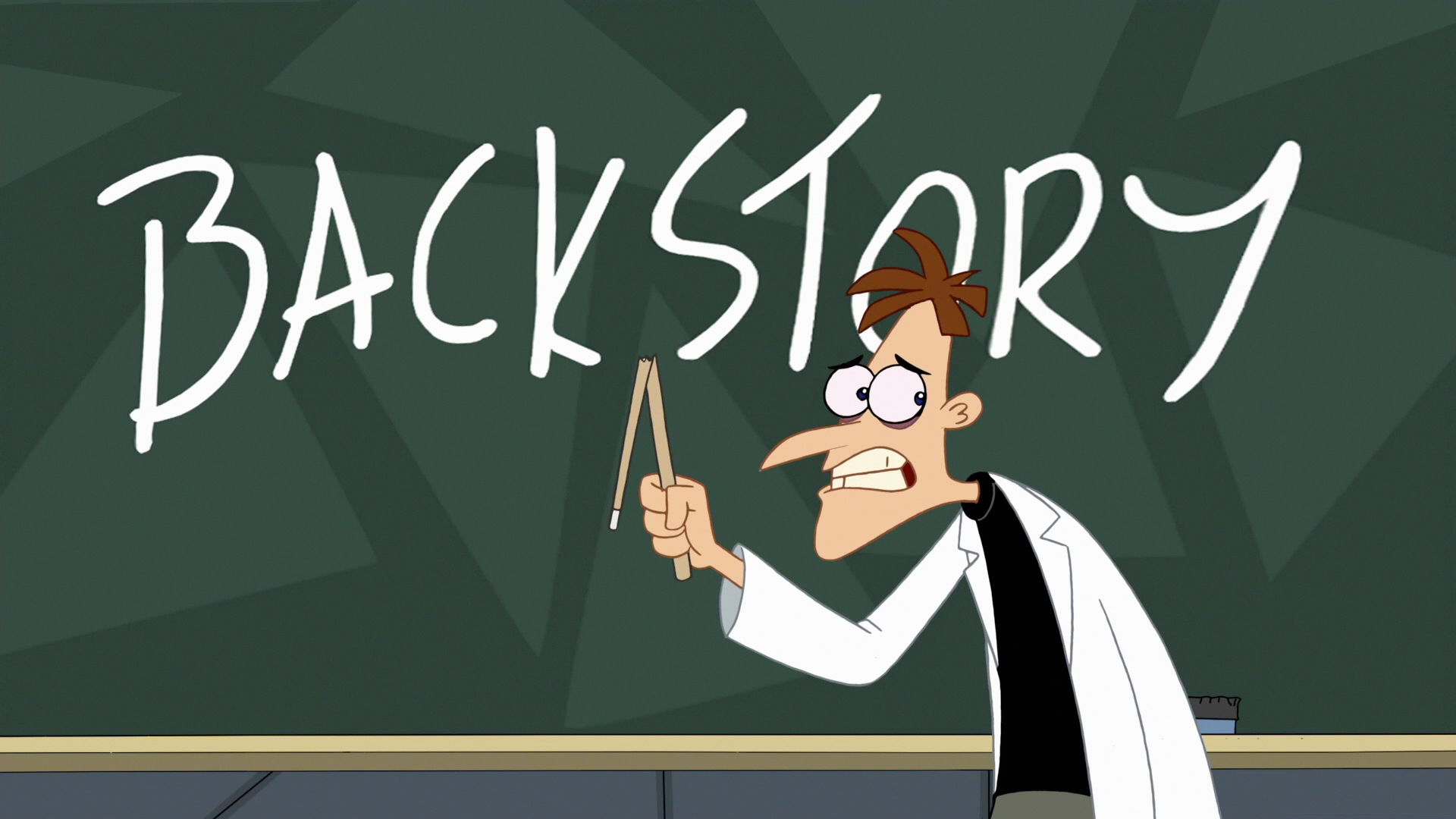
You Asked: Can You Explain Backstory?

phineasandferb.wikia.com

Welcome to another, You Asked, the Experts Answer, segment. This week ‘s question is: Can You Explain Backstory?

Well, I can’t, as I’ve been as confused about this topic as you have. I’m in the process of writing my first novel and how or when to use  backstory has been as clear as mud to me, until now. So, let me introduce the expert.

Lisa Cron is the author of Wired for Story: The Writer’s Guide to Using Brain Science to Hook Readers From the Very First Sentence.

At Writer Unboxed, Lisa discusses the topic of backstory, in her article, What We’ve Been Taught About Backstory . . . and Why It’s Wrong.”

I won’t repeat everything she said, you’ll want to visit Writer Unboxed yourself and trust me, you’ll want to read this article. I will, however, share a few highlights. I’ll let Lisa  give you the details.

 Top 5 Highlights
  • “Backstory is the fundamental “why” people do the things they do.
  • Our own life experiences are backstory.
  • The backstory and the present should be layered as if you’re making a great dish of lasagna.
  • Think of Newton’s Law: “For every action there is an equal and/or opposite reaction.” We make choices based on our experiences and so do our characters.
  • “Backstory is the first half of your story” and guides your character as clearly as a roadmap.

Lisa does a great job explaining what backstory is, how to use it and when to use it. Her examples make the issue crystal clear. So, check out her article, and let me know what you think. Did it help?

I’d love to hear your comments. Tell me your story. And as always, you can find me on Facebook at SheilaMGoodPinterestBloglovinContently,
and Twitter@sheilagood. Say hello and pass it on.