How Do You See Others?

Hello, fellow fence jumpers! It has been close to a year since I last stepped deep into the Cow Pasture. Like many of you have been caught up in the strange world of Covid-19, the quarantines, rules, regs, and controversies. It feels as if I have stepped from my world onto another planet.

Uncertainty, fear, isolation, social unrest, censorship, confusion, and even a cultural war have dominated the past year. All of which, looking through a writer’s eye, would make a great start to a sci-fi novel.

So, I sat back and thought about what was happening. The first thing I noticed was how superficial we had become.

Fear does strange things to people. It makes some of us vulnerable, some of us dig down and find our courage and push through, and others become opportunists. The vulnerable retreat to safety to wait out the worst; the courageous push forward and find ways through the challenges, and the opportunistic exploit and take advantage of the situation. It is the opportunists narrative we hear the loudest. And as a result, we stop listening, talking, or hearing each other. We hunker down in homes, groups, or โ€œtribes,” throw ourselves into survival mode, and all the while our world vision narrows to the point we could no longerย seeย others.ย Really see them.

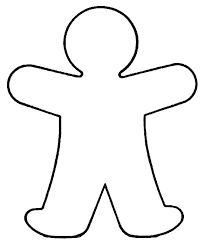
We have become a nation of paper cut-out people, flat characters who define each other by our most basic and outward traits. Most notably, the color of our skin, political affiliation, or the values we espouse. But, as writers, we know that people are not flat. They are not just a color of skin, or a profession, or gender, or any of those outward characteristics, traits, or appearance.

When writers begin the process of character development outward, physical characteristics such as height, weight, gender, hair/eye color, dress, and so on are the things that we build upon to create living characters. But at that point, all we have is a paper cut out, a sketch. It is by no means the sum of the personality we are developing. We research, plot, plan, and delve into the revealing, intricacies, and intimate details that make our character a person. We want to know what makes them tick, why and how they make decisions, what influences them, or what makes the character act or curl up in a ball. We want to know their biases, preferences, desires, hopes, dreams, deep dark secrets, and the history of their failures. Those things make our character come to life, leap off the pages of our story, and relatable.

Despite all the challenges we’ve faced in the past year, it became clear to me what we need to do. First, we should never give in to the temptation to see others through the lens of what they look like or what group they belong. Each of us is a whole, complex person, made up of our unique life experiences. You can’t tell that by looking at someone from the outside. Two, we should always refuse to accept the narrative of superficial labels. Three, make it a mission to get to know people.

We live in a beautiful free country where every individual deserves respect and to be seen as a whole person. A character of their own making and the way they look is just the beginning. They have a history, an intimate story to tell, complexities unseen by our eyes. But when we take the time to speak to each other, to talk, and to listen, to really listen, we often discover a friend.

As writers, we always strive to be better writers. As one of the millions of characters in this big beautiful world we inhabit together, we should expect nothing less of ourselves than to strive to be a better person. Look beyond watch you see. Dig deeper, reach out your hand and make a new friend. After all, we’re in this together.


Iโ€™d love to hear your comments. Talk to me. Tell me your story. Iโ€™m all ears and look for me on my Facebook Pageat SheilaMcIntyreGood,PinterestBloglovinTwitter@sheilamgoodContently, and Instagram. You can follow my reviews on Amazon and Goodreads.


Stretch Your Writing Muscles With These Contests

Want to stretch your writing muscles? Increase your publication portfolio? Submit to these upcoming contests (list compliments of Hope Clark’s Fund for Writers,ย Narrative,ย ย WOW).

  1. Institute For Writers Sci-Fi First Pages Contest –ย $19 Entry Fee. Deadline March 31, 2018. First prize $650. Second prize $350. Third prize $100. Fourth prize $100. Fifth prize $100. 750 Word Limit.ย 
  2. First Pages Prize –$25 Entry Fee. Deadline –ย March 13, 2018. Submit your first five pages of a fiction, creative nonfiction, or poetry manuscript.
  3. Narrativeย – The Winter Story Contest.ย Deadline: Saturday, March 31, at midnight, PDT. ย $2,500 First Prize;ย $1,000 Second Prize;ย $500 Third Prize; Ten finalists receive $100 each.
  4. Wow – Spring 2018 Quarterly Flash Fiction Contest –Open prompt.ย Maximum Word count 750. Deadline – ย ย May 31st, 11:59 PM.ย ENTRY FEE:ย $10.00.First Place: $400.00 cash prize; $25 Amazon Gift Certificate; Interview on the WOW! Women On Writing Blog.ย Second Place –$300.00 cash prize; $25 Amazon Gift Certificate; Interview on the WOW! Women On Writing Blog.ย Third Place –ย $200.00 cash prize; $25 Amazon Gift Certificate; Interview on the WOW! Women On Writing Blog.ย 7 Runners Up:ย $25 Amazon Gift Certificate;ย Interview on the WOW! Women On Writing Blog.
  5. WOW – Quarterly Creative Nonfiction Essay Contest.ย Open topic.ย Maximum word count-1000; Deadline–ย April 30th, 11:59 PM;ย First Place:ย $500.00 cash prize; Interview on the WOW! Women On Writing Blog.ย Second Place:ย $300.00 cash prize; Interview on the WOW! Women On Writing Blog.Third Place:ย $200.00 cash prize; Interview on the WOW! Women On Writing Blog.ย 7 Runners Up:ย $25 Amazon Gift Certificate.

A Checklist Before You Submit:ย 

  1. Know your Judge and the journalย – A little extra time in research will pay big dividends. Find out the genre, style, and preferred content before making a submission. Reading previous winners is an excellent way to get a feel for what the editors are looking for.
  2. Be sure to follow the guidelines! Sounds obvious, but editors say submissions which fail to follow the guidelines are their number one beef!
  3. Proofread! – Careless grammar and punctuation errors can sink your submission.

Iโ€™d love to hear your comments. Talk to me. Tell me your story. Iโ€™m all ears and look for me onย Facebookย atย SheilaMGood, ย Pinterest,ย  Bloglovin,ย Twitter@sheilamgood, Contently, and Instagram. You can follow my reviews on Amazon and Goodreads.

Stories Worth Sharing

It’s time again to showcase some great stories!

First up – 1st Place Winner: WOW Summer 2017  – Los Espantos By Ezzy G. Languzzi.

Second – 2nd Place Winner: WOW Summer 2017-  Venus, from the Sea By Michelle Hsu.

Third – 3rd Place Winner: WOW Summer 2017 – Feeding the Witch By Elizabeth Jones Hanley.

And, last but not least, from one of the master writers of our time – 2BRo2B by Kurt Vonnegut, Jr. – Narrative’s Story of the Week. 

Stories for your enjoyment!

Iโ€™d love to hear your comments. Talk to me. Tell me your story. Iโ€™m all ears and look for me on Facebook at SheilaMGood,  PinterestBloglovinTwitter@sheilamgood, Contently, and Instagram. You can follow my reviews on Amazon and Goodreads.


The Present is Tense: 2 mistakes to avoid when writing in present tense.

Another guest-post by K. Alan Leitch. Please visit my blog for tips that have helped me to write, and for samples of my fiction.

All this present tense in recent fiction really is making me tense. Perhaps it’s just because I’ve been reading since before it was popularโ€”I’ve been accused of that during discussionsโ€”but I genuinely feel that more and more authors are writing using present tense for the wrong reasons. Present tense can seem more erudite, more literate and more immediate, but it carries with it a number of pitfalls that erode favorite novels like The Hunger Games without us even noticing. They pull off the improbable feat of a heroine narrating in detail while being chased by poisonous wasps and fireballs, and they give their narrators the super-power of predicting the future.

Mistake Number One: Narrating in first-person & present tense

hg

Is there a Mockingjay helping Katniss make notes?

Tortured Katniss Everdeen, sought-after by receding hunks for her very belligerence, pulls off double-duty by dodging assassins in a hostile forest, all while taking the time to carefully describe every sight, smell, and anguished emotion that occurs to her. When you think about it, this is quite a feat: for an archer whose only targets were rats, prior to her fight-to-the-death in a dystopian arena, her aim remains surprisingly true while she is nattering away every detail of the life and death around her. Of course, as a reader, I could choose to suspend my disbelief and just assume I am reading her thoughts, but the muscle in my brain that suspends disbelief is already too busy believing that twelve districts will be pitted against one another for the entertainment of Utopian overlords. In other words, I want to focus on the highly imaginative elements of this fictional world, not cringe over every faux pas that its narrator commits. And Katniss commits many, such as…


katniss_everdeen

It’s hard work memorizing narrative detailย while fireballs descend.

Mistake Number Two: Predicting the future

Most good novels make use of techniques that help readers link the plot together. Sometimes, we are helped along through foreshadowing, while at others the narrator directly lets slip some tidbits from the characters’ future. Harper Lee’s masterpiece, To Kill A Mockingbird, brings to mind a mature, adult Jean-Louise Finch sitting at her desk, penning (perhaps using an inkwell) her adventures as innocent little Scout. Every so often, though, she tells us what she knows now, not just what she knew then. Of course, Mockingbird was written in the days when past tense was virtually an author’s only choice; The Hunger Games, to follow a trend, chooses to use present tense, but still lets these tidbits slip. It is as if Katniss has the additional power of predicting her own future; she knows in advance what behaviors the Gamemakers will reward, and how her initial ill-will toward her fellow sook, Peeta, will morphย into the bond between them. Collins is not even particularly subtle about this,writing narrative with the word ‘will,’ willy-nilly, throughout the entire trilogy. Katniss knows, a little too often, what ‘will’ happen to her.

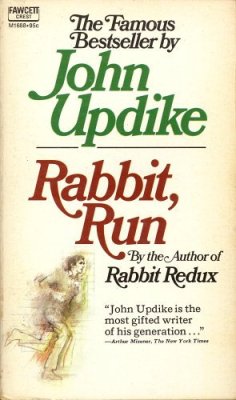
rabbit-runOf course, present tense is an effective tool, when used very carefully. One of the first novelists to make regular use of it was the great John Updike; his Rabbit series, by purposefully eliminating all sense of foreshadowing, truly gives readers a sense that they are living a starkly real life alongside the protagonist. Furthermore, occasional use of present tense can stand out, from a novel largely written in past tense, as being either highly emotive toย the narrator, or part of a tapestry of a life ‘then’ being narrated ‘now.’

The problem, though, is when authors use it just to make their novels ‘sound better.’ I was pleased to see that I am not along in this opinion, withย Philip Pullmanย expressing the view that, “If every sound you emit is a scream, a scream has no expressive value.”

Perhaps that is why so many present-tense novels make me want to scream; I just need to be heard over them.

More Words from K. Alan

SaveSave