Stay Calm and Read On

Day 12

Day 13

Day 13 of the My 500 Words Challenge.  “A journal entry, but with a twist: make your day sound interesting.”

Yesterday, day12 of the my500 word challenge, was so much fun. To refresh your memory, here’s the prompt:

“It’s true that honesty is the best policy. It’s just fun to fib now and again. Not in a dirty and deceptive way, but in a way that invokes imagination. Just for today’s challenge, it’s okay to stretch the truth a little. Rewrite history, imagine an alternate reality, or just plain lie.” 

I had no desire to “rewrite history,” from my viewpoint, we’ve had enough of rewriting history. Alternate realities are not my thing, although, sometimes I feel as if we’re all living in an alternate reality.  But, the last part of the prompt caught my attention, ” just plain lie.”

I have to admit the thought brought a mischievous smile to my face. As Jeff said, “It’s just fun to fib now and again.”

As writer’s we all have plenty of experience with rejections and I’ll admit I turn green with envy when I read of some author achieving instant fame with their very first book. Hearing those stories make me want to toilet paper their house. How in Sam’s hill did they accomplish that? Who did they have to do? Give me a name I’ll call. (Just kidding).

We all want to be recognized, win a contest, or have our work discovered. But, as you know, achieving instant fame is like finding a needle in a haystack or an act of divine Providence.

I don’t want to reveal any spoilers; you can read my prompt by clicking here. The responses I received surprised and delighted me. My sister and fellow writer-in-crime came out of the gate first and called me.

“Omg! That’s wonderful. You have to tell me, who is it?”

Similar responses followed and I dutifully responded to each one. I got a taste, albeit a tiny taste, of what being discovered might feel like, and it was amazing.

Throughout the day, each time my phone pinged, I would find another congrats or “Like” and spent most of the day giggling as if I were a school age girl playing a prank on the teacher. I even received a note from WordPress, “Cow Pasture Chronicles received record Likes today.”

As much fun as I had yesterday, I couldn’t help but wonder. What made my post so credible? I’d given all kinds of clues, the biggest being the title and secondly, I restated the prompt at the top of the post. Yet, it went unregistered.

No one questioned the probability of such an occurrence; they accepted my story as truth. I like to think it was the writing. I wrote it so well, so convincingly, you had to believe it to be true (Please, don’t burst my bubble). The truth is, most people skim when they read, and there are numerous studies to support this, “When you add more verbiage to a page, people will only read 18% of it.” You can read more of these studies, here.

I am a stickler for truth and accuracy, but I had a great deal of fun not only fibbing, but  experiencing a hint of what I hope is to come. I mean, Mr. King could get wind of my post and call. Stranger things have happened.

I’d love to hear your comments. Talk to me. Tell me your story. And as always, you can follow me on Facebook at SheilaMGood and  Twitter @cofcmom.

Photo courtesy of : sarahmaidofalbion.blogspot.com

Photo courtesy of: sarahmaidofalbion.blogspot.com

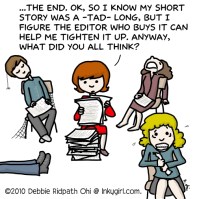
How to be an Effective Critique Partner

Critique_005I’ve been bogged down this weekend with family and community events. So, I’m sharing an oldie but goodie, with a few tweaks and additional information. Enjoy.

Critiques are a part of every writer’s life. Whether it’s a one on one partner, or a group providing feedback. Having another set of eyes on your stories, essays, or novels is essential for growth and success.

Accomplished writers already understand the value of a good critique partner. For newer writers or those who have yet to take part in a group, I’d like to share my critique cheat sheet. I hope you’ll find the information provided here helpful.

A Few Things to Remember:

  • The format and function may differ from group to group.
  • Know the rules before joining to ensure the commitment is one you are willing to make.
  • If you don’t know the group’s process, ask before your first meeting.
  • Don’t  rubber stamp each submission presented with, “I loved it,” without providing further constructive feedback. Doing so is unfair to the author. Those who submitted work want and deserve a genuine response and critique.
  • Critique groups are not about safeguarding a writer’s feelings. It’s about providing quality feedback.
  • If this is your first group, familiarize yourself with the terminology groups use. (genreprotagonist, antagonist, point of view (POV), voice, conflict, backstory, info dump, pacing, opening and resolution).

 My Cheat Sheet for the Short Story Critique and Things to Consider:

  1. Did you enjoy the story?  If not, why.
  2. Could you identify the story’s setting? Or, did you get lost in too much backstory?
  3. Did the story engage you and draw you in? Did you want to keep reading?
  4. What about the opening sentence or paragraph? Did they make you want to read further. If not, why? What made you hesitate?
  5. Was the protagonist clear to you? Did you understand the goals? Did you have enough information about the main character? Did you like the character or care about his/her situation (goals versus conflict).
  6. Were the stakes facing the protagonist, high enough to make you care?
  7. Did you find the dialog believable? Too much internal dialogue?
  8. Were you able to identify the genre?
  9. Did the story progress in a natural flow, or were there places that left you confused? Explain.
  10. Was there a resolution? Did the ending make you happy or, leave too many unanswered questions?
  11. Could you identify the theme?
  12. Explain the things that gave you pause. Make notes in the margins of the submitted piece indicating pertinent information. It could be a wrong word choice, sentence length, credibility, pacing, or something else.

Articulating your impressions provides the author with specific feedback. They can then decide to use or not use the information to strengthen their story. Sometimes, we’re too close to our work to see the flaws. Another set of eyes helps point out the weaknesses or holes in our story.

Good critique partners are an invaluable resource and asset to writers of all levels and I encourage you to find one in your area or online.

Want more information on critique partners and groups? Ryan Lantz gives excellent pointers, in his post, Critique Partners 101: Everything You Need to Know Before Pairing Up.

Interested in starting a group? Janice Hardy, from Fiction University, provides the lowdown on how to start a group, Are You Looking for a Critique Group or Partner?

Here’s to wonderful critique partners.

I’d love to hear your comments. Talk to me. Tell me your story. And as always, you can follow me on Facebook at SheilaMGood, PinterestBloglovin, Twitter @cofcmom, and Contently.

Too Good to be True?

1Day 12 of the My 500 Words Challenge! Rewrite history, imagine an alternate reality, or just plain lie.

Day 12

Day 12

OMG, OMG, OMG! You won’t believe what happened today. I received an email from a favorite author telling me he loved my blog. At first I thought it was a joke, and when I conveyed my unease, he put me in touch with his publisher, so I could verify  he was who he said.

I mean, who would have thought little old me would have snagged such an impressive author through my flash stories. Especially given I have more rejections than acceptance letters in my files. As they say, I guess persistence does pay off.

We conversed via email a couple of times and I ask him what caught his attention about my blog. He said, “I loved the dark side of some of your flash fiction. I think a couple of them have great potential.”

OMG! Seriously? I was speechless. He offered to read two of my stories and give me feedback. Well, of course, I jumped on that like white on rice (a southern expression). And to think my family would prefer more Pollyanna type stories; it’s just not in me.

Now, I realize y’all are dying to know which famous author contacted me, but unfortunately for y’all, he’s asked me to keep it confidential. I mean, he’d have everybody and their brother asking for the same; I’m sure you understand.

What I can share with you is general information.

He’s an American author and writes, horror, science fiction, suspense and some fantasy. He’s published more than 54 novels and sold more than 350 million copies. I’m hyperventilating as I think about his accomplishments.

We’ve already had three rather lengthy email conversations and I ask him a few of the questions that have always weighed heavy on my mind. For example, does your family think you’re weird for writing such horrific novels? I think mine does. In fact, one sister said, “You’re warped.”

I’m not warped, but the dark side within us fascinates me. I don’t write horror or fantasy. I write about the what if’s of human nature. Most people tell me, “I would never…” But, you’d be surprised when pushed hard enough; just how far over the line you’d go.

The human psyche fascinates me. What makes one person tick or break makes another strong. There are the psychopaths and sociopaths, which we expect at some time to cross the line and they do usually sooner than later. However, what inspires my stories are the “normal” individuals who cross the line into darkness.

The housewife who murders her husband because he couldn’t handle the disappointments of life as a man and turned into a lazy, drunken liability, The Toast. Or, the young wife who feeds her abusive husband to the alligators as in, The Excursion.

I’ve never published The Toast, one of my first short stories, but Providence has handed me a wonderful opportunity and it’s now in the hands of my new friend. Based on his feedback so far, I am optimistic.

I don’t know why he chose me; I’m not the best writer, but as mama always told me, “Don’t look a gift horse in the mouth.” In other words, shut up and be grateful for this gift, and I am.

I’d love to hear your comments. Talk to me. Tell me your story. And as always, you can follow me on Facebook at SheilaMGood and  Twitter @cofcmom.

Are You a Free-Thinker? Maybe, Maybe Not

Day 11 of the My 500 Words Challenge! Write a letter or appeal, something that persuades your reader to join the cause, take sides with your movement, or simply try something new.”  

Phot courtesy of www.michellehenry.fr & Google

Photo courtesy of http://www.michellehenry.fr & Google

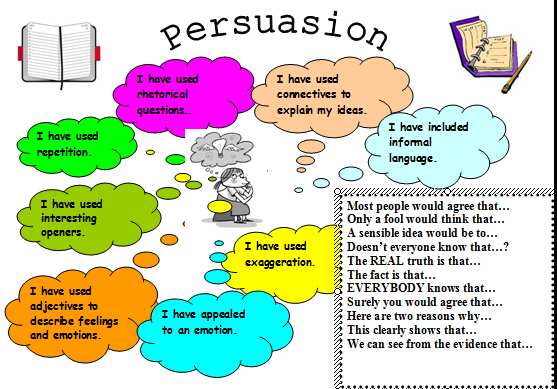
“Persuasion is human communication designed to influence the autonomous judgments and actions of others.

I hesitated to do this prompt because of the climate of disagreement prevalent in our society these days. I won’t go into the issues, we all know what they are, but to say there is division between opposing groups is an understatement. The biggest reason for that division is spin, influence, manipulation, or more accurately the art of persuasion.The media tell us there’s a consensus regarding these issues, but is that true?

So, for this challenge, I’m not going to try and persuade anyone about anything. In this red-hot societal climate, I’d be rowing upstream without a paddle. Instead, let’s talk about how we are persuaded.

Think you’re an independent thinker? Think again; with the massive presence of social media, we’re anything but free thinkers. Not yet persuaded? Consider the following studies. Not all persuasion is wrong, but being able to tell the difference between gentle persuasion and manipulation is important.

In his bookInfluence: The Psychology of Persuasion,Dr. Robert Cialdini’s Regents’ Professor Emeritus of Psychology and Marketing at Arizona State University, shares six basic psychological principles used for persuasion. I’m sure when you think about it, you’ll recognize these behaviors of influence.

1. Reciprocation – Trespond to (a gesture or action) by making a corresponding one. Example: Your co-workers surprise you with a gift for your birthday. When you receive a request to contribute a donation to buy a gift for another co-worker’s birthday, you reciprocate, even if you don’t care for the person. After all, she contributed to yours. You reciprocated with a donation, but you were persuaded  by a sense of obligation. I imagine you can think of other examples where this plays out day-to-day. We’ve all been invited to a friend’s Tupperware, jewelry, or a cookware party where everyone in attendance bought something. Were you the lone individual who didn’t buy an item? Doubtful. 

2. Scarcity – The state of being scarce or in short supply. You’ve heard the old saying, We always want what we can’t have. How many times have we read in the paper or an on-line news account of a store closing or product being discontinued? What happens next? The sales skyrocket because the product or service has become scarce.

3. Authority – The power or right to give orders, make decisions, and enforce obedience. A person with extensive or specialized knowledge about a subject; an expert.  The power to influence others, especially because of one’s commanding manner or one’s recognized knowledge about something. We routinely accept the word of a person or organization, we rarely question experts; think doctor.  We don’t go to see a dentist for a heart problem. Likewise, we seek out an attorney specializing in the particular type of law, we require; think divorce or criminal. Jurors listen, believe, and trust the testimony of “experts” when rendering their verdict. The media knows this and makes use of it on a daily basis. Think political campaigns. Information disseminated by the media, in most cases, is perceived as accurate, even when it proves otherwise.

4. Consistency – Conformity in the application of something, typically that which is necessary for the sake of logic, accuracy, or fairness. We hear, all the time, in discussions of parenting or pet training for that matter, consistency is the key. By nature, we humans like things which are consistent. For example, once we take a stand about something, we strive to maintain the same position when faced with similar situations or actions. It’s called the “Rule of consistency.”  In 1960’s, two psychologists,  Jonathan Freedman and Scott Fraser conducted a study on the “foot in the door technique.”  What the study found is people prefer to do things the same way every time. Simply put, being consistent makes life easier. If you donate to March  of Dimes, once; you will donate again.

5. Liking – A feeling of regard or fondness.  We like people who give us compliments,  are similar to us and are cooperative. To those individuals, we respect their opinions and tend to listen. Think co-workers, best friend, parents or a supportive spouse.

6. Consensus – General agreement. People look to others to determine how they should behave. The best examples to date include our latest societal issues, which I don’t intend to discuss in this post, perhaps another day.  When you understand the principles most often used in persuasion, know which buttons to push, which angles to play, and  appreciate the power of words, persuasion is easy. Everyone uses these principles whether it’s a conscious decision as with journalist or unconscious because we want what we want. The difference lies in our knowledge base, value and our aim.

The use of persuasion is not all bad; sometimes it’s helpful, but make no mistake, it’s also manipulative. So, the next time you espouse being a free-thinker, take a second look. Pay attention to who’s doing the persuading, what principles they’re are using and their end game. When you get the feeling, ” I’m being manipulated,” chances are, you’re correct.

I’d love to hear your comments. Talk to me. Tell me your story. And as always, you can follow me on Facebook at SheilaMGood and  Twitter @cofcmom.

Day 11

Day 11