Three Coaching Resources to Help You Finish that Novel

write-a-book I’ll admit, in the beginning writing a novel seemed as foreign to me as speaking intelligible French on my trip to Paris last year. The fact I didn’t know the language didn’t sway me. Besides, I had a niece living in Paris and a daughter who had retained some French from her high school days  at my side.  What could go wrong? As it turns not, nothing. I had the best resources available to me (minus the french guide) and it turned out the trip of a lifetime.

However, I’ve discovered writing a novel is a harder journey to make. In spite of reading dozens of how-to books and journals, I became overwhelmed.  ARC? Structure? Pinch point? Voice? POV?  I needed a translator.

After procrastinating, I decided to pull my WIP (current work in progress) from the dusty files of my desk. Apply the things I’d learned from the best of the best story coaches and finish the damn thing.

My Top Three

1.When it comes to my current WIP, no other story coach has helped me improve my process more than Larry Brooks, from Storyfix.com. Larry has written six novels, two best-selling books on writing (a third to come out this August) and offers coaching services. The tutorial on Concept and Premise made me sit up and take notice.  Don’t miss this valuable information. You can find it here. And, if you’re serious about writing a novel, check out his book, Story Engineering.


 

2. Janice Hardy at Fiction University is another great resource. Her book, Planning Your Novel: Ideas and Structure, will help you nail it.

In addition, she offers an excellent workshop that will help you get your novel in tiptop shape. Revise Your Novel in 31 Days,


3. A novelist, copywrite editor, and writing coach, C.S. Larkin is another favorite. I don’t miss a day reading and taking notes from her blog, Live Write Thrive. If writing a novel has left you confused, her new book, The 12 Key Pillars of Novel Construction: Your Blueprint for Building a Strong Story,  will walk you through the process.

She has  also written, Writing the Heart of Your Story, Shoot Your Novel, and Say What? The Fiction Writer’s Handy Guide to Grammar, Punctuation, and Word Usage. A tremendous resource, I encourage you to check out her books; all are available on Amazon.

What about you?

Do you have a WIP gathering dust or hidden away in a drawer? If so, I hope you feel inspired knowing these great resources are right at your fingertips.

I’m nearly 40,000 words into my novel and with the help of these excellent coaches and mentors, I intend to finish Hello Hell, one way or the other.  I’ll keep you abreast of my progress and you can keep me on task. So, stay tuned and let me know what you think. How’s your story going? Who will tell it if you don’t?

As always, I love feedback and comments.

Get the Nitty-Gritty on Flash Fiction

newspaper

Lets talk about flash fiction. Having dipped my toe into this market a few years ago, I love it. Writing flash fiction challenges me to write leaner, encourages my muse, and gives me the break I need from the in-depth work of my novel.

Although, definitions vary from market to market, the terms flash fiction, short-shorts or micro-fiction are often used interchangeably. However, all specify word counts,  ranging from 300 – 1000 words.

In short (no pun intended), flash fiction are compete stories, driven by tight, lean writing and  limited by the number of words. The number varies on the market and genre, but  range  between 300 – 1000 words. Stories less than 300 are most often referred to as micro fiction.

One of the best articles I’ve ever read on this subject is  Suzanne Vincent’s article, Managing Story Length from Slushpile Avalanche. You can also,  check it out Becky Tuch’s post, Flash Fiction: What’s it all About? As the founding editor of The Review Review, she went to the experts to find out what they had to say about this growing genre. Interested in dipping your toe?

My top five favorite sites for flash fiction.

  1. Flash Fiction Online
  2. Flash Fiction Chronicles
  3. NANO Fiction
  4. Everyday Fiction
  5. Vestal Review

The Markets:

Photobucket

Markets catering to flash fiction here. Besides doing a search on Duotrope, you can find markets accepting flash fiction by going to these links.

  1. Flash Fiction Markets
  2. The Review Review
  3. Flash Fiction World

Practice makes Perfect. Check out these sites to flex your flash fiction muscles.

  1. The Daily Post
  2. NANO Fiction
  3. Flash Fiction 365

Want a more succinct challenge?

  1. Julia’s Place for 100 word prompts
  2. Lillie McFerrin Writes– Five Sentence Fiction
  3. 100 Word Story

How to Successfully Keep Track of Submissions

Charles Canary

Now, that you’re thinking about submitting your work, you need an easy method for tracking all those submissions.

 Why keep track?

  1. Turn around time can vary from a few days to nearly a year. The average response time is more like 2-3 months.
  2. You need a record of who, where and what you submitted to avoid sending the same query to the same publication/editor.
  3. Keeps track of  documents and word counts. We all have more than one version and/or word count and being able to identify the appropriate document is helpful as market guidelines may differ.
  4. And, builds your own statistics regarding response times, acceptance rates, or those offering feedback and critiques.

Resources to Keep Track:

You can find many resources online, some easier to use than others:

  1.  Duotrope Digest –  A huge searchable database, and due to the large membership, statistics are readily available. Information is entered manually. The cost – $5/month.
  2. The Writer’s Database:  A free, online database which functions similar in fashion to Duotrope. Requires manual entries in a smaller database.
  3. Use folders on your computer. Arrange by time, publication, or title. Good labeling is the key to organizing your files.
  4. Or, use a spreadsheet, as I do and NOW, you can too.

Below is my  FREE  gift to you:

My Free Gift to You

An easy and quick submission tracker at your fingertips. Header columns include: Title, Category/genre, Submission Date, Status, Publisher, Website, Reply/Comments and Document links. You can change them to suit your needs. Click the link or image to download your copy today.

Submission Tracker Log Sheet1

Submission Tracker Log

Click image to download

How to Create Documents Links for Your Tracker:

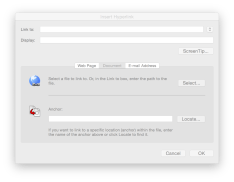
By creating a link to the actual document, you  are able to see the version submitted with a click. To create the hyperlink follow these steps:screenshot

  1. In Word, open the document.
  2. Select Insert, Hyperlink.
  3. Select Document, then select File.
  4. Locate your file in the Finder, select and the link is automatically entered.
  5. Open File Properties and enter the link in the Summary Section under Hyperlink Base.

I hope you will enjoy this gift and find it helpful in keeping track of your submissions. I’d love to hear from each of you and what you think about the tracker.

Happy writing and success on your submissions.

Top 5 Resources for Contests and Submissions

CUSTOM STATIONARY-2

In my last post, I mentioned how important submitting  work on a regular basis is to writers. So, it’s only fair I share with you some of my favorite resources for the most up-to-date lists..

 My top 5 sites:

1) Duotrope: No longer free, this service now requires a paid membership. A 30-day free trial is available; after that, the cost is $5/month.

  1. The database lists thousands of markets tailored to your work and/or genre; including, fiction, non-fiction, or poetry.
  2. They offer a plethora of data on every site regarding, acceptance rates, turn around time, payment, unknown to extremely challenging markets, and other statistics.
  3. Provide a calendar of upcoming themed contests.
  4. And, track of all your submissions.

2) Every Writer’s Resource:

  1. On the home page, you will find listings for all types of literary magazines.
  2. Magazine profiles include the year founded, preferred genre,  guidelines, response time, paid or non-paying market, and names of editors.
  3. For quick reference, check out the current and updated list in the sidebar.
  4. You can search by name, category, theme, call for submissions, or print.

3) Flash Fiction Chronicles:

  1. Markets are listed according to word count restrictions;  from as little as 50-100 words  to 1500.
  2. Provides a brief summary of the magazine with links to view current issues, site guidelines and read editor interviews; one of the most informative aspects offered.
  3. Under the Resources tab, you can find additional contests list.

4) New Pages

  1. Your guide to news, literary magazines, agents, and contests.
  2. Call for submissions include, fiction, non-fiction, essay, poetry, and art.
  3. Additional resources for writers is also available.

5)  Funds for Writers

  1. Holly Clark provides a list of contests and freelance markets in every mewsletter.
  2. Information includes deadlines, the cost to enter, paid or non-paid markets, and a synopsis of the competition.
  3.  All contests listed have been researched for credibility.
images-12

Photo courtesy of google and http://www.southwestwriters.com

I hope you will explore these sites, make a list and begin submitting. I’d love to hear what you think, and about your successes. So, drop me a line.

Happy writing and good luck on your submissions.