Cow Pasture Chronicles, My Oasis

In response to The Daily Post’s writing prompt: “All About Me.”

The name of my blog as you may know, if you’re a follower, is Cow Pasture Chronicles. The name has a special meaning to me.

I was a precocious child, or so they said. I prefer a smart, independent, and inquisitive girl ahead of her time. One of six kids, I was quiet, but sneaky. I didn’t mouth off or sulk as some of my siblings. I stayed quiet, said the requisite yes ma’am and no ma’am. I listened, paid attention, and when the timing was right, snuck off and did what I damn well pleased. I rarely got caught, but when I did, there was usually hell to pay.

We lived on a dirt road just outside of town, not many neighbors in sight, and right behind our house was a big cow pasture, filled with cattle. Located just over a hill, the road and pasture remained out of view from our house and provided the perfect opportunity for a curious girl to explore. All I had to do was get past mama. As it turns out, getting past mama was the easy part.

It took a few times of trial and error before the cows (I thought they were all cows, NOT) and I learned to ignore each other. I had no idea what a dangerous situation, it was climbing the fence. To me, running past a 2000 lb bull in giggles, after invading his territory seemed a game of catch me if you can, and I was the champ. Sometimes ignorance is bliss.

The cow pasture became my favorite hide-a-way. Every day I climbed the fence running down the hill until I came to rest under the canopy of trees by the stream. I loved to hear the flow of the water and watch the cattle wander in to drink. The pasture became my escape, my paradise, my oasis.

It was there I began my writing adventure. As often as I could escape the house, I did. In the quiet of the pasture, beside a trickling stream, I filled my journals, writing about my grievances with my mother, poems, and stories. I even waxed poetic about algebra, the bane of my high school existence and signed my work with a pen name, Zeke

When I decided to start my blog, the name was a no brainer. The cow pasture I used for escape has long disappeared. Instead of cows meandering the fields, houses fill the expanse. My blog, Cow Pasture Chronicles, is  now my  escape. Here is where I explore the stories within me, voice the occasional opinion, and share the knowledge I’ve gained on the craft of writing.

If you haven’t stopped by, please do. I love to interact with other bloggers, readers, and writers. And I love feedback and dialog. And, as always you can follow me on Facebook at SheilaMGood and  Twitter @cofcmom.

For your reading amusement, my poem on theorems, enjoy. (Be kind, I wrote this in 1972, when I was just a babe and I am not a poet)

Theorem 31

Oh, that teacher in 1st period

his Theorems and his Proofs!

the more I try, the harder it gets

and, the Lord knows that’s the truth

The corollaries and postulates,

know them one by one

now, get to work and state the Proof

Of Theorem 31

I proudly state the given

then comes L1=L2

man, on my way am I

and AB=BY.

I look again at what

I am proud to prove and

suddenly see despair

I know that Mr. Morgan’s near

I sense him in the air.

He’s standing there right over me

With ruler in his hand

Sheila that’s wrong,

dear heart

Erase it and try again

Oh, that teacher in 1st period

his Theorems and his Proofs

they’re driving me up the wall

and, God knows that’s the truth.

With a long, deep

and sad, sad sigh

I begin to erase it

I begin to cry

The shreds of hair lay

All around

My tear-stained face

Is streaked

So here, go again

compose yourself

don’t look so stunned

Sheila it’s really very easy

now, take this sheet

Quit pulling your hair

Now, prove theorem 31

Zeke (aka. Sheila)

January 11, 1972
Day 5

Day 5

A Tribute to Daddy

“Honour thy father and thy mother: that thy days may be long upon the land which the LORD thy God giveth thee.” Exodus 20:12

Today is Father’s Day and all over the country, families will celebrate with cards, gifts, phone calls and gatherings. For many, however, there is no father. Some have never known theirs; others see him infrequently, through bars, or lost him too soon.

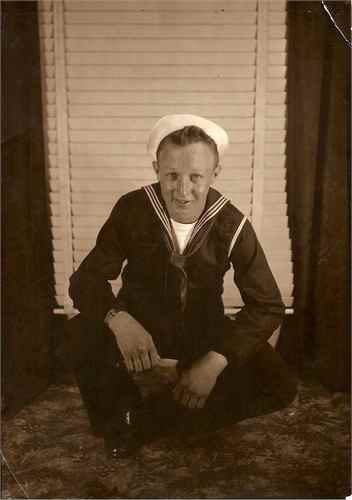
I was five years old when I lost my father to a brain aneurysm; he was 32 years old. Although, I don’t have many memories of my childhood, I do have  memories of my daddy.466eb47d-5dd4-493b-a892-e29e20917249 I remember laughter, a tight-knit family, and a sense of security. My daddy had a fun, mischievous side to him and he loved us.

A memory I will always cherish is the Sunday me and my two sisters misbehaved in church, or so mom said. We were warned, “You just wait until your father gets home.” Daddy closed the door to our bedroom, removed his belt and told us, “Girls, when I hit the bed I want you to cry real loud.” He gave that bed the spanking of a lifetime and satisfied mom’s demand we be punished. Our suppressed giggles and the smile on my daddy’s face will stay with me always.

I also remember the day he got sick and the last time I saw him in his hospital bed, just before surgery. Alert and smiling, he hugged and kissed each one of us. He told us he loved us and to be good to mama. Daddy died on the operating room table before the surgery began. I remember my cousin lifting me over the casket, sitting in our family living room, to kiss him goodbye. Losing him was a tremendous loss, but it would be years before I realized the magnitude.

Recently, I reconnected with some of my cousins on daddy’s side and we visited my 93-year-old Aunt, daddy’s only remaining sibling. With a crystal clear mind, she shared stories with me. She validated those early memories and gave me a few new ones to cherish. My aunt told me, he was a good man and “crazy about your mama and all of you kids.” It is something I knew deep in my heart even as a child.

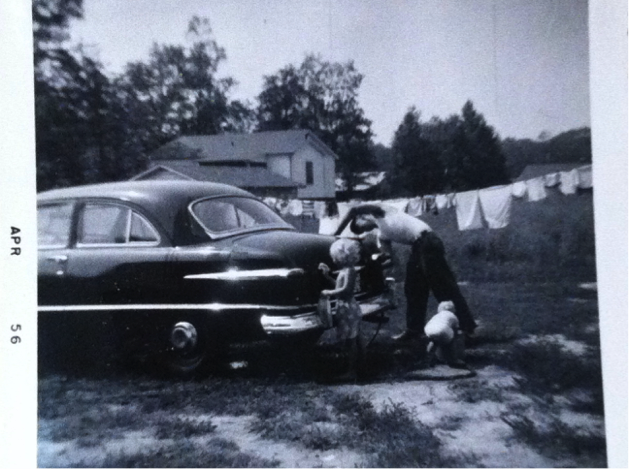
WashingDaddysCar

Daddy, I honor you today for the father you were to me, my sisters, and brother. I did not have you long, but you left a lasting impression on the woman I have become. Thank you for the image of making mom laugh. Thank you for the Sunday’s at Grandma’s and always stopping by the State line store to spend the silver dollar Papa gave to each of us. I remember what you always said as you pulled to a stop in front of the store, “I bet that money’s burning a hole in your pocket.” Thanks Daddy for letting me help you wash your car, play in the snow and not spanking me for getting in the hen-house. Thank you for the memories of love, Daddy and showing me, once upon a time the true meaning of family. .

Happy Father’s Day,

I love you

You can follow me on Facebook at SheilaMGood and  Twitter @cofcmom.

Day 4

Day 4

How to Tell Which Self-Publishing Company is Right For You

I’m not ready to make a decision on who or how to publish my novel. However, years ago while looking at publishing a picture book, I investigated some of the SPSCs, including Author House. This information is the kind you want to save, even if you’re not quite ready for publication. Thanks to A Writer’s Path for sharing this valuable guest post by Helen Sedwick.

Who’s on First? Confusing POV

Day 3

Day 3

Have you ever read a book where you lost who was telling the story? Ever had to flip backwards to determine the speaker? If you have, chances are the author was using more than one point of view (POV).

One of the most important aspects of planning is determining the point of view. Who do you want to tell the story and from what viewpoint. There are three basic viewpoints: First person, second person and third person. They’re variations within each; however, I’m only going to touch on the basic POVs.

First person or the “I” view brings the reader close to the action, making them  experience the story along with the character. The following Examples are adapted from one of my stories, Fair is Fair.

“I  took my time setting the tray of coffee on the table in the living room. Let him wait. He, along with every reporter in the country had vied for this interview for years. He would wait in the cold for as long as it took, of that I was certain.”

The downside is it’s easy to slip into a mode of “telling versus “showing,” or being too wordy or passive.

Second person POV is told through the voice of a narrator using “you, yours, and you’re.” Although, frequently used in self-help books, second person POV is not often used in fiction writing. Example:

“You don’t the truth. You want me to tell the story the way you think it should be told. You want me to sugar coat the facts so that it doesn’t offend your precious audience’s sensibilities. You get the story my way or not at all.”

The downside is it’s hard to write in second person and do it well without sounding like a self-help book, or sitting in a lecture hall.

Third person POV is told through the narrator’s voice using, “he,” “she,” or “it.”  It is the most common POV used in fiction.

“She grew up in a Christian home, believing in forgiveness and the  goodness of man. She didn’t believe in capital punishment. Judgment was reserved for God, but that was before. Now, all she could think about was how fast the executioner’s hand would fall.”

The downside of using third person POV is the narrator telling things of which they couldn’t possibly know. Unless it is third person omniscient, the narrator can only see what happens from a single character’s view.

Determining the POV in which to tell your story is important because, as in life, each POV offers a different perspective. Nothing is more frustrating or confusing to a reader than a sudden switch between POV. It jars the reader from the story and creates distance to the main character. If the reader can’t follow, he won’t care about your main character and when they stop caring, they stop reading.

A few times, I’ve found myself turning the pages backward in a book to figure out which character viewpoint I’m reading. It’s frustrating, confusing and reminds me of the famous skit, Who’s on First by  Abbott and Costello.

For a detailed description of POV, check out Janice Hardy’s Fiction University. Her post, Through My Eyes. Or Your Eyes. OR Somebody Eyes. POV Basics, defines each type, and discusses in detail the advantages and disadvantages of each. Also, Marg Gilks at Writers World, has an excellent post, Establishing the Right POV,  using her own early work as an example.

Writing in different POVs is acceptable; however, the key is to have a clear delineation between the changing POVs. This can be accomplished via white space, a new scene, or chapter to indicate the change. Whatever method you use, be consistent and you’ll never end up with the reader asking, Who’s on first?

What about you? Which POV do you use and why? Talk to me. Tell me your story. I’d love to read your comments. You can follow me on Facebook at SheilaMGood and  Twitter @cofcmom.