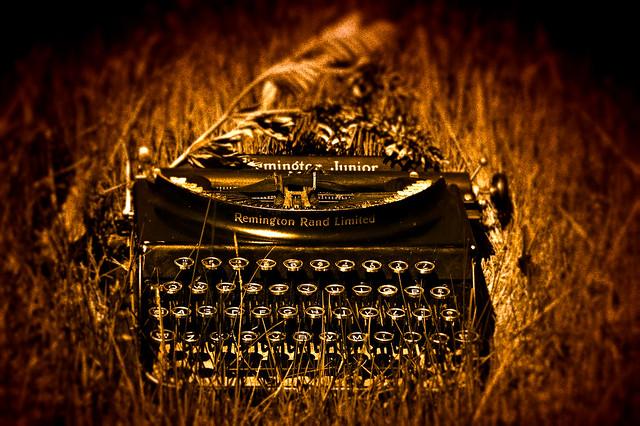
Editing Tools at Your Fingertips


I get the hibbie-jibbies every time I finish a work in progress, whether it’s a short story, flash fiction piece or blog post. Why? Because I’m convinced, the truth will come out and everyone will know I’m not a real writer. I mean, a real writer wouldn’t make stupid grammar mistakes, would they?

The truth is every writer makes grammar mistakes. Fortunately, successful writers can afford a proofreader and editor. Me? I rely on my fading memory and a few favorite editing tools.

Here are my top favorites:

1-  AutoCrit: Updated with fiction writers in mind, this program tops the list of  favorites editing tools. This program evaluates pacing, repetition, redundancies, dialog, and much more. It is my go-to editing program. Prices range from $5/month for  Gold membership to $12/month for professional. Check out this link for the different options available. You can, of course, give the program a free, but limited try. In my opinion, professional membership is the only way to go.

2- Grammarly: Is just what the name implies. It evaluates your writing for over 250 grammatical errors. Including punctuation, spelling, word choice (making suggestions), and detects plagiarism. This program is often used in colleges and universities for that purpose. Compatible with Word and Outlook, is is less friendly with a Mac product. Cost ranges from $29.95/month to $139.95 annually.

3- EditMinion: Simple to use, this free robotic copy editor pinpoints areas of weakness in seconds. The program highlights Adverbs, Weak Words, Said Passive Voice, Prepositions, Homonyms, and Clichés. A favorite of mine, its a fun way to tighten your prose.

4- ProWritingAid: Is a free online editing tool, similar to Grammarly‘s program. It checks for grammar, overused words, repetition, spelling, consistency, Clichés, and redundancies. It works with Word and Google Docs. I admit I haven’t used this tool as much but have heard favorable reviews. Cost for Premium program is $35/year; $55/2 years,$70/ 3 years, or $120/ Lifetime.

silverbirchpress.wordpress.com


In addition, to these editing tools, I have a quick find folder on my desktop with the following sites:

Grammar Girl: Quick and Dirty Tricks

Words Writers Should Delete/Word Sharpeners

The Chicago Manual of Style Online

Elements of Style

Guide to Grammar and Writing


How to Create Your Own Conference from Home

gstatic images

This is the year,” I said. The year I will attend a writers conference. Certain I’d walk away with valuable knowledge and new friends, I circled the dates, in red ink, on my calendar. Instead, life happened, reality set in, and the conference became a repeat item on my wish list. Some conferences were too costly, too lengthy, too far away, or personal and family obligations got in the way.

I turned green listening to other attendees talk about their experiences, and the authors and agents they met. I wanted to garner their newly acquired wisdom and enthusiasm for my own.

As much as I believed in the value of conferences, I realized they weren’t the only resource. So I developed a backup, my own lists of resources to utilize as my own home conference. Here are my top five.

Conference from Home: The internet provides a treasure trove of writing resources. Written by agents, authors, and writers, of all genres, they are, with the stroke of a key, available to everyone. Articles, instruction, workbooks, checklists, critiques, podcasts, online classes, and free downloads are yours for the taking. 

  1. Live Write Thrive – C.S. Larkin’s website rates top on my list. She offers a wide selection of articles and focused series aimed at helping writers succeed. Her most recent series is 12 Key Pillars of Novel Construction. In addition, you can download a number of items including, Fiction critiques  and First-page checklists for novelsTwo excellent examples.
  2. Write Better Stories – Jennifer Blanchard offers an array of articles and services, including free downloads for her new guide and workbook, How to Write Better StoriesHer First Plot Point Worksheet is also available
  3. Writer’s Village Academy – In easy layman’s terms and with an array of examples, Dr. John Yeoman  is a tremendous source of  succinct information on writing. Currently, Dr. Yeoman is offering the first four weeks of his Master Course in Creative Writing – FREE!
  4. Women on Writing is an awesome site with numerous articles, classes (paid), and referral sites. Here you can find a smorgasbord of resources from classes like, Writing a Novel with a Writing Coach: One-on-one Instruction to sections on Character Research and Books for Writers. WOWalso sponsors one of my favorite contests.
  5. Udemy Online offer classes and courses on a variety of subjects, including writing. The courses are often discounted and sometimes free, as in the case of the course I’m taking, Outlining Your Novel: The Hollywood Secret Exposed (all about outlining a whodunit-mystery-novel).

gstatic images

While not the hands-on conference I aspire to, I find these the next best thing, providing me the opportunity to hone my craft from the comfort of home.

I’d love to spend a few days at a writers conference, but until the stars align and I can, I’ll utilize the resources at my fingertips.

What about you? What do you do in lieu of conferences?


How to Get Back in The Game

Writer's Block

Greetings, from the Cow Pasture; It’s been awhile since last hearing from me. To be exact it’s been seven months.

During the time away, the task of writing seemed overwhelming. Many days I’d feared not only my creative muse had been lost, but also the desire to write.

So, I gave myself permission to stop, if only for a time. To stop struggling with time, blank pages, and a blank mind. I continued to read my favorite blogs and books. Reading has always brought me pleasure and gave me much needed food for thought, manna for my soul. My writing, I set aside.

The last two years had taken its toll. I needed time for my body and soul to heal.
At any given moment, you have the power to say…

I’m ready now, but how did I get back into the game of writing?

I realized this wasn’t how I wanted the story of my life to end. Trying to play catch up would be futile. I knew couldn’t. So, I made a to-do-list. “Start slow, take baby steps,” I told myself. It was a beginning

http://www.flickr.com/photos/85608594@N00/10448651626Perhaps, you will find it helpful.

  1. Designate a time to write; daily, weekly, whatever works for you and keep it sacred.
  2. Clean and declutter computer files. The mundane task of reorganizing files can help hands and mind reconnect to writing related tasks.
  3. Evaluate current mailing lists. Eliminate sites rarely used or those offering redundant information. Stop wasting time going through a zillion emails.
  4. Reevaluate social platforms (Blog, Author’s page, Facebook, Pinterest, Twitter, etc). Narrow the focus and find which social network will work best for you based on where you are and what you hope to accomplish.
  5. Establish ONE goal. The thing you want most to accomplish in the next three, six months or over the next year, outline a schedule and do it. (Publish, revise current works in progress, try a different genre, etc.)
  6. Pick ONE project at a time and see it to completion. The satisfaction of accomplishing your goal, will keep you moving forward.
  7. Persevere and write even if it is one word a day.

When asked, “How do you write?” Stephen King replied. … ‘One word at a time.’Sounds like a great place to start.

Have you been out of the game? How did you get back? I’d love to hear from you.


Related articles

Push the Creativity Reset Button Every Day

5 Ways We Neglect Our Own Creativity–And How to Bring It Back

Becoming a Better Writer: Taking Breaks

24 Tips on Sparking the Creative Muse

5 Things To Do If You Lose Your Muse

An Interview with Writer’s Block

Decluttering Life

Ways We Sabotage Our Own Writing Success

SABOTAGE CAN OUTWEIGH PRODUCTION - NARA - 515321Writing is not for the faint of heart. It takes hard work, dedication, a thick skin, and perseverance. Submitting that first piece of work is like standing naked on the stage of American Idol for all the world to judge.

We know, intellectually, constructive criticism and rejection will be part of the creative writing process, yet we are often unprepared. In addition, juggling everyday responsibilities and establishing a solid writing schedule amid time constraints can lead to disorganization, resulting in sabotaging the very success as writers we seek.

Sabotaging ourselves is easy. With its many disguises, it insidiously creeps up in the form of revisions, platform building, tutorials, tally counting, and discouragement, to name a few.
If you have ever found yourself doing any of the following, you might be sabotaging your writing success and perhaps it’s time to reevaluate.

  • Obsessing over a story or chapter–Revising to the point you can’t seem to move forward.
  • Obsessing over a rejection or critique–Taking it personally rather than learning from the experience
  • Obsessing over another’s numbers – Number of stories or novels published; the number of TwitterFacebook, or Pinterest followers they have compared to you. As a result, you spend more time on social network sites than writing.
  • Obsessing over learning rather than doing – Reading or attending every how-to-write-the –best-novel book, class or seminar without ever translating the knowledge into a story or novel.
  • Obsessing over time – Constant complaining over not enough time, schedule interruptions; lack of planning, no set schedule, timetable or goal.
  • Obsessing over a blank page – Writer’s block or missing muse.
  • Obsessing over the negative rather than the positive – Allowing discouragement, resentment, and anger to sap your creative energy.

Each one of us has chosen our path in life and defined our own success. However, to achieve our dreams and goals we must recognize the obstacles in our path, including the ones we often place ourselves.

Patterns of sabotage can lead to talented writers throwing their hands up in frustration or never seeing their dreams come to fruition. However, once recognized these patterns can be changed and success is but a keystroke away.

What do you think? Do writers sabotage themselves? Have you? I’d love to hear your comments.

“…Finally… never quit. That is all the secret of success. Never quit! Quitting, I like to believe, has not been a striking characteristic of our family, and it is not tolerated in our college.
If you can’t win the scholarship, fight it out to the end of the examination.
If you can’t win your race, at least finish—somewhere.
If your boat can’t win, at least keep pulling on your oar, even if your eye glazes and the taste of blood comes into your throat with every heave.
If you cannot make your five yards in football, keep bucking the line -never let up—if you can’t see, or hear, keep plugging ahead! Never quit! If you forget all else I have said, remember these two words, through all your life…”

John D. Swain novelist and screenwriter; The Book of Man:  Readings on the Path to Manhood (Manuscripts & Archives, Yale University)

Related articles

Time is relative, write?

How to write more

Is that block you keep stumbling over …you?

Too Much Planning Can Sabotage Your Productivity – And Career