Add Spice to Your Writing

It’s been a while since I walked across the fields of the Cow Pasture. Words have alluded me. Some days it has been like sitting at the keyboard and forgetting how to spell. Other times words run through my mind at warp speed at the turn of events in my life – not words I should repeat here. Although laced with emotions, they are lazy words, meant only for my catharsis.
We rarely get the results we want when we spew words into the universe because it feels good or is quick and easy. Like a recipe without flavor, it’s lazy and boring.
Words are the spice of our stories. Write with purpose and choose words that bring your story to life and leaves the reader with a lingering taste for more.
Check out this article by Jerry Jenkins, 249 Strong Verbs That’ll Spice Up Your Writing and spice up your writing.

Before You Query ​- Tips

Be Calm and Query On

I’ll admit when I started the process, I thought the most difficult part would be finding the right agent to query. Just goes to show you how much I know – zilch, zip, zero. Querying is NOT for the faint of heart. But, be encouraged––I’m going to give you my tips and what I’ve learned, so far in the process.

TIPS:

1. Get organized – to help you streamline the query process. 

  • Make sure all your materials are completed, edited, & ready to use. DO NOT query until they are. (Completed Manuscript; Synopsis, Pitch, Author Bio, and a frame-work query letter you can personalize to each agent.
  • Make sure you have some method for keeping up with your queries. You need to be aware of the agent and agencies they represent – you can only query one agent in the same agency at a time. I use Query Tracker to keep up with mine (more on that later).
  • Before you get query – research about agents, your genre, and familiarize yourself with the different types of submissions (snail mail, email, form) More on those later.

2. Find your agency/agent/publisher resources––some great places to start:

 3.  Select a number of agents/publishers you want to query.

  1. Familiarize yourself with the agent: read her profile, Twitter account, Website and get a good understanding of what type of queries she or he is seeking. Knowing your agent before you write that query letter makes all the difference.
  2. Know how to format your materials for submission via email, mail, and online.
  3. Make sure you read and follow the agents specific guidelines for submissions, including what must be in the query, email, and formatting. It is different for each agent.

 4. Be realistic and patient.

Do NOT expect a fast turnaround. Average time vary from agent to agents but don’t be dismayed to know that it can take 4-8 weeks for any response.

Stayed tuned, I’ll cover how to format your materials for each method of submission in the next post.

What has been your querying experience?

I’d love to hear your comments. Talk to me. Tell me your story. I’m all ears and look for me on Facebook Page at SheilaMcIntyreGoodPinterestBloglovinTwitter@sheilamgood, Contently, and Instagram. You can follow my reviews on Amazon and Goodreads.



Self-Editing Checklist

ANNABEL SMITH

Check out the article, Self-Editing for Fiction Writers: A Quick-Start Checklist from the AutoCrit Blog for this quick and simple start to self-editing.

1. Clean things up:
  • Clear out the clutter.
  • Weed out “to be” verbs and other passive constructs.
  • Eliminate clichés
2. Check Narrative Flow
  • Show, don’t tell.
  • Find and eliminate redundancies.
  • Vary sentence lengths.
  • Pace yourself.
3.  Dialogue
  • Get rid of excess dialogue tags.
  • Stick to “said” and “asked.”
  • Keep adverbs out of dialogue tags.
4. Plot

Evaluate your character development, conflict, action, and theme.

I’ve listed the main points on the checklist, but to get the details, you’ll need to read the article. If you’re ready to begin self-editing, need help or a little direction you can test AutoCrit for free 

Learn How AutoCrit Works | View  Pricing


I’d love to hear your comments. Talk to me. Tell me your story. I’m all ears and look for me on Facebook at SheilaMGood,  PinterestBloglovinTwitter@sheilamgood, Contently, and Instagram. You can follow my reviews on Amazon and Goodreads.


Tidbits and Nuggets – Scenes

  • What Makes a Scene?
  • It takes place in real time.
  • Have settings – specific locations readers can picture.
  • Contain some action – something happens.

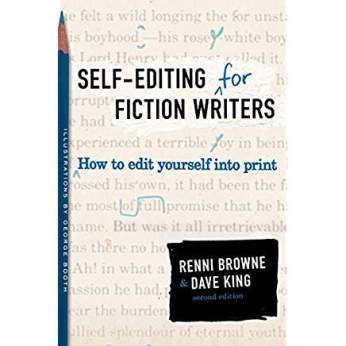
“You want to draw your readers into the world you’ve created, make them feel a part of it, make them forget where they are. You can’t do this effectively if you tell your readers about your world secondhand – You have to take them there!”

Self-Editing for Fiction Writers
Renni Browne & Dave King

I’d love to hear your comments. Talk to me. Tell me your story. I’m all ears and look for me on Facebook at SheilaMGood,  PinterestBloglovinTwitter@sheilamgood, Contently, and Instagram. You can follow my reviews on Amazon and Goodreads.