What I’ve Learned About Querying

Querying tips

I’ve been as invisible as a ghost over the last month because I entered the maze of querying agents for my manuscript, Hello Hell. Let me tell you, it can be a scary place if you don’t know what you’re doing or follow the process as outlined by every, single, agent. So, here’s a few tips, I’ve learned aloong the way. Feel free to share your own.

  1. Pick your resources: Writer’s Digest, MSWL, Querytracker, or Writer’s Market.
  2. Identify those agents open for submissions and who are requesting manuscripts in your genre.
  3. Publications don’t always tell the whole story related to a specific agent, so do your reasearch.
  4. Make a list. Note siginifcant specifics about each agent.
  5. Read the agents profile, website, Twitter account and any other site they provide to get a good feel for whether he/she might be a good fit. For example, a profile may list they are interested in womne’s fiction but when you did deeper, there is a very specific type of women’s fiction they are interested in. Unless your manuscipt fits within that narrow scope, mark them off your list.
  6. Read through the agency, research all the agents listed, the books they have published, and their submission guidelines. 
  7. Perfect your query again and again. Don’t write one and think it will serve all. Some agents are very particular regarding what they want to see in a querying and the layout. So, be prepared to have numerous versions as you gothrough the process.
  8. Keep track of each query sent to each agent. This is important because you can’t querying more than one agent within an agency. So, pay attention to your list. I use Query Tracker which provides valuable insight into an agent:  response times, genre reports, percentage of responses, and the number of negative and positive responses. 
  9. Setup reminders to followup (nudge an agent) or to mark a query as closed. Some agents specify that after x number of weeks, “assume we have reviewed your work and are going to pass on it.”
  10. Understand querying is a process. It’s takes time, patience, and a thick skin. Whether an agent likes your work or not is often subjective. So keep things in perspective and don’t take a rejection personally.

Hope these tips help and if you have a tip, please share with us in the comment section. Good luck.

I’d love to hear your comments. Talk to me. Tell me your story. I’m all ears and look for me on Facebook Page  at SheilaMcIntyreGood, PinterestBloglovinTwitter@sheilamgood, Contently, and Instagram. You can follow my reviews on Amazon and Goodreads.

Advice – Separating the Wheat from the Chaff

Day 1:  #atozchallenge

Flickr

We love receiving good advice, especially from the experts. But, therein lies the rub.

Who are the experts? When we first step out into the web as either a writer or a blogger, we’re hungry for advice; I know I was. Cow Pasture Chronicles was my second blog. I began blogging after the death of my best friend as a way to deal with her loss. You can find that blog, mistakes and all at, Friendship of a Lifetime.  Those entries are full of grammatical errors, but they were heartfelt and served a purpose. Later, I decided to pursue my love of writing, and the Cow Pasture Chronicles was born.

At the time, I didn’t have a clue what the rules for blogging were (whether there were rules) or how to get started. With research and the support of my sister, Jean at Jean’s Writing, I’ve managed to get an okay grasp on what I’m doing (most of the time). But with millions of bloggers, how do you tell which advice to follow and which to toss?

Like everything else, with experience comes wisdom.  Here are my top five valuable and proven expert sites I go to for advice.

For Writers:
  1. Every Writer’s Resource 
  2. Janice Hardy’s Fiction University</a
  3. Jane Friedman
  4. Live, Write, Thrive by C.S. Lakin</a
  5. Writer’s Digest
For Bloggers:
  1. Top 100 Writing Blogs for Authors and Bloggers
  2. Copyblogger
  3. WordPress
  4. Blogging 101
  5. Jeff Goins

The more writers you connect with, find, and follow, the more we learn from each other. We develop lists of favorite blogs based on enjoyment and in many cases, for the author’s expertise. However, sometimes it pays to take a second look at the source.

Red Flags:
  1. When the “expert” seems more concerned with selling than connecting, take a second look. I don’t begrudge a blogger for wanting to earn money, however, spamming me with constant sells pitches or emails offering high-dollar courses, is a red flag.
  2. Bloggers who tout themselves as “experts.” No doubt, some have lots of expertise (see the lists above), but some are just good at marketing. Do your research and check out their experience, credentials, and accomplishments.
  3. What do other bloggers say about the advice they received?

My journey as a blogger and writer has given me the opportunity to meet many people. I’ve come to respect a number of them as experts and rely heavily on their advice. As writers, we’re all at different levels. I treasure the collaboration of others and love to receive feedback from the blogging and writing community. I merely caution you to do your homework. When looking for expert advice, be mindful and separate the wheat from the chaff.

I’d love to hear your comments. Talk to me. Tell me your story and look for me on Facebook at SheilaMGood,  PinterestBloglovinTwitter@sheilagood, and Contently.

My Top 5 Gift Subscriptions For Every Writer

It’s that time of year when we’re all trying to figure out the perfect gift for friends and loved ones. And, gifts for the writer in our circle is one of the hardest to find. Here are my top five recommendations to make your shopping easier. Enjoy.

51NYqYBHXsL._SY300_1. Writer’s Digest – An excellent resource for writers at all levels. Covering all genres, this magazine is your go-to-resource on writing. Available in print or digital,  a year’s subscription will cost $19.96 (8 issues).

issue_95_cover_450x6752. Glimmer Train Stories – One of the best magazines in print, this magazine loves to showcase emerging and new writer’s.  Forty percent of stories last years was from first time authors. Represented in  the Pushcart Prize: Best of the Small Presses Henry Prize StoriesNew Stories from the South, and Best American Short Stories. A year’s subscription will cost you $35.00.

Crazyhorse_88_cover-1025x10243. Crazyhorse – This College of Charleston literary magazine, located the beautiful coastal city in  South Carolina has published the works of established and  emerging writers for the last 50 years. Work from the journal’s pages has been reprinted in the Best American PoetryBest American Short StoriesBest American Nonrequired Reading and The Pushcart Prize annual anthologies. Issues and stories are available online and in print.  Offering 25% off a one year subscription – $15.00 USD, $25.50 USD; ends 12/31/2015.

Issue60ForWeb-14. American Short Fiction – Publishes work from both emerging and new writers. Stories published by American Short Fiction are anthologized in Best American Short StoriesBest American Non-Required ReadingThe O. Henry Prize Stories, and The Pushcart Prize: Best of the Small Presses, and elsewhere. A year’s subscription will cost $25.00. Current issues and back issues available for $7.00 – $10.00.

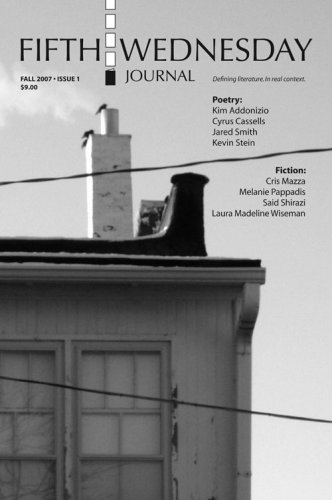
41BSSXcYaSL5. Fifth Wednesday Journal– An independent print literary magazine published twice a year. Focusing on contemporary literary and photographic arts, this magazine accepts contributions of short fiction, poetry, essays, interviews, book reviews, and black and white photography.    A one-year-subscription will cost you $20.00 per year. Individual issues, $11.00 each.

Happy shopping!

I’d love to hear your comments. Let’s have a conversation. Talk to me. Tell me your story. And as always, you can follow me on Facebook at SheilaMGood, PinterestBloglovinTwitter@sheilagood, and Contently.


The Value of Blog Comments

leavecommetgifWritten in response to the Writer’s Digest 2015 October Platform Challenge

Blogging is an excellent way to express ourselves, improve skills, impart knowledge and expertise, or share stories. But, what role do comments, both given and received, play? Are they important?

When I began blogging in 2008, I had no aspirations beyond using my blog as a way to express grief after the sudden loss of my best friend. But, then people began to respond. I made connections, my grief lessened, and my writing evolved. Without their encouragement, I’m not sure I would still be writing.

The Value of Blog Comments: 
  • They are the lifeblood of any blog – connecting us to others.
  • Tell us our words have resonated with someone.
  • Sometimes, they express gratitude.
  • Other times, they offer us a different opinion to consider.
  • An avenue to share resources, give recognition, or validate information.
  • Provide ideas for future topics.
  • Creates a network of bloggers, writers, classes, and groups.

Given these benefits, how can we create an atmosphere of interaction?

Ways to Invite Reader Participation:
  • Lead the way – Comment on your favorite blogs. Make sure what you have to say will add value to the conversation.
  • Keep it simple – spam is a valid concern. However, CAPTCHA’S can actually discourage readers from leaving comments. Trying to match blurred letters or numbers in little boxes is more annoying than trying to read the fine print on the back of a medicine bottle.
  • Do away with registrations. Requiring readers to fill out a form before leaving a comment is a sure-fire way not to get one.
  • Readers respond more often to a call-to-action or questions.
  • Be an active participant on your own blog – respond and interact with those who have taken the time to read and respond.

Not only is replying to comments, the polite thing to do, but doing so helps create a network of like-minded bloggers and writers, which adds value to all of us.

People blog for different reasons and the topics are as varied as the names. We want to believe our blogs provide valuable information or entertaining stories, but without reader participation, how will we know?

I’d love to hear your comments. Talk to me. Tell me your story. And as always, you can follow me on Facebook at SheilaMGood, PinterestBloglovin, Twitter @cofcmom, and Contently.