Writing Your Memoir?

Writing my memoir is something I’ve toyed with for years, but memory is a tricky thing. As I get older it’s become more like the childhood game, “Catch me if you can.”

It’s important to understand we’re not expected to recall every tiny detail of every event in our lives.  As one author notes, we’re not journalists reporting facts (if such a being still exist).  It’s about telling a story – our story. We want to share our experiences, pain, the lessons we’ve learned, or perhaps, to free ourselves of the stones weighing down our souls.

Whatever the reason for trying to get your memoir on paper,  there are resources to help. Because when it is all said and done, you want the finished product to shine, to resonant and move those people meant to read it.

Take a moment and check out  WOW! Classes & Workshops.


I’d love to hear your comments. Talk to me. Tell me your story. I’m all ears and look for me on Facebook Page at SheilaMcIntyreGood, PinterestBloglovinTwitter@sheilamgood, Contently, and Instagram. You can follow my reviews on Amazon and Goodreads.

What I’ve Learned About Querying

Querying tips

I’ve been as invisible as a ghost over the last month because I entered the maze of querying agents for my manuscript, Hello Hell. Let me tell you, it can be a scary place if you don’t know what you’re doing or follow the process as outlined by every, single, agent. So, here’s a few tips, I’ve learned aloong the way. Feel free to share your own.

  1. Pick your resources: Writer’s Digest, MSWL, Querytracker, or Writer’s Market.
  2. Identify those agents open for submissions and who are requesting manuscripts in your genre.
  3. Publications don’t always tell the whole story related to a specific agent, so do your reasearch.
  4. Make a list. Note siginifcant specifics about each agent.
  5. Read the agents profile, website, Twitter account and any other site they provide to get a good feel for whether he/she might be a good fit. For example, a profile may list they are interested in womne’s fiction but when you did deeper, there is a very specific type of women’s fiction they are interested in. Unless your manuscipt fits within that narrow scope, mark them off your list.
  6. Read through the agency, research all the agents listed, the books they have published, and their submission guidelines. 
  7. Perfect your query again and again. Don’t write one and think it will serve all. Some agents are very particular regarding what they want to see in a querying and the layout. So, be prepared to have numerous versions as you gothrough the process.
  8. Keep track of each query sent to each agent. This is important because you can’t querying more than one agent within an agency. So, pay attention to your list. I use Query Tracker which provides valuable insight into an agent:  response times, genre reports, percentage of responses, and the number of negative and positive responses. 
  9. Setup reminders to followup (nudge an agent) or to mark a query as closed. Some agents specify that after x number of weeks, “assume we have reviewed your work and are going to pass on it.”
  10. Understand querying is a process. It’s takes time, patience, and a thick skin. Whether an agent likes your work or not is often subjective. So keep things in perspective and don’t take a rejection personally.

Hope these tips help and if you have a tip, please share with us in the comment section. Good luck.

I’d love to hear your comments. Talk to me. Tell me your story. I’m all ears and look for me on Facebook Page  at SheilaMcIntyreGood, PinterestBloglovinTwitter@sheilamgood, Contently, and Instagram. You can follow my reviews on Amazon and Goodreads.

Tidbits and Nuggets – Repetition

Tidbits & Nuggets-2

It’s easy, even as a novice writer to notice those pesky instances of repetition. There’s another type of repetition that causes problems – repetition of effect. Two sentences that convey the same information or two characters that serve the same role are examples.

1 + 1= 1/2

“When you try to accomplish the same effect twice, the weaker attempt is likely to undermine the power of the stronger one.”

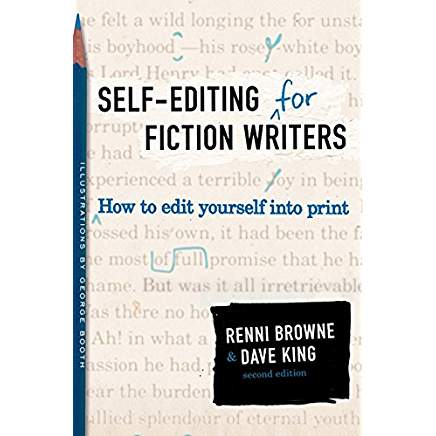
Self-Editing for Fiction Writers 
Renni Browne & Dave King


51qoV-PGncL._AC_US436_QL65_


I’d love to hear your comments. Talk to me. Tell me your story. I’m all ears and look for me on Facebook at SheilaMGood,  PinterestBloglovinTwitter@sheilamgood, Contently, and Instagram. You can follow my reviews on Amazon and Goodreads.


The Dreaded Synopsis

If you’ve ever renovated or built a house from the ground up, you understand what a  monumental pain in the butt is.

Finally, after months of hard work and anticipation, you see the finish line. You’re certain once the paint goes on the walls, the finishing touches will go quickly and you’ll be moving furniture in place and hanging pictures on the wall.

Only, you soon discover the most tedious part is the finishing work. Weeks of wading through catalogs, and home improvement stores made it clear, light fixtures, switch plates, countertops, cabinet hardware, plumbing fixtures, made it clear, building the structure was only half the game. The magic lay in the details.

Writing a novel is much like building a house and writing the synopsis is the finishing work. Next to editing, writing the dreaded synopsis can be the most difficult.

Creating a riveting, one-page summary out of nearly 80,000 words is not as easy as picking out light fixtures, but it doesn’t have to be difficult. I’ve done my homework and here’s what I learned.

Here Are A Few Tips, I’ve Learned About Writing The Dreaded Synopsis:
  1. It’s not rocket science. Don’t make it harder than it is.
  2. Write in an active voice – third person, or present tense.
  3. Introduce your character and the main storyline in the opening paragraph.
  4. It should be 500-600 words, single space – unless submission guidelines request otherwise.
  5. Use the same font as your novel – New Times Roman or Courier.
  6. Only explain character details relevant to the story.
  7. Avoid using names and places that are not significant to the whole story.
  8. Don’t highlight subplots that don’t move the story forward.
  9. Avoid anything that requires more information.
  10. Avoid long character, setting, too many names, long explanations, or dialogue.

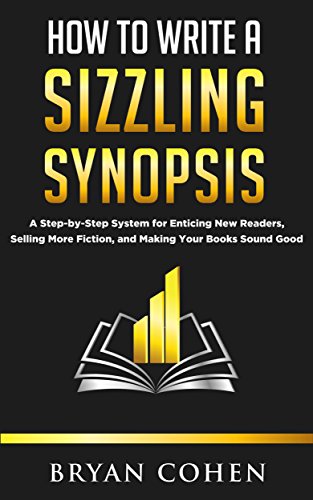
What You Need to Include: (From How to Write a Sizzling Synopsis by Bryan Cohen)

  1. Introduce your main character.
  2. Establish what is at stake for your character.
  3. Increase the tension.
  4. Additional main characters? Repeat the above steps.
  5. Bring the characters together
  6. Raise the stakes for the characters
  7. Place the character in the worse case scenario of failing.
  8. End with a bang.

Other Resources

SaveSave

SaveSave

SaveSave


SaveSave