Submissions- Advice for Success

Day 19: #atozchallenge

images-8
As a writer, we all enjoy sending our words out into the universe and, particularly, achieving recognition. Submitting work takes careful consideration and time.

Success can be yours if you do these four basic things:

  1. Research the journals appropriate for your genre.
  2. Spend time reading the journals as well as the winning stories.
  3. Write a good story.
  4. Follow the guidelines of the journal in which you are submitting.

The article, 10 Observations from the Slush Pile by author and editor, Suzanne Vincent, is an excellent resource for the do’s and don’t of submitting your work. Check it out and take note.

Success is in the details.

When was the last time you submitted?

I’d love to hear your comments. Talk to me. Tell me your story and look for me on Facebook at SheilaMGood,  PinterestBloglovinTwitter@sheilagood, and Contently.

Formatting Your Manuscript

Day 6:   

Properly formatting your manuscript is essential to a writer’s success. The first rule is always to check the guidelines outlined by the agent or publisher before you submit. Below are basic formatting tips. But, be mindful, the agent or publisher may have different requirements. Adapt per their preferences.

Traditional Print Formatting Tips:

  1. Title Page: Include your name, contact information in the upper left corner. Upper right corner – the estimated word count. Space down to center your title, double space and enter by, double space and add your name. Space three lines and begin your manuscript.
  2. Font: Courier 12 or Courier New 12 – this is the font most often preferred by editors; however, some editors are now accepting newer fonts – Arial or Times New Roman. Check the guidelines.
  3. Spacing: Double-space your manuscript – provides room for the editor to make notes and is easier on the eyes.
  4. Character spacing:  is a single space.
  5. Margins: 1 inch on all sides – allows room for the editor to make notes.
  6. Headers:  Include your name, title of the novel or keyword (all caps) and the page number.
  7. Chapters: Start each chapter on a new page, a third of the way down. Capitalize Chapter number and titles.
  8. Scene Breaks: indicate a break using the # sign in the center of the line.
  9. Word Count: Estimate word count by using 250 X the number of pages.
  10. Justification: Left justify.
  11. End: Designate with the # symbol in the center of the line or write, The End.
  12. Secure: the pages of your manuscript with a clip or rubber band.

No-No’s in Formatting:

  1. Do not use fanciful or colored fonts.
  2. Don’t number the title page. Start with the first page of the story.
  3. Do not place a copyright symbol © on your manuscript; it makes you look like an amateur. If your manuscript is accepted, the publisher will file a copyright in your name.
  4. Do not send a manuscript printed on both sides.
  5. Do not use word processors to determine word count; they’re not always accurate.
  6. Do not bind or staple your manuscript.

For more resources of formatting check out these links:

I’d love to hear your comments. Talk to me. Tell me your story and look for me on Facebook at SheilaMGood,  PinterestBloglovinTwitter@sheilagood, and Contently.

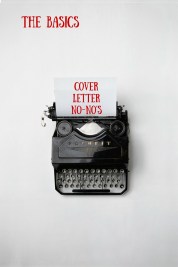
Cover Letter Basics

Day 3: 

Cover letters – don’t we dread writing them? When so many magazines have an automated submission process, what is the purpose?

Why do a Cover Letter?Cover Letter

It’s a way to introduce yourself to the editor, and where I come from, an introduction is a polite thing to do.

It tells the editor the basics about your submission – title, word count, and is a good opportunity to indicate your familiarity with the magazine.

Things Not to do:

  1. Don’t screw with the guidelines. Read and follow them to the tee. Taking a gamble won’t win you any points but a straight up rejection.
  2. If you’ve developed a template, make sure you’ve updated the date, editor, magazine, story, and word count. Don’t be careless. It’s not only bad form but bad manners to call someone by another’s name.
  3. Don’t get long-winded. Editors are busy people. One to two paragraphs works fine. Remember this is a cover letter, not a query.
  4. Don’t address the letter, “To Whom it may concern.” It signals the editor that you’re unfamiliar with their magazine.
  5. Don’t wax sentimental about your personal life. It’s a distraction, pegs you as an amateur, and will likely land your submission on the slush pile.

The Basic Things to Do:

  1. Follow the guidelines.
  2. Keep the cover letter to a single page.
  3. Make it simple and succinct.
  4. Limit your bio to no more than a paragraph.
  5. Address the editor by full name and title.
  6. Be mindful of grammar. It matters even in the cover letter.
  7. Include your name, address, email, and phone number as on any business letter.
  8. Include the title of your story, genre, and word count.
  9. Indicate whether it’s a simultaneous submission.
  10. Stick to the format and font outlined in the guidelines; every magazine has their preference.
  11. Keep a copy for your file and link it to the manuscript you submitted.
  12. Update your submission log, including the expected date to hear back/or contest deadline.

What do you think about cover letters? Do they make a difference? Ready to find out, check out my list of Call for Submissions in the sidebar and good luck.

I’d love to hear your comments. Talk to me. Tell me your story and look for me on Facebook at SheilaMGood,  PinterestBloglovinTwitter@sheilagood, and Contently.

Stories to Share

images-4

sevenstorylearning.com

We’ve read a lot this week about book reviews and the impact they have on the authors. But, what about all the stories we read? It’s worth remembering, all writers need feedback on their work, regardless of the number of words. With that in mind, here are this week’s Stories to Share.

First up,   Spider Webs, by .

Second,   Reading Their Only Son, by Rick Trushel.


And, last but not least,  and Dollhead, by  Vanessa Mártir.


Accepting submissions of fiction up to 1000 words, Smokelong has an excellent article this month on what they do and do not want to see in submissions. So, check out the guidelines, carefully.

Seeking fictional stories up to 8,000 words, you can find Submission guidelines for Menda City Reviewhere.

Fiction Southeast is looking for short fiction of 1500 words or less and offers two annual contests. Submissions are accepted for The Ernest Hemingway Flash Fiction Prize from June the 1st – December 1st. First Prize includes  $200.00 and publication. In addition, the annual Fiction Southeast Editors’ Prize opens in December with a deadline of July 1st. Winner $100.00 and publication. You can find their general guidelines here.

I hope you enjoy these stories as much as I did, share them, and where possible, I encourage you to leave a comment for the author.

images-7

beliefnet.com

I’d love to hear your comments. Talk to me. Tell me your story and look for me on Facebook at SheilaMGood,  PinterestBloglovinTwitter@sheilagood, and Contently.