Do You Find The Submission Process Stressful?

SylvesterI don’t know about you but submitting my work has become very time-consuming, confusing, and stressful. The sheer number of journals, magazines, and contests from which to choose is overwhelming. Where to start? Which one is the best fit for me?

In the past, I’ve used Duotrope, NewPages, and The Review Review to help narrow my selections, but hell, by the time I get through reading and researching, I’ve missed the deadlines. And, it seems I’m not alone feeling so frustrated with the process.

In the June issue of the Literary Hub, Erika Dreifus discusses the submission process and provides a list of 13 questions to ask before submitting to any literary journal. You can read her article and the questions, here.

Want a way to stay up to date? Get the details on awards, contests, general submissions, and deadlines? Now you can.

Download your free copy of the 2016 Literary Calendar from The Master’s Review. Click to Tweet.

What methodology or resources do you use when deciding where to submit? Share your pointers with us.

I’d love to hear your comments. Talk to me. Tell me your story and look for me on Facebook at SheilaMGood, Pinterest, Bloglovin, Twitter@sheilamgood, Contently, and Instagram.

How to Successfully Keep Track of Submissions

Charles Canary

Now, that you’re thinking about submitting your work, you need an easy method for tracking all those submissions.

 Why keep track?

  1. Turn around time can vary from a few days to nearly a year. The average response time is more like 2-3 months.
  2. You need a record of who, where and what you submitted to avoid sending the same query to the same publication/editor.
  3. Keeps track of  documents and word counts. We all have more than one version and/or word count and being able to identify the appropriate document is helpful as market guidelines may differ.
  4. And, builds your own statistics regarding response times, acceptance rates, or those offering feedback and critiques.

Resources to Keep Track:

You can find many resources online, some easier to use than others:

  1.  Duotrope Digest –  A huge searchable database, and due to the large membership, statistics are readily available. Information is entered manually. The cost – $5/month.
  2. The Writer’s Database:  A free, online database which functions similar in fashion to Duotrope. Requires manual entries in a smaller database.
  3. Use folders on your computer. Arrange by time, publication, or title. Good labeling is the key to organizing your files.
  4. Or, use a spreadsheet, as I do and NOW, you can too.

Below is my  FREE  gift to you:

My Free Gift to You

An easy and quick submission tracker at your fingertips. Header columns include: Title, Category/genre, Submission Date, Status, Publisher, Website, Reply/Comments and Document links. You can change them to suit your needs. Click the link or image to download your copy today.

Submission Tracker Log Sheet1

Submission Tracker Log

Click image to download

How to Create Documents Links for Your Tracker:

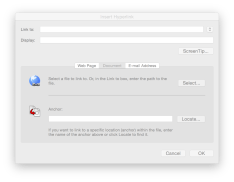
By creating a link to the actual document, you  are able to see the version submitted with a click. To create the hyperlink follow these steps:screenshot

  1. In Word, open the document.
  2. Select Insert, Hyperlink.
  3. Select Document, then select File.
  4. Locate your file in the Finder, select and the link is automatically entered.
  5. Open File Properties and enter the link in the Summary Section under Hyperlink Base.

I hope you will enjoy this gift and find it helpful in keeping track of your submissions. I’d love to hear from each of you and what you think about the tracker.

Happy writing and success on your submissions.

Top 5 Resources for Contests and Submissions

CUSTOM STATIONARY-2

In my last post, I mentioned how important submitting  work on a regular basis is to writers. So, it’s only fair I share with you some of my favorite resources for the most up-to-date lists..

 My top 5 sites:

1) Duotrope: No longer free, this service now requires a paid membership. A 30-day free trial is available; after that, the cost is $5/month.

  1. The database lists thousands of markets tailored to your work and/or genre; including, fiction, non-fiction, or poetry.
  2. They offer a plethora of data on every site regarding, acceptance rates, turn around time, payment, unknown to extremely challenging markets, and other statistics.
  3. Provide a calendar of upcoming themed contests.
  4. And, track of all your submissions.

2) Every Writer’s Resource:

  1. On the home page, you will find listings for all types of literary magazines.
  2. Magazine profiles include the year founded, preferred genre,  guidelines, response time, paid or non-paying market, and names of editors.
  3. For quick reference, check out the current and updated list in the sidebar.
  4. You can search by name, category, theme, call for submissions, or print.

3) Flash Fiction Chronicles:

  1. Markets are listed according to word count restrictions;  from as little as 50-100 words  to 1500.
  2. Provides a brief summary of the magazine with links to view current issues, site guidelines and read editor interviews; one of the most informative aspects offered.
  3. Under the Resources tab, you can find additional contests list.

4) New Pages

  1. Your guide to news, literary magazines, agents, and contests.
  2. Call for submissions include, fiction, non-fiction, essay, poetry, and art.
  3. Additional resources for writers is also available.

5)  Funds for Writers

  1. Holly Clark provides a list of contests and freelance markets in every mewsletter.
  2. Information includes deadlines, the cost to enter, paid or non-paid markets, and a synopsis of the competition.
  3.  All contests listed have been researched for credibility.
images-12

Photo courtesy of google and http://www.southwestwriters.com

I hope you will explore these sites, make a list and begin submitting. I’d love to hear what you think, and about your successes. So, drop me a line.

Happy writing and good luck on your submissions.