Procrastination: There’s an App for That

9ce2ef07-3537-4422-b7d0-d20142fcdf33_zpsxmohyn1a-compressorDo you have a project you’ve been working on since Edison invented the light bulb? You want to get to the finish line but for some reason, you haven’t.

I know, it’s the hours in the day ( they haven’t changed), the retired husband (I sympathize), the grandkids, laundry, HBO (had to catch up), Twitter, Facebook, or any number of excuses we come up with to justify not reaching the finish line.

“I have not failed. I’ve just found 10,000 ways that won’t work.” Thomas Edison
Tweet this
toon_procrastinator-compressor

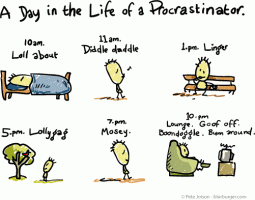
Procrastination is one of those insidious things that – surprise, surprise, do not get better with age. But, cheer up – there’s an app for that!

Thanks to Amy Rolph from Unstuck Advice, we can now have a digital monitor. The Unstuck app helps identify the type of procrastination you’re exhibiting and offer solutions.

Are you a drifter, deflated doer, waffler, perplexed planner, avoider, or just a fuzzy forecaster? Check out the Unstuck App to find out, and get the project completed!use_unstuck_btn-compressor

I’d love to hear your comments. Talk to me. Tell me your story and look for me on Facebook at SheilaMGood,  PinterestBloglovinTwitter@sheilamgood, Contently, and Instagram. You can follow my reviews on Amazon and Goodreads.

My Top Twenty Websites for Writers

images

Photo: courtesy of wikipedia.org

I don’t know about you, but I rely on the expertise of other writers and bloggers. I have collected an array of blogs that are my go-to resources for writing advice, critiques, editing, grammar, writing prompts, research, publishing, and blogging.

I’m sure you have your favored sites, but I thought I would share with you my top 20 websites for writers. Enjoy and if you have one, you think my readers, or I would like them, please pass the link on in the comment section below.

  1. Fiction University with Janice Hardy – one of all time favorite resources on writing.
  2. WOW- Women on Writing – designed to support women writers through all stages of writing.
  3. Live Write Thrive with CS Lakin – copywriter, editor, and writing coach.
  4. Writer Unboxed – all about the writing of fiction.
  5. The Review Review – a source for all writers interested in submitting to literary magazines; read reviews and interviews with the editors, her.
  6. Mash Stories – started out as a competition site, now a platform.
  7. Every Writer’s Resource – Literary Magazine with all kinds of resources for the writer.
  8. Now Novel– a structured method to help anyone write a novel.
  9. Story Medic – professional editing blog.
  10. Crimespree Magazine – an award-winning print magazine that covers all aspects of crime fiction writing.
  11. Melissa Sugar Writes: Have You Heard -if you love legal thrillers, Melissa is your gal.
  12. The Short Mystery Fiction Society Blog – Markets for mystery and crime short fiction.
  13. Crime Writer Sue Coletta – A crime writer’s resource.
  14. The Memoir Writing Club – Mentors and courses for those interested in memoir writing.
  15. Sister’s in Crime – With chapters all over the US, this organization’s mission is the recognition, advancement, and development of women crime writers.
  16. One Stop for Writers – the library of resources for storytellers and writers.
  17. No Rules, Just Write – CJ Lyons – Pediatric ER Doctor turned thriller writer.
  18. Writer’s Digest – both print and online magazine with every resource the writer may need.
  19. Mystery Writers of America – open to the public, this organization is for crime writers (all levels).
  20. Freelance Writing – Everything you need to know to get started and more.


I’d love to hear your comments. Talk to me. Tell me your story and look for me on Facebook at SheilaMGood,  PinterestBloglovinTwitter@sheilamgood, Contently, and Instagram. You can follow my reviews on Amazon and Goodreads.

Stories to Share

Time to ShareDon’t you just love a good story? So do I and I have several to share with you. I hope you will enjoy them as much as I did. We all need a little recognition, especially when it comes to our stories. So, give the authors a little love and let them know what you think about their stories.

First up:

  1.  Bed Hole Syndrome by  Carla Lancken. Courtesy of Flash Fiction Magazine.
  2. An Unexpected Death by P.S. Hoffman.
  3. Short-listed by Mash StoriesMonte Carlo by Dominic Howarth.
  4. And, from WOW-Women on Writing’s 2015 Fall Flash Fiction Contest:

Interested in seeing Your Story Published? Check out the Mash Stories Competition and Wow- Women on Writing’s Summer 2016 Flash Fiction Contest.

Sit back, kick up your feet and enjoy a good read.

I’d love to hear your comments. Talk to me. Tell me your story and look for me on Facebook at SheilaMGood,  PinterestBloglovinTwitter@sheilamgood, Contently, and Instagram. You can follow my reviews on Amazon and Goodreads.


You Asked: What is Plagiarism?

Welcome to another: You Asked the Experts Answer, segment. The question this week – What is plagiarism?

If you’ve been watching television, read anything on social media, or in the news this week, you’re aware of the controversial speech Melania Trump gave on Monday night. Personally, I thought her speech was beautifully given and expressed some of the same values I’ve articulated. However, many don’t see it that way, questioning certain passages as plagiarism.

As writers we’ve repeatedly heard the saying, there is no new story under the sun.  Not wanting to plagiarize, I went on the hunt for the original source. There were many quasi-sources, but the most original came from the King James Bible – Ecclesiastes 1:9. Some might argue that the above statement is a common expression and doesn’t need sourcing, but and there in lies the rub. How do we know? You can find out more about, The exception of common knowledge, here

What is Plagiarism?

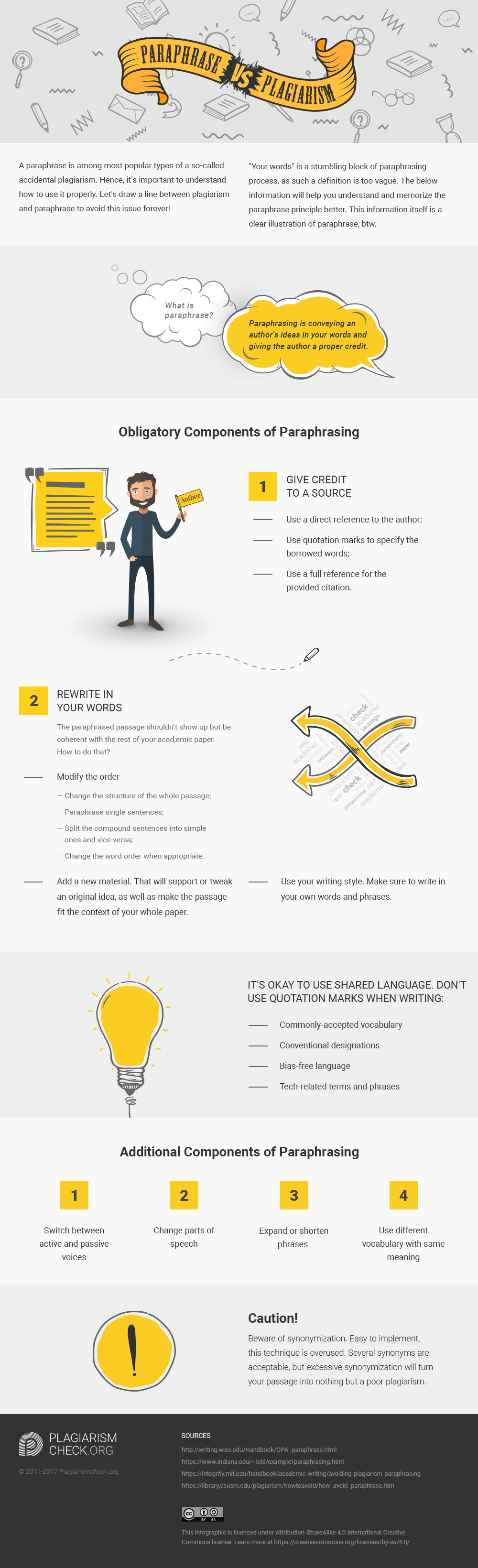
According to the reliable Merriam-Webster DictionaryPlagiarism  -“the act of using another person’s words or ideas without giving credit to that person.” However, it’s more complicated than good old Webster implies.

Types of Plagiarism:

According to the Harvard Guide to Using Sources, there are six types of plagiarism. You can find out more by clicking on the links below.

  1. Verbatim plagiarism – word for word.
  2. Mosaic plagiarism – bits and pieces.
  3. Inadequate paraphrase – language too close to the original.
  4. United paraphrase – using your words to reflect another’s ideas or words with giving credit.
  5. United quotations – using quotations without citing the source.
  6. Using material from another’s work – collaboration is fine, but most be cited from the source.

As you can see avoiding making mistakes is like walking a tightrope at times and as writers it becomes even more important. Below are a number of resources to help you avoid those nasty pitfalls. In addition, I’ve provided a list of the top plagiarism checkers for you to evaluate.