Ask the Experts: Time to Query

It’s time to write and perfect your query letter, but where to start? How long should a query be and what do I need to include?

What is a Query?

The purpose of the query letter is to entice an agent or editor to read and/or request your manuscript. 100-200 words are sufficient for most novels. Plain and simple – it’s a sales pitch.

Some Do’s and Don’ts:

Do’s:

  • Your research. Make sure you are sending your query to the right agent, and the reason is for sending it to her/him is clear. “According to your agency’s  website, you are actively seeking…”
  • Set up your story by conveying what your main character wants above all else and what’s preventing her/him from getting it.  Show who your character is. What are they up against and what they’re made of.
  • Show strong actions, consequences, and emotions.
  • Include a concise summary of your novel’s statistics and appropriate comparative works.
  • Close with a short and bio paragraph.

Don’ts: 

  • Be careful with accolades or listing accomplishments. If you include any, include only the most relevant.
  • Make sure your comp title only if it gives the agent a clear sense of your story and style.
  • Be vague.
  • Forget to thank the agent
  •  Stories are subjective. One agent may love it, another hate it, but don’t give up. Be patient and query on.
Five Essential Elements of a Query:
  1. What you’re selling: genre/category, word count, title/subtitle
  2. Hook – Protagonist, the stakes, and the thing that sets your story apart.
  3. Bio: an option for unpublished fiction writers
  4. Personalization – customize the letter to the agent or editor
  5. Closing – ‘thank you.’

Remember, this will be, perhaps, your one and only chance with this agent to draw them into your story and ask for more. So, do your homework.

Where to find the Right Agent
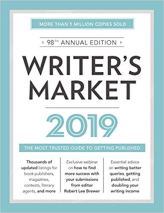
Resources:

What are your tips on writing queries?

I’d love to hear your comments. Talk to me. Tell me your story. I’m all ears and look for me on Facebook at SheilaMcIntyreGood, PinterestBloglovinTwitter@sheilamgood, Contently, and Instagram. You can follow my reviews on Amazon and Goodreads.


Revision Versus Rewriting – What’s the Difference?


book-proofreading.jpg

Annabel Smith

I’ve tasted the victory of typing the last line on my first full-length novel. The exhilaration of writing “The end” lasted for about a day because now, the real work begins. But, where do I begin?

To find out what my next steps involved, I started where I always do – with research and looking at what the experts had to say.

First, let’s look at a few definitions and terms – Here’s what I discovered:

Revision – means to you take a second look; read it through with fresh and critical perspective.

  • includes reviewing and amending the story.
  • is not a one-time run through.
  • often requires a back and forth between drafts. (I’m told many writers go through multiple drafts and revisions before moving to the next stage.
  • it requires a large-scale overview of the story.
  • You’re looking for the overall flow and structure of the story.
    • looking for holes or loose threads
    • organization of the story
    • character development
    • issues of credibility or believability in the plot, character, or settings.
    • logistics/timeline
    • conclusion

Rewriting – When you rewrite an entire scene, chapter, or add additional information to expand a scene, delete an unnecessary character, or make a character fuller.

Note:  Inline annotations are a good way to make note of areas that may require a rewrite.

Editing and ProofReading –  I tend to think these two things go hand in hand.

  • Editing involves getting the words right and making sure the sentence flows.
  • Proofreading means getting into the nitty-gritty of grammar, spelling, and punctuation; line by line. Things to look for during this process:
    • sentence structure and length
    • those pesky waste words
    • weak verbs
    • Remove unnecessary, vague words, clichés, or jargon
    • Remove awkward or mixed metaphors
    • redundancy
    • rhythm
    • smooth transitions
    • homonyms – words with the pronunciation but different meanings; or, two or more words with the same spelling but different meanings.

Finishing that first draft is exhilarating, but don’t let impatience to see it in print cause you to skimp on the revision process. We all want to see our book on the shelves, but we want a polished book one where our readers get lost in the story and not distracted by poor story organization or sloppy typos.

For More on the Revision Process, check out what this expert has to say.

  1. Are You Making These 3 Common Revision Mistakes? By Janice Hardy. 
  2. General Strategies Before Your Proofread
  3. Revising Drafts

Do you have pointers on revising a draft? Please, share with us. I’d love to hear your comments. Talk to me. Tell me your story. I’m all ears and look for me on Facebook at SheilaMGood,  PinterestBloglovinTwitter@sheilamgood, Contently, and Instagram. You can follow my reviews on Amazon and Goodreads.

Ask the Experts: Tips for Self-Editing

 As many of you know, I have been hard at work on my first novel. Currently, my focus has been on getting the story down and for once, have not disappeared down the rabbit hole of editing while I write, although the temptation has been great. After more than two years, I finally can see the end in sight and couldn’t be more excited!

I do plan to hire an editor for this novel, but in the meantime, I will clean up some of the apparent errors.  As a practice, I use three-four editing tools for all my work, and I must say, I find them an essential tool in my writing.

  1. The Writer’s Diet is one of the first tools I use. A free resource, this tool provides an overview of your writing. Insert 100-1000 words to find out if your is writing is lean or flabby.
  2. The Hemingway Editor  – available for both MAC and Windows, provides an incredible array of convenient tools:
  • Use it anywhere;  even without internet connection.
  • Format your prose
  • Publish directly to WordPress & Medium
  • Export to Microsoft Word or other editors – a New feature
  • Send Hemingway highlights to colleagues –  a New feature

3. Grammarly –  an excellent grammar, punctuation, and vocabulary tool.

4.  Autocrit – A manuscript editing software, specifically for fiction writers.

These are my tips, but, since I’m still learning, I checked with the experts.

Jacqui Murray offers specific and detailed tips in her article, 19 Self-editing for Your Writing.  Tips include:

  • eliminating weak/waste  words – very, was, it, but, just;
  • eliminate redundancies and word repetition, and as many dialogue tags when possible.
  • Limiting adverbs, gerunds, qualifiers, prepositional phrases,
  • Secure place and time in each chapter; verify timeline.
  • Change passive to active words and phrases.

To read more from Jacqui and get the details, as well as other resources she can recommend, check out her article.

Other resources you might want to check out, include:

What about you? Do you have some advice for this writer on self-editing? I’d love to hear all about it.  I’m all ears and look for me on Facebook at SheilaMGood,  PinterestBloglovinTwitter@sheilamgood, Contently, and Instagram. You can follow my reviews on Amazon and Goodreads.

You Asked: How do I Prepare For My First Book Signing

I ‘ve been asked, by a friend, to speak to her literary group about my newly released short story collection, Maybe Next Time.
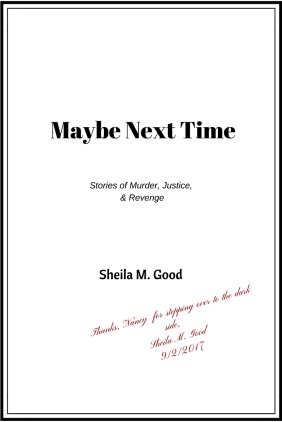
I’ll admit I felt a bit of trepidation upon receiving the invite. I was excited about sharing my work, but a little nervous, but then decided, why not?

I will be speaking about my book, the inspiration for the stories, the Cow Pasture Chronicles and share one of the stories from my collection. It’s a small group and a good opportunity to get my feet wet in the realm of book signings. However, I knew little about being on this side of the table. So, I ask the experts.

How to Prepare for a Book Signing:

  1. Find out from the person/locale what they’re looking for from you. Do they want you to speak? Read an excerpt? Or, is it simply a platform they’re offering to promote your book?
  2. If speaking/reading, it’s important you understand how much time is available to you and prepare accordingly.
  3. Get a ballpark number of attendees, well in advance, to have enough books available.
  4. Have business cards available with your contact, social media pages, website information, and if desired info on your book.
  5. Although many people use electronic e-readers, not all do. Having bookmarks or other promotional items is a great and inexpensive way to get the word out, and as a thank you gift to offer guests.
  6. Use a good pen for signing and have more than one with you.  The experts recommend a gel pen – they don’t bleed and don’t dry out if uncovered for a time.
  7. If the event is open to the public, promote the event – on social media, website, and tell your friends.
  8. Dress comfortably. You may be nervous, and the last thing you need is to feel like your clothes are choking you to death, or worse, you’re wearing a sauna.
  9. Take a bottle of water. Even if refreshments are being provided, you are the one speaking and reading – which becomes difficult when your lips are stuck to your teeth.
  10. Order your books and promotional items well in advance. Showing up empty handed is not cool nor appreciated.

 Signing:

I was surprised how flummoxed I became recently when my sister asked me to her copy of the book. It was my sister for God sake, and I drew a blank. I didn’t know what to write! I’ll admit, I felt foolish, but it prompted me into action.

  1. You don’t have to be clever when signing a book (unless you want to).
  2. Most authors sign with a generic phrase or their name. Here are some typical phrases: All my best, Thanks, In gratitude, Much appreciation, Warm wishes, Your friend.
  3. Dating your signature is entirely up to you. The experts say dating adds value for those books likely to become collectibles in the future.
  4. Signing your full name is recommended, but some authors (not most)  will sign just their first name.
  5. Some attendees will request a particular phrase with your signature. Have a notepad or post-its on the table and ask them to write exactly what they want you to say. This prevents errors.
  6. In addition, for those who want a personalized signature, a  notepad is an excellent aid to ensure you get the spelling of their name correct. Do you realize how many ways you can spell Hailey?Hailee, Haleigh, Haley, Haylee, Hayleigh, Hayley, Haylie. 
  7. Make sure your name is legible.
  8. Practice signing before you go. Decide how you want to sign and what you want to say (if anything) – practice makes perfect.
  9. Relax and have fun. Mingle if time allows and talk to the guests.
  10. Don’t forget to say “Thank you” to your host and the guest attending.

Granted, my book is not War and Peace, it’s a small collection of short stories, but it still represents my work.

I’m honored to have been asked, and I take the invitation seriously, as should you. No matter how large or small the opportunity, be prepared and make it count.

The Pen: 

  • The best pen should be fade proof, UV-resistant, water-resistant, and acid-free (archival or acid-free).
  • Be fast-drying/smudge-proof.
  • Show up well on colored or dark paper.
  • Work on smooth or glossy paper.

So, what do you think? Have other suggestions or recommendations? Share it with us. I’d love to hear your thoughts on the subject. Join the conversation. Talk to me or tell me your story. I’m all ears.