Truth is Stranger than Fiction

images-4:Ninelin.es

Photo courtesy of : google & ninelin.es

It’s an old saying that’s inspired many a story. The problem can come, however, when the plot line or a particular scene is unbelievable to the general audience. On the Premises talks about this very thing in their latest newsletter.

A good example is my own background. I spent the better part of my life in the nursing profession. Medical people have a language of their own and, to this day, I still use many medical abbreviations and terminology. It’s second nature to me, a habit and  the average person, outside of medicine, don’t understand.
confused-baby.jpg:Pixgood

Photo courtesy of: google and pixgood.com

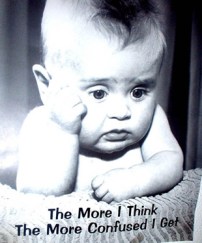
Now, picture the average reader. If I’m going to write a book or story involving medicine, I must be careful to write the story that’s  believable and  understandable to the general audience of readers. Otherwise, they’ll stop reading and or run for a dictionary. Either way, I’ve pulled them put of the story and most likely lost them as a reader.

Do the necessary homework and research when writing, but be cautious. You don’t want the readers eyes to glaze over from info dumps.

Remember the words of Mark Twain.

Truth is stranger than fiction, but it is because Fiction is obliged to stick to possibilities; Truth isn’t.”― Mark Twain

Thanks to On the Premises for this gentle reminder to keep it real or at least believable when we write. Be sure to check out their website for more writing tips and contests.

What do you think?

Get the Breakdown on Writing a Query

Writing a query can almost  be as hair pulling as writing a novel, not to mention, revisions. As a newbie, I didn’t have a clue, but in 2012,  I was fortunate to win a raffle from The Bookshelf Muse. My prize included a free copy of the book, Keep Calm and Query On, and a free consultation with the author, Luke Reynolds.

Luke was amazing and walked me through the process of writing a query for my work in progress (WIP). After our initial phone consult and numerous emails, I had a finished product; a query for Hello Hell. I am extremely grateful for the opportunity to work with Luke.

We don’t always have those types of opportunities, but this week on Query Tracker Blog, Adriana Mather, wrote an excellent post on queries. Breaking Down the Query, covers the inner workings of writing a query, and the best methods to achieve success.

Thanks Ariana, this one I will be keeping in my important file. If you want to know more or find yourself ready for a query, please check this one out.

Breaking Down the Query (the story of a colorful noob getting results)

Interested in a Free Revision Workshop?

It’s here and free. If  you have a work in progress (WIP) or competed a draft manuscript, you’ll love this opportunity to walk through a detailed revision with Janice Hardy.

Fiction University: Janice Hardy

Today is day one of  Fiction University’s Month-Long-at- Home Revision Workshop.  Today’s lesson focuses on your story structure.

Ms. Hardy provides a number of links, for outliners and pantser’s alike, to begin the process of analyzing your structure. 

Need to play catchup? Find the preliminary preparation here on her introductory page.

Thanks Janice, for this amazing opportunity.


50 Shades of Red

Well, well, well. Seems the hottest topic in the universe these days is the movie/book, 50 Shades of Grey. Released in March of 2012, the book by EL James  amassed sales of 10 million copies within the first six weeks and surpassed the 100 million mark last week. The movie, released President’s Day weekend set box office records with $87.1 million dollars in a single weekend. And the world is seeing red.

The movie’s  success brought with it, torrid moralistic judgments and rantings from  every corner. Accusations of setting feminism back decades, glorifying the abuse of women, to rehashing the books inadequacy as a literary accomplishment, “The worst book ever written,” can be found on everywhere.

I admit, I haven’t read the book nor seen the movie. But, my curiosity is piqued. First, I’m curious why 68% of the audience belong to women. If it degrades and abuses women, or puts feminism back decades (a nice thought), what are women doing lining the theater seats? I have my theories, but that’s another post.

I surmise this movie, while making headlines now, will fade into the background and be forgotten, unlike feminism.  Society is still reeling and feeling that impact (another post for another time).

Secondly, I’m curious because this author, unknown before March 2012, has become a zillionaire in a matter of two and half years! What writer or aspiring writer doesn’t sit up and take notice of that little fact? I want to know, what made this book, it’s story so successful? And, no matter where you stand on the content, a success it is.

Larry Brooks at Storyfix.com had an excellent blog post on this subject and I believe it is well worth reading. He says it’s about story physics and I have to agree. In all the ruckus, we writer’s are forgetting what makes a good story.

Mr. Brooks explains what we’re missing in all of the hoopla, far better than I can here. Check it out: What you May be Missing about “50 Shades of Grey,” and let me know what you think.