Self-Editing: Fighting Emotion with Logic

An excellent post on self-editing with practical advice. Thanks to the quintessentialeditor.

Corey Truax's avatarCorey Truax

cute kitten.jpg Please don’t sacrifice me to the writing gods…

You’ve written your book.  The masterpiece has been marinating in a drawer (or buried on a hard drive) for weeks.  Somehow, you managed to not tear into it early, despite it whispering into your ear at night.  Let’s face it, you both needed some time and space from one another.  Good job.  The time has come though.  You unlock the drawer or double click that icon and staring you in the face is months worth (maybe more) of neatly typed words. The manuscript gazes back at you with worried eyes.  It knows.  You are about to tear it to pieces.  The question is; will you tear yourself to pieces in the process?

Many people think writing a book is the hardest thing you can do.  Then an editor comes along and breaks your heart.  As an editor, telling a writer…

View original post 1,087 more words

Are Your Commas in the Wrong Place?

images-12One would think with years of education stored in my brain I would have conquered sentence structure and those damnable commas – I haven’t. If you’ve been following my blog, you may remember I wrote about this some time ago in Confessions of a Comma Whore.

Recently, I had the opportunity for an editor to review the first chapter of my novel. I was pleased with his comments and surprised to see only a few red marks on the pages.

Here’s some of what he had to say:

“You need to review participial phrases, which is quite a common mistake. Additionally, I recommend learning about restrictive VS nonrestrictive phrases, which will help you better place a few troublesome commas.”

Well, Hells Bells! It looks as if those damn commas will haunt me till I die. Thank God for editors. Forgive me if I’m insulting anyone’s intelligence but I thought I’d review these “quite common mistake’s.”

Participial Phrases

participle is a verb used as an adjective, and they end in – ing, d, t, or n.

An example: Barking dogs (Bark = verb)

A participial phrase is a group of words containing the participle and any complements or modifiers.

xbasic_diagram_participial_phrase.jpg.pagespeed.ic.QxRA8-JccHThanks to Grammar Revolution, here’s how a participle phrase looks diagrammed:

Restrictive versus Nonrestrictive Clauses

restrictive clause is part of a sentence that explicitly restricts the noun.

Dogs that jump on people annoy me.

The words “that jump on people” restrict the kind of dogs I find annoying. Restrictive clauses do not require commas.

A nonrestrictive clause provides additional information but when left out doesn’t change the meaning of the sentence.

My, fluffy white, Bichon Frisé is a lap dog.

Removing the words “fluffy white” doesn’t alter the meaning of the sentence. It just provides more information. Non-restrictive clauses require commas.

I did well in college. English was one of my favorite subjects. The fact that commas remain my nemesis can only be explained in one of two ways – This Southern gal likes to write the way she talks, or my brain cells just aren’t what they used to be.

Many thanks to James from Storymedic for his feedback and encouragement.

“… very minor corrections. I could immediately tell that you possess a more developed craft, well beyond average.”

Want to know more about those pesky participles and clauses? Check out these resources:

  1. Grammar Revolution (Diagram it)
  2. Grammar Girl: Quick and Dirty Tips
  3. The Elements of Style by Strunk and White
  4. English Plus
  5. Purdue Owl Online Writing Lab
  6. The Grammarly Handbook

Do you still struggle with certain grammar issues? I’d love to hear your comments. Talk to me. Tell me your story and look for me on Facebook at SheilaMGood,  PinterestBloglovinTwitter@sheilamgood, Contently, and Instagram.

What’s Your Favorite Thesaurus? Share It To Unlock The WHW Prize Vault


It is a writer‘s job to draw readers into the fictional story so completely that they forget the real world. Our goal is to render them powerless. Despite the late hour, the mountain of laundry, or workday ahead, they cannot give up the journey unfolding within the paper-crisp pages before them.

Strong, compelling writing comes down to the right words, in the right order. Sounds easy, but as all writers know, it is anything BUT. So how do we create this storytelling magic?

How can we weave description in such a way that the fictional landscape becomes authentic and real—a mirror of the reader’s world in all the ways that count most?

The Setting Thesaurus DuoWell, there’s some good news on that front. Two new books, released this week may change the description game for writers. The Urban Setting Thesaurus: A Writer’s Guide to City Spaces and The Rural Setting Thesaurus: A Writer’s Guide to Personal and Natural Spaces.

These books look at the sights, smells, tastes, textures, and sounds a character might experience within 225 different contemporary settings. And this is only the start of what these books offer writers.

In fact, swing by and check out this hidden entry from the Urban Setting Thesaurus: Police Car.

And there’s one more thing you might want to know more about…

Rock_The_Vault_WHW1

Becca and Angela, authors of The Emotion Thesaurus, are celebrating their double release with a fun event going on from June 13-20th called ROCK THE VAULT. At the heart of Writers Helping Writers is a tremendous vault, and these two ladies have been hoarding prizes of epic writerly proportions.

A safe full of prizes, ripe for the taking…if the writing community can work together to unlock it, of course.

Ready to do your part? Stop by Writers Helping Writers to find out more!

Do you have a favorite thesaurus? I can’t wait to add these two new resources to my library. What about you? I’d love to hear what you think and let Angela and Becca know too.

Talk to me. Tell me your story and look for me on Facebook at SheilaMGood,  PinterestBloglovinTwitter@sheilamgood, Contently, and Instagram.

How to Show Anger in Your Characters

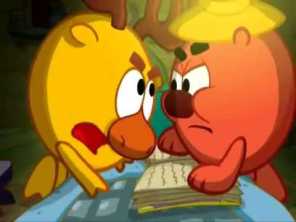
hqdefault-2Daily Post Prompt:  Angry

Anger – a strong feeling of annoyance, displeasure, or hostility. Usually consisting of a three-part reaction: negative thoughts, frustration, and acting out (screaming, shaking fist, or violence).

Whether it’s in the form of nasty tweets or highly-charged protests, the media and social networks are rampant with demonstrations of anger.  And, although most people think anger is a negative and counterproductive emotion – it does have benefits worth noting.

Benefits of Anger to Individuals

  1. It motivates us.
  2. Makes us feel more confident.
  3. Acknowledging anger helps lower stress and pain.
  4. Expressing anger rather than bottling it up, benefits interpersonal relationships.
  5. Provides insight if we’re open to looking inward.
  6. Aids negotiations.

In life, anger isn’t always a bad thing. But, how do we use it in writing? Part of making our characters well-rounded and real, is capturing their emotions – including anger. Anger equals conflict and conflicts move the plot forward.

Reasons Characters get Angry:

Just like us, our characters get angry when they feel helpless, confused, frustrated, jealous, embarrassed, or hurt, to name a few.  But, how do we show anger without being melodramatic? First of all, forget the clichés and don’t rely entirely on the actions of the character (remember show don’t tell).

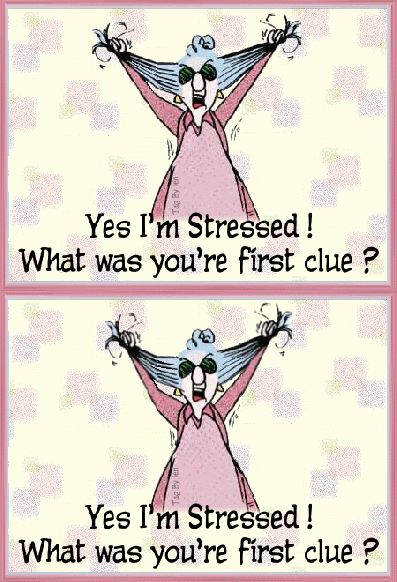
We show anger in the way we speak, the tone of our voice, and body language. Below is a small sample of the ways you can show anger in your characters.MAXINE1131313

Angry Speech:

  • Stammer with rage
  • Taunt
  • Sputter
  • Scream
  • Speak in grudging tones
  • Sarcasm

Angry Tones of Voice:

  • Strained
  • rising an octave
  • Tinged with menace
  • Dripping with Spite
  • Cool, icy
  • Voice shaking

Facial Expressions:

  • Scorching look
  • Eyes narrowing with contempt
  • Withering stare
  • Regard bitterly
  • Warning look
  • Glower
  • Eyes that are cold
  • Nostrils flaring
  • jaw clenching
  • Eyebrows drawing together
  • Reddened face

Other Body Expressions:

  • Clenching fists
  • Stomping
  • Punching, kicking, throwing
  • Body tense
  • Veins visibly pulsing
  • Breathing deeply
  • Muscles quivering
  • Slamming doors, etc.

For more on how to write about anger, check out these resources:

  1. 37 Ways To Write About Anger by Amanda Patterson
  2. Creating Emotional Frustration in Your Characters61zuks2byenl-_sx348_bo1204203200_
  3. Emotional Rollercoaster: Writing Anger by Apryl Duncan
  4. The Emotion Thesaurus: A Writer’s Guide to Character Expression
  5. The Writer’s Digest Sourcebook for Building Believable Characters 1st edition by Marc McCutcheon 51pt853khal-_ac_ul480_sr312480_

Anger is one of those emotions that make us uncomfortable, but it is an essential component of who we are and thus your characters.

How do you show anger in your characters?

I’d love to hear your comments. Talk to me. Tell me your story and look for me on Facebook at SheilaMGood,  PinterestBloglovinTwitter@sheilamgood, Contently, and Instagram.