Call Me Florence

The Daily Post Prompt:  Ballerina Fireman Astronaut Movie Star
When you were 10, what did you want to be when you grew up? What are you now? Are the two connected?

I don’t remember much about the age of ten. For sure, I wasn’t focused on a career. Growing up in a small town, I spent my days as a child playing outside with my sisters and brother or a friend. If anything, I thought about becoming a wife and mother.

The one thing I do remember wanting to be when I grew up was,  a non-smoker. Having grown up in a smoking household, I hated the smell of smoke and the stench that permeated every surface. At the young age of nine, I made the conscious decision to set a different and healthier path for myself. I would never smoke. It was the first step toward my career and realizing what I really wanted to be when I grew up – Florence Nightingale.

~~~~~~~~
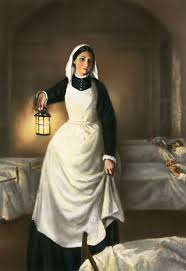
images-8Florence Nightingale surfaced while I was holding court with three preteen boys in the basement of their home. Our parents, long time friends, were upstairs visiting. Why I came along for the visit, escapes me now.

Bored, I perched up on top of the washing machine as if I owned the world, and the boys gathered round. A precocious adolescent, developing ahead of most of my friends, I’d learned years ago my blonde hair and green eyes were an asset. A subtle flip of hair or intent gaze seemed to work magic.

All three boys stood around the washer, looking goo-goo eyed. Elbows propped on the edge and baby-fuzzed faces cupped in fidgety hands, they couldn’t take their eyes off me as I regaled them with stories of becoming a missionary nurse and traveling the world to help the sick and infirmed.

Of course, I could’ve been speaking jibberish for all they cared; adolescent boys will believe anything given the circumstances. I loved the attention using every bit of my wily teenage charm on those six sets of adoring eyes.

I’m guessing, based on the oldest boy’s level of attention, his mom spent a busy day laundering sheets the next day. Just saying, I could be pretty disarming for a young lady. And, when you’re fifteen, unmitigated adoration goes a long way feeding that demon.

I grew up in a small southern town. The middle child of three girls, and a younger brother. Two half sisters came later when Mom remarried. Maturing ahead of most of my classmates, I learned early on, when a boy in my class bumped into me, boobs created a lot of attention. He  pointed at my well-developed chest and yelled for the whole class to hear, “She’s got them things.” A smart girl, I caught on fast; discovering that  my assets, while unwelcome at first, had advantages.

He and his friends followed me around the playground for weeks until I had enough and reported them to the teacher. Attention, although nice  could also be tiresome. It would be on my terms or not at all.

Over the years, more than those three young boys, hanging onto the side of the washer and my every word, would accuse me of sending double-whammies with my green eyes, but I digress.

As usual, when you make broad declarations at the age of fifteen, they rarely come true; mine were no exception, at least, not in the strictest sense. I didn’t do the missionary thing, not the way you think, but in 1972, Florence Nightingale followed me to nursing school.

The satellite branch of the University of South Carolina, less than an hour’s drive from home, offered the closest associate degree nursing program.  With four younger kids left at home, there would be no dorm room or college campus experience for me; I’d have to commute. I didn’t mind. Contrary to my precocious adolescence, Florence and I weren’t the partying kind.

One of the first assignments I received in nursing school included keeping a personal journal to record why we chose nursing and our experiences during the first semester. Yadda, yadda, yadda. The assignment sounded juvenile to me, more like high school than college. But, to the professors, the journals were serious business, counting a third of our grade. If that’s what they wanted, that’s what they’d get, with a bit of a twist.

From day one, I signed my journal Florence Nightingale. Of course, identifying myself, on the inside cover, to get credit where credit was due. Every entry went under the name of Florence, and my professor’s reaction? Oh, my God, she loved it.  She and Florence had quite the rapport going the whole semester. Based on her graded comments to each entry, you would have thought she was communicating with the dead.

Now, don’t get me wrong. A good student, I studied. While others played hearts in the canteen area, I hit the books. By the end of my first semester of nursing school, I’d learned more than the funny language of medicine or how to stick the butt of an orange (nothing exciting). In fact, my “assets” paled in comparison to what the journal and Florence taught me. I’d discovered the art of bullshit and spin; the power of words.

No doubt, I had big plans. I’d be the next Florence Nightingale, work to help cure cancer, or the next disease threatening to wipe out humanity, and I swear to God, I think my professors believed it too, but then, that might just be me. First semester – I earned an A.

I’d love to hear your comments. Talk to me. Tell me your story. And as always, you can follow me on Facebook at SheilaMGood, PinterestBloglovinTwitter@sheilagood, and Contently.

You Asked: Secrets That Will Help You Get Published

Welcome to another, You Asked, the Experts Answer, segment. This week ‘s question is: Is there a secret to getting published in literary magazines?

Well yeah, sort of.  Lincoln Michel, a Buzzfeed contributor, takes us behind the scenes in his two-part article, The Ultimate Guide To Getting Published in a Literary Magazine.

This is one of  the most in-depth articles on getting published I have ever read. We’ve all heard the tips :

  • Submit often
  • Read the magazines
  • Follow the guidelines
  • Proofread

But, we’ve never understood what happens behind the scenes or how literary magazines actually select those they choose to print. Well, now you will. Lincoln goes into great detail about editors, readers, the slush pile, solicited and non-solicited work, and even “carpet bombing.”

“Most editors would probably consider at least 60% of the slush pile to be unpublishable, period. Twenty percent shows promise but needs some work, and 10% is publishable but not in the journal being submitted to. That leaves 10% of work that might deserve real consideration.”

Here’s a few important things I gleaned from the article, but I still encourage each of you to read it in its entirety.

  1. Submissions go first to the slush pile.
  2. 60 % of those in the slush pile are unpublishable.
  3. Acceptance rates are about 1% for good magazines.
  4. Submissions are sometimes solicited by editors or through agents (I had no idea).
  5. 20-100% of works published come from the slush pile.
  6.  Connections are important.
  7. Editors are not the first to read your work, readers are (typically 2).
  8. Readers are volunteers, or students.
  9.  The first paragraph and page is important in making it past the readers.
  10. Persistence in submitting is one of the main keys to success.
  11. Know the Cover letter No-No’s (see the article).
  12. Selective your top 3 to 5 magazines and go for it; again & again.

Where to Find the Right Market for Your Story?

Many sites offer information on Magazines open for submission. Here are my top five resources.

  1. Every Writer’s Resource 
  2. Duotrope
  3. The Review Review
  4. The Writer’s Database
  5. Clifford Garstang’s Pushcart Rankings

I’ve only given you the teasers from the article, but I can tell you it’s one worth keeping for the files. What do you think? Are you seeing submission success? Do you have a favorite market site?

I’d love to hear your comments. Talk to me. Tell me your story. And as always, you can follow me on Facebook at SheilaMGood, PinterestBloglovinTwitter@sheilagood, and Contently.

You Asked: 7 Things You Can do to Identify Your Genre

Welcome to another, You Asked, the Experts Answer, segment. This week ‘s question is: How do I know If I’ve chosen the right genre?  

Choosing a genre is something many writers struggle with and the biggest reason is being  unfamiliar with the different genres. Unfamiliarity breeds confusion, which in turn makes it difficult to know which to choose.

Whether you plan to self-publish or go the traditional route, selecting the right genre is essential for success. After all, you want people to find your book.

Why is Genre so Important?

  1. It gives you clarity for pitching to the right agents.
  2. It’s how the publishing world will view your work.
  3. It’s easier to find your target audience.
  4. Makes it easier for readers to find your book.
  5. Helps you write a succinct pitch.
  6. Helps the industry know how to market your book.

7  Easy Steps to Find Your Genre

  1. Ask yourself: What readers would like my story? What books are similar to mine?
  2. Review Amazon’s bestseller list and check out the list of genre’s.
  3. Go to your neighborhood bookstore, look at where the books are shelved. Fantasy? Mystery?
  4. Select five-six books and  read the descriptions; make a note of the core story in each. What stands out?
  5. Look at titles – can you determine the genre?
  6. On what shelf do you see your book?
  7. Know what your story is about and be able to verbalize it in a succinct manner.

The Downside of Getting it Wrong

  1. You will get rejected and your book will end up in the slush file.
  2. You won’t know how to market your book, which in turn makes it hard to sell.
  3. You’ll miss  your target audience and, likewise, they will miss your book.
  4. Getting it wrong will make agents think twice about you and your work.

We all want to see our books on Amazon or our local bookstore shelves. But, in order to do that, we must not only write a compelling story but know who our audience is and choose the correct genre. For more information, check out these great resources for writers on writing in your genre.

Resources:

  1. Identify Your Novel’s Genre
  2. How to Pick the Right Genre for Your Novel
  3. Where Does My Book Fit? Figuring Out Your Genre
  4. Don’t Know Your Book’s Genre? Here’s What to Do
  5. How to Pick the Right Genre for Your Novel

I’d love to hear your comments. Talk to me. Tell me your story. And as always, you can follow me on Facebook at SheilaMGood, PinterestBloglovinTwitter@sheilagood, and Contently.

You Asked: The Ultimate Guide to Writing Genre’s

Welcome to another, You Asked, the Experts Answer, segment. This week ‘s question is: What are the major literary genre’s?

In simple terms, genre is the type of story you’re writing and it’s best if you know where your story fits before you begin; however, sometimes it evolves as your storyline develops.

Knowing where your story belongs is important. Agents and editors look for books that fall within the genre they represent and choosing the right one is invaluable in marketing. But, deciding on a genre can be a bit confusing given the number of sub-genre‘s and the way they overlap.

Major Genre’s Include:

  1. Romance
  2. Crime & Mystery
  3. Thrillers
  4. Fantasy
  5. Historical Fiction
  6. Science Fiction
  7. Horror
  8. Literary
  9. Mainstream

In addition, Women’s Fiction and Upmarket Fiction are two genre’s I believe it’s worth mentioning. These two fall between literary and mainstream fiction.

Women’s Fiction is more commercial than literary. Usually written by women, for women, and the stories (about women) appeal to a large mainstream audience. You can find more about this genre at Find Me An Author.

Upmarket Fiction is a blend between literary and commercial fiction. Relatively new, this genre is growing in popularity, especially with agents. Check out Chuck Sambuchino’s, article on Upmarket Fiction at Writer’s Digest.

 Sub-Genre’s:  Too numerous to include in this post, I’ve provided you  these resources for examples of the most popular sub-categories.

  1. Sub-genre DescriptionsWriter’s Digest
  2. Short Prose Genre’s – Writer’s Relief
  3. Sub-genre Definition –  Book Genre
  4. The Book Industry Study Group

To date, there is no complete list of genre’s, but The Book Industry Study Group (BISG), working with publishers, has compiled the most comprehensive list.

To find out more including the most popular genre’s, free downloads, and access to the book genre finder, check these out.

  1. Now Novel outline the major genre’s in their post, Genres of writing: How to choose your story’s vehicle.
  2. Writer’s Digest offers a free genre description download.
  3. Writer’s Relief offers a whole series on Genre Defined.
  4. Book Genre is one of the best sites and offers the book genre finder with complete listings.

In the next segment of, You Asked, the Experts Answer, we’ll look at: How do I identify my books genre?  

I’d love to hear your comments. Talk to me. Tell me your story. And as always, you can follow me on Facebook at SheilaMGood, PinterestBloglovinTwitter@sheilagood, and Contently.