
Looking Back at 2016

My mother once told me, the older you get, the faster time flies. She was right. The time between October 1st and the New Year gets shorter every year. It’s as if I blinked and we’re on the precipice of Valentine’s Day.

This is my first real post since taking a medical leave just after Thanksgiving. I owe big thanks to all my Cow Pasture Contributors and guest authors for helping to keep the conversations going while I was away. I hope you enjoyed their excellent posts.

I’m not at a hundred percent, but I’m getting there. In the meantime, I thought the best way to get back into the groove was to take a look back at 2016 in the Cow Pasture.

For the last couple of years, WordPress did a great job sending out an annual year-end review for WordPress bloggers. However, this year, they decided against it. So, I decided to do my own.

Mine isn’t as artistic as the one offered by WordPress, but it was definitely enlightening.

The Numbers:

In 2016, there were 167 posts published; growing the total archive of this blog to 480 posts. The most popular day for posting- Friday and the most popular time – 9:00 am.

Traffic to the Cow Pasture almost doubled with 10,086 views; 5,543 visitors. My longest streak was in the month of April when I participated in the A-Z Blogging Challenge – posting daily for 30 straight days. The busiest month of the year was July with 2062 views.

The most popular post was Dark Cloud Hovering, with the most views in one day, 341 and a whopping total 977 views. This post continues to be very popular with more than 1742 views on Stumbleupon. The post receiving the most comments: My Top Twenty Websites for Writers – 56 comments and 196 views.

How did they find Me? The top referring sites in 2016 were:

Reaching the World – One Word at a Time.

The Cow Pasture Chronicles reached more than 100 Countries and regions.
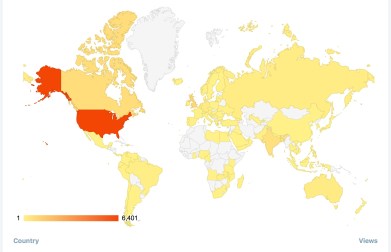
countryviews2016countriesnos2

To all my readers, Thank you, and, particularly, those who took the time to comment, interact, and share. Feedback is the lifeblood of the blogging community. I encourage each of you when you read something helpful, inspirational, or thought-provoking- speak up, say something, comment and even debate. Communication, after all, is what brings us together.

Here’s to an even bigger and better year for all of us.


I’d love to hear your thoughts on the subject. Join the conversation. Talk to me or tell me your story. I’m all ears.

Amplified Voices

Another guest post by K. Alan Leitch. My fellow fence-jumpers may not see me here for awhile, but feel free to stop by my blog for samples of my writing and tips that have helped me write, including my current series about YA fiction, The “Right Age” for Young Readers.

Give a man a megaphone, and he thinks he’s in charge.

loudspeakers

The end of fun at the beach…

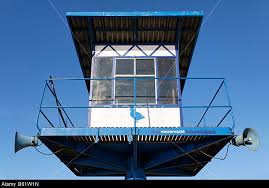
It’s always been that way, really. To a man—much more so than to a woman—an amplified voice is a sign of importance, and of authority.  I live this as I cycle past the shorelines near where I live; a few years ago, amplification systems were installed in the lifeguard towers, and the concept of a quiet day at the beach changed forever. The surf that once hushed the cries of gulls was replaced: replaced by demands that we swim closer to shore, warnings about sun exposure, and general advice that it might be simplest to avoid fun altogether.

So, men with megaphones now rule our local beaches, but this is nothing new. History is rife with men who have shouted to be obeyed.

puritan

Would you attend a play against his advice?

Portraits of Elizabethan England make the whole place seem like it was a shouting match.  Shakespeare and his contemporaries would shout from stages for the penniless to enter their theatres, while The Puritans would shout, from platforms outside, for the upper-crust to avoid those theatres or risk damnation. Both sides had a following, and I wouldn’t be surprised if victory depended on whose voice was louder one day or the next. Without megaphones, though, they were pitting their natural gifts—mostly tonsils and lungs—against one another. Our pantalooned patrons may have been limited by their voices, but that only made them shout more loudly for an audience.

tokyorose

Rose’s amplified voice demoralized the allies.

Time rattled forward, then, through an endless string of armed conflicts, until Japanese combatants during World War II had their TERA Rifles and Type 10 Grenades supplemented by long-range radio broadcasting: the ultimate megaphone of the day. Allied servicemen spent hours of their day listening to Tokyo Rose, whose voice was louder than theirs, so could depress them with all the demoralizing news of the war effort. While it is true that Tokyo Rose was a woman—probably several women—it doesn’t take much knowledge of history to know that men put her behind that microphone and handed her those scripts. Essentially, they were men with megaphones, trying to take charge of the world.

It’s difficult, indeed, to block out a megaphone entirely. We think we are ignoring them, but still we purchase clothes more expensive than we need, and cower from the broadcast threats of cowardly terrorists. Occasionally, good people might even elect a megalomaniac with a megaphone to political office. Resisting their noise and their allure is often impossible.

Where, then, are the messages of substance… the messages from quiet voices like Gandhi’s, and from amplified voices like Martin Luther King’s? This is where our zeal to be heard becomes sobering, because those messages are still out there: we just can’t hear them over the rush and chaos of all the boy-bands and cologne commercials. Each invitation to choose our own entertainment are lost in a thousand others; each urging to save our own souls are drowned in depravity. When one man teaches tolerance and another man hatred, we listen to the one whose voice scares us the most.

Now that everyone has a megaphone, it seems that we have flashed back to the Elizabethan culture, when those with the strongest tonsils would be heard.

It’s always been this way, really. Give a man a blog, and he thinks he’s in charge.

– More Words from K. Alan

SaveSave

Show, Don’t Tell (unless you’re in Kindergarten).

Another guest-post by K. Alan… sort of. The thing about sudsy water is that it keeps clothes from growing diseases, but causes timber floors to grow them. With apology, I only have time for a reblog.

This is one of the posts from my series exploring some of the most common (and sometimes baffling) advice that writers hear. The other posts in the series are about Writing What You Know, Starting in the Middle of the Action, and Knowing your Target Audience.

Let me know your thoughts!

kalanleitch's avatarWords from K. Alan

Continuing my series, ‘How to Follow Writing Advice that Makes No Sense,’ please comment with your ideas of when it is better for writers to ‘show’ and when to ‘tell.’

showntell Children were never expected to interpret the trauma in a budgie’s past.

Do you remember your favorite part of kindergarten? While I am tempted to name ‘Nap Time,’ memory forces me to acknowledge that naps only became precious to me later in life. No, my favorite part of kindergarten—and probably yours—had to be ‘Show and Tell.’ These were the moments that I could bring in my tricycle, greeting cards or guinea pigs, and allow my classmates to gawk enviously at them while I supplied detailed narrative about their mechanical, emotional or bodily functions. In kindergarten, detail and clarity were rewarded, and Mrs. Arbuthnott would confirm with her warmest smile as she fought to keep from nodding off during the fourteenth minute…

View original post 486 more words

Constant Change

This is a guest-post by K. Alan Leitch: another attempt to express what has been troubling me about the friction between creativity and social media. Please visit my blog for tips that have helped me to write, and look for  samples of my fiction from the menu of my projects page.

oceanThe ocean is constantly changing.

It churns millions of gallons between continents every year, and each cupful of water on one beach could well have visited another. Enslaved to tidal forces even greater than itself, movement and change are essential to the ocean; they keep the life underneath it thriving, and sculpt the land between it. A still ocean, one imagines, would surely herald a dying world.

Of course, the ocean isn’t all that changes. Timber wheels evolve into rockets so powerful that they break the force of the very gravity holding that ocean here, so that we can watch a privileged few explore the distant force of those tides. Literature changes, from just a few men being watched playing women on a small wooden stage, to women directing masterpieces that are watched on screens worldwide. And communication changes, too, perhaps most of all; a single letter that was once an act of true devotion is now a daily expectation, to be read and discarded with a swipe.

All the while, the ocean keeps churning, its water travelling the world and pausing only to freeze, for a time, near one pole or the other. Inky around life we have yet to discover, the ocean feels just as playful stippled with tattoos of sunlight at its surface. Millennia past the time that its depth began to vary, the ocean continues to vary it; those depths crush crust beneath it, and the shifts in that crust make it quake.

From some change in pride, though, we no longer allow ourselves to quake. The fears we once held—fears of heights, and of speed, and of demons—have been transferred to entertainment, with roller-coasters and cinemas the only places left we allow ourselves to scream. Where darkness once drove us to cower with our families, it now invites us out into cities to seek some sense of family from strangers. The only fear we have now—the only real fear, that we feel every day—also comes from a change in us.

Where most of us once feared being watched, we now crave it. We crave it so badly that we fear the moment it stops.

So we tweet shrilly when once we pondered, and our walls are now for posting instead of for privacy. We journal, and we blog, then we wait and we waver and we watch, until a message appears that makes us feel like someone might be watching us back. Our philosophy of existence has moved from ‘I think therefore I am,’ to believing that ‘I am’ only when the opinions that ‘I think’ appear on the devices of others. Thought has become the effect rather than the cause.

Still, the ocean keeps changing, too. That cupful of water that travelled and froze—then thawed, so it could travel again—has come all the way back to the beach where it started. The churning waves roam from the same deep blue across the same stripes of green as they shallow, foaming into the familiar bronzed shores that they always have.

Perhaps water doesn’t recognize where it is, where it’s been, or when it’s returned. Perhaps people don’t, either.

But the ocean, at least, is constant.

– More Words from K. Alan


SaveSave