How to be an Effective Critique Partner

Critique_005I’ve been bogged down this weekend with family and community events. So, I’m sharing an oldie but goodie, with a few tweaks and additional information. Enjoy.

Critiques are a part of every writer’s life. Whether it’s a one on one partner, or a group providing feedback. Having another set of eyes on your stories, essays, or novels is essential for growth and success.

Accomplished writers already understand the value of a good critique partner. For newer writers or those who have yet to take part in a group, I’d like to share my critique cheat sheet. I hope you’ll find the information provided here helpful.

A Few Things to Remember:

  • The format and function may differ from group to group.
  • Know the rules before joining to ensure the commitment is one you are willing to make.
  • If you don’t know the group’s process, ask before your first meeting.
  • Don’t  rubber stamp each submission presented with, “I loved it,” without providing further constructive feedback. Doing so is unfair to the author. Those who submitted work want and deserve a genuine response and critique.
  • Critique groups are not about safeguarding a writer’s feelings. It’s about providing quality feedback.
  • If this is your first group, familiarize yourself with the terminology groups use. (genreprotagonist, antagonist, point of view (POV), voice, conflict, backstory, info dump, pacing, opening and resolution).

 My Cheat Sheet for the Short Story Critique and Things to Consider:

  1. Did you enjoy the story?  If not, why.
  2. Could you identify the story’s setting? Or, did you get lost in too much backstory?
  3. Did the story engage you and draw you in? Did you want to keep reading?
  4. What about the opening sentence or paragraph? Did they make you want to read further. If not, why? What made you hesitate?
  5. Was the protagonist clear to you? Did you understand the goals? Did you have enough information about the main character? Did you like the character or care about his/her situation (goals versus conflict).
  6. Were the stakes facing the protagonist, high enough to make you care?
  7. Did you find the dialog believable? Too much internal dialogue?
  8. Were you able to identify the genre?
  9. Did the story progress in a natural flow, or were there places that left you confused? Explain.
  10. Was there a resolution? Did the ending make you happy or, leave too many unanswered questions?
  11. Could you identify the theme?
  12. Explain the things that gave you pause. Make notes in the margins of the submitted piece indicating pertinent information. It could be a wrong word choice, sentence length, credibility, pacing, or something else.

Articulating your impressions provides the author with specific feedback. They can then decide to use or not use the information to strengthen their story. Sometimes, we’re too close to our work to see the flaws. Another set of eyes helps point out the weaknesses or holes in our story.

Good critique partners are an invaluable resource and asset to writers of all levels and I encourage you to find one in your area or online.

Want more information on critique partners and groups? Ryan Lantz gives excellent pointers, in his post, Critique Partners 101: Everything You Need to Know Before Pairing Up.

Interested in starting a group? Janice Hardy, from Fiction University, provides the lowdown on how to start a group, Are You Looking for a Critique Group or Partner?

Here’s to wonderful critique partners.

I’d love to hear your comments. Talk to me. Tell me your story. And as always, you can follow me on Facebook at SheilaMGood, PinterestBloglovin, Twitter @cofcmom, and Contently.

Are You a Free-Thinker? Maybe, Maybe Not

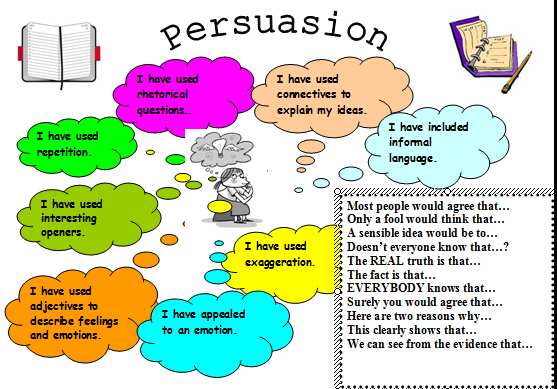
Day 11 of the My 500 Words Challenge! Write a letter or appeal, something that persuades your reader to join the cause, take sides with your movement, or simply try something new.”  

Phot courtesy of www.michellehenry.fr & Google

Photo courtesy of http://www.michellehenry.fr & Google

“Persuasion is human communication designed to influence the autonomous judgments and actions of others.

I hesitated to do this prompt because of the climate of disagreement prevalent in our society these days. I won’t go into the issues, we all know what they are, but to say there is division between opposing groups is an understatement. The biggest reason for that division is spin, influence, manipulation, or more accurately the art of persuasion.The media tell us there’s a consensus regarding these issues, but is that true?

So, for this challenge, I’m not going to try and persuade anyone about anything. In this red-hot societal climate, I’d be rowing upstream without a paddle. Instead, let’s talk about how we are persuaded.

Think you’re an independent thinker? Think again; with the massive presence of social media, we’re anything but free thinkers. Not yet persuaded? Consider the following studies. Not all persuasion is wrong, but being able to tell the difference between gentle persuasion and manipulation is important.

In his bookInfluence: The Psychology of Persuasion,Dr. Robert Cialdini’s Regents’ Professor Emeritus of Psychology and Marketing at Arizona State University, shares six basic psychological principles used for persuasion. I’m sure when you think about it, you’ll recognize these behaviors of influence.

1. Reciprocation – Trespond to (a gesture or action) by making a corresponding one. Example: Your co-workers surprise you with a gift for your birthday. When you receive a request to contribute a donation to buy a gift for another co-worker’s birthday, you reciprocate, even if you don’t care for the person. After all, she contributed to yours. You reciprocated with a donation, but you were persuaded  by a sense of obligation. I imagine you can think of other examples where this plays out day-to-day. We’ve all been invited to a friend’s Tupperware, jewelry, or a cookware party where everyone in attendance bought something. Were you the lone individual who didn’t buy an item? Doubtful. 

2. Scarcity – The state of being scarce or in short supply. You’ve heard the old saying, We always want what we can’t have. How many times have we read in the paper or an on-line news account of a store closing or product being discontinued? What happens next? The sales skyrocket because the product or service has become scarce.

3. Authority – The power or right to give orders, make decisions, and enforce obedience. A person with extensive or specialized knowledge about a subject; an expert.  The power to influence others, especially because of one’s commanding manner or one’s recognized knowledge about something. We routinely accept the word of a person or organization, we rarely question experts; think doctor.  We don’t go to see a dentist for a heart problem. Likewise, we seek out an attorney specializing in the particular type of law, we require; think divorce or criminal. Jurors listen, believe, and trust the testimony of “experts” when rendering their verdict. The media knows this and makes use of it on a daily basis. Think political campaigns. Information disseminated by the media, in most cases, is perceived as accurate, even when it proves otherwise.

4. Consistency – Conformity in the application of something, typically that which is necessary for the sake of logic, accuracy, or fairness. We hear, all the time, in discussions of parenting or pet training for that matter, consistency is the key. By nature, we humans like things which are consistent. For example, once we take a stand about something, we strive to maintain the same position when faced with similar situations or actions. It’s called the “Rule of consistency.”  In 1960’s, two psychologists,  Jonathan Freedman and Scott Fraser conducted a study on the “foot in the door technique.”  What the study found is people prefer to do things the same way every time. Simply put, being consistent makes life easier. If you donate to March  of Dimes, once; you will donate again.

5. Liking – A feeling of regard or fondness.  We like people who give us compliments,  are similar to us and are cooperative. To those individuals, we respect their opinions and tend to listen. Think co-workers, best friend, parents or a supportive spouse.

6. Consensus – General agreement. People look to others to determine how they should behave. The best examples to date include our latest societal issues, which I don’t intend to discuss in this post, perhaps another day.  When you understand the principles most often used in persuasion, know which buttons to push, which angles to play, and  appreciate the power of words, persuasion is easy. Everyone uses these principles whether it’s a conscious decision as with journalist or unconscious because we want what we want. The difference lies in our knowledge base, value and our aim.

The use of persuasion is not all bad; sometimes it’s helpful, but make no mistake, it’s also manipulative. So, the next time you espouse being a free-thinker, take a second look. Pay attention to who’s doing the persuading, what principles they’re are using and their end game. When you get the feeling, ” I’m being manipulated,” chances are, you’re correct.

I’d love to hear your comments. Talk to me. Tell me your story. And as always, you can follow me on Facebook at SheilaMGood and  Twitter @cofcmom.

Day 11

Day 11

How to Tell Which Self-Publishing Company is Right For You

I’m not ready to make a decision on who or how to publish my novel. However, years ago while looking at publishing a picture book, I investigated some of the SPSCs, including Author House. This information is the kind you want to save, even if you’re not quite ready for publication. Thanks to A Writer’s Path for sharing this valuable guest post by Helen Sedwick.

Who’s on First? Confusing POV

Day 3

Day 3

Have you ever read a book where you lost who was telling the story? Ever had to flip backwards to determine the speaker? If you have, chances are the author was using more than one point of view (POV).

One of the most important aspects of planning is determining the point of view. Who do you want to tell the story and from what viewpoint. There are three basic viewpoints: First person, second person and third person. They’re variations within each; however, I’m only going to touch on the basic POVs.

First person or the “I” view brings the reader close to the action, making them  experience the story along with the character. The following Examples are adapted from one of my stories, Fair is Fair.

“I  took my time setting the tray of coffee on the table in the living room. Let him wait. He, along with every reporter in the country had vied for this interview for years. He would wait in the cold for as long as it took, of that I was certain.”

The downside is it’s easy to slip into a mode of “telling versus “showing,” or being too wordy or passive.

Second person POV is told through the voice of a narrator using “you, yours, and you’re.” Although, frequently used in self-help books, second person POV is not often used in fiction writing. Example:

“You don’t the truth. You want me to tell the story the way you think it should be told. You want me to sugar coat the facts so that it doesn’t offend your precious audience’s sensibilities. You get the story my way or not at all.”

The downside is it’s hard to write in second person and do it well without sounding like a self-help book, or sitting in a lecture hall.

Third person POV is told through the narrator’s voice using, “he,” “she,” or “it.”  It is the most common POV used in fiction.

“She grew up in a Christian home, believing in forgiveness and the  goodness of man. She didn’t believe in capital punishment. Judgment was reserved for God, but that was before. Now, all she could think about was how fast the executioner’s hand would fall.”

The downside of using third person POV is the narrator telling things of which they couldn’t possibly know. Unless it is third person omniscient, the narrator can only see what happens from a single character’s view.

Determining the POV in which to tell your story is important because, as in life, each POV offers a different perspective. Nothing is more frustrating or confusing to a reader than a sudden switch between POV. It jars the reader from the story and creates distance to the main character. If the reader can’t follow, he won’t care about your main character and when they stop caring, they stop reading.

A few times, I’ve found myself turning the pages backward in a book to figure out which character viewpoint I’m reading. It’s frustrating, confusing and reminds me of the famous skit, Who’s on First by  Abbott and Costello.

For a detailed description of POV, check out Janice Hardy’s Fiction University. Her post, Through My Eyes. Or Your Eyes. OR Somebody Eyes. POV Basics, defines each type, and discusses in detail the advantages and disadvantages of each. Also, Marg Gilks at Writers World, has an excellent post, Establishing the Right POV,  using her own early work as an example.

Writing in different POVs is acceptable; however, the key is to have a clear delineation between the changing POVs. This can be accomplished via white space, a new scene, or chapter to indicate the change. Whatever method you use, be consistent and you’ll never end up with the reader asking, Who’s on first?

What about you? Which POV do you use and why? Talk to me. Tell me your story. I’d love to read your comments. You can follow me on Facebook at SheilaMGood and  Twitter @cofcmom.