Tidbits and Nuggets – Editing

Editing Tip:

R.U. E

Or, better known by editors as, “Resist the Urge to Explain.”

“It’s best to resist the urge to explain. If the emotion isn’t shown, rewriter the passage so that it is.”

Self-Editing fot Fiction Writers
Renni Browne & Dave King


I’d love to hear your comments. Talk to me. Tell me your story. I’m all ears and look for me on Facebook at SheilaMGood,  PinterestBloglovinTwitter@sheilamgood, Contently, and Instagram. You can follow my reviews on Amazon and Goodreads.


Some Hard Truths About Blogging

When I began blogging, I will admit I had no idea what I was getting into. I just wanted to write.

I discovered a few things along the way:


  • Blogging is hard work.
  • It takes time, lots of time.
  • Blogging and writing my novel was a difficult balance.

 has written a great article on this very subject. 5 Ways an Author Blog Could Kill Your Writing (and What to Do Instead). Here are some highlights.

  1. Blogging is a huge investment in time and effort.
  2. It robs you of valuable writing time.
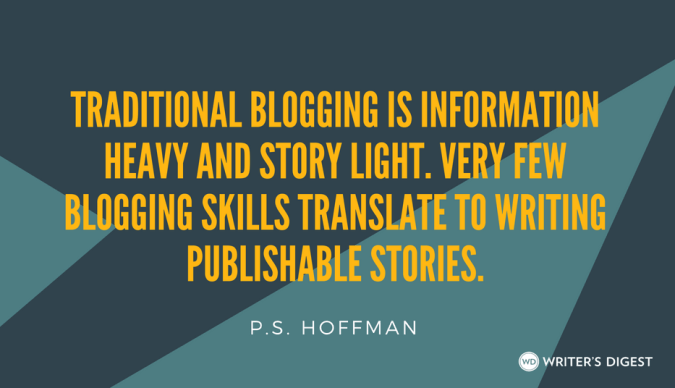
  3. If you want to write a novel, blogging teaches the wrong skills.
  4. Blogging is “information heavy and story light.”
  5. If you want to build your storytelling skills – write stories. Readers want to read your stories.
  6. Author blogs don’t sell books.
  7. To blog well, you must love blogging.

I enjoy sharing with my readers my stories and the tips or resources I come across as I strive to learn the craft of writing. I discovered, however, that to focus on my novel, I had to put my blog on the back burner.
At first, I felt guilty for abandoning my readers, even if for a short while; but, I had to decide – Did I want to be a writer or a blogger? The answer was clear, I wanted to write. I set aside the focus on my blog and for more than three months, turned my attention to my novel. It is now complete and out to beta readers and editors.

For now, I can focus on sharing some of what I learned during the process of completing my novel and what happens as I go through the process from draft to publication.

The question is still an important one to ask? What’s your goal? Writer? Blogger?

Check out  post,  5 Ways an Author Blog Could Kill Your Writing (and What to Do Instead)and let me know what you think.


I’d love to hear your comments. Talk to me. Tell me your story. I’m all ears and look for me on Facebook at SheilaMGood,  PinterestBloglovinTwitter@sheilamgood, Contently, and Instagram. You can follow my reviews on Amazon and Goodreads.

SaveSave

How to Deal With Manuscript Critiques

ANNABEL SMITH

I have my manuscript out to my first beta readers and am anxiously awaiting their feedback and critiques. I’ll admit, it’s nerve-wracking. Will they like it? Were my characters well-developed? Was the plot cohesive? Was the story compelling? 

I really want to hear what they have to say. I want honest opinions, but how do I handle the comments and critiques? What if it simply wasn’t their favorite genre? What if I disagree? What if, what if, what if…

Janice Hardy gives us 8 tips in her post, 8 Tips for Reviewing a Manuscript Critique.

  1. Here’s a sneak peek:
  2. Take comments seriously
  3. If you agree, change it; if you don’t agree, don’t.
  4. Not sure? Give it consideration. Why did the reviewer think or make that comment?
  5. Grammar or punctuation – look it up. The Elements of Style by Strunk & White
  6. If something is confusing, fix it. Clarity is essential to the story.
  7. Do what makes your story the best.
  8. Be objective.

Janice covers each of these in more details and provides additional resources. So, stop by and check out her post,
8 Tips for Reviewing a Manuscript Critique.


I’d love to hear your comments. Talk to me. Tell me your story. I’m all ears and look for me on Facebook at SheilaMGood,  PinterestBloglovinTwitter@sheilamgood, Contently, and Instagram. You can follow my reviews on Amazon and Goodreads.


SaveSave

SaveSave

SaveSave

Feeling Overwhelmed

And, I thought writing the novel was a daunting task. It is more fun, for sure, but editing is tedious mind-numbing work. It can become overwhelming especially to those of us new to the craft of writing novels.
Thank God we have experts to help us along the way. Janice Hardy from Fiction University is one such expert. She is my number one go-to resource.

Janice understands the complexities of self-editing and offers some great advice in her article, How to Edit a Novel Without Feeling Overwhelmed.

The six main points:

  1. Decide whether you want to edit or revise. The processes are not the same.
  2. Don’t bite off more than you can chew, so to speak. Set a word count, a number of scenes to work on and stick to it – a must when you’re working with 70,000 words plus.
  3. Don’t try to cover all the bases, focus on one thing at a time – setting, character, dialogue, and so on.
  4. Set a time limit – Time management is a biggy for me. It’s easy to get lost in the process, or become impatient.
  5. Leave the advice books on the shelf while you’re editing – love this one! It’s so easy to get caught up in the ‘how-tos’ or the ‘should’s,’ and not get a thing accomplished.
  6. Make a plan and let it be your guide – Use a calendar, spreadsheet, or whatever planning tool helps you accomplish your goal.

For more information, check out, How to Edit a Novel Without Feeling Overwhelmed.

I’d love to hear your tips. Talk to me. Tell me your story. I’m all ears and look for me on Facebook at SheilaMGood,  PinterestBloglovinTwitter@sheilamgood, Contently, and Instagram. You can follow my reviews on Amazon and Goodreads.