Tidbits and Nuggets – Making Characters Real

Tidbits & Nuggets-2

“Have your characters misunderstand one another once in a while. Have them answer the unspoken question rather than the one asked out loud. Have them talk at cross purposes. Have them hedge. Disagree. Lie. It will go a long way toward making them sound human.”

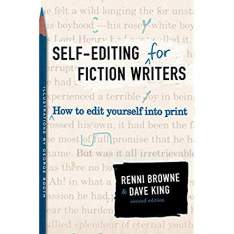
 Self-Editing for Fiction Writers
 Renni Browne & Dave King

51qoV-PGncL._AC_US436_QL65_


I’d love to hear your comments. Talk to me. Tell me your story. I’m all ears and look for me on Facebook at SheilaMGood,  PinterestBloglovinTwitter@sheilamgood, Contently, and Instagram. You can follow my reviews on Amazon and Goodreads.



Ask the Experts: Time to Query

It’s time to write and perfect your query letter, but where to start? How long should a query be and what do I need to include?

What is a Query?

The purpose of the query letter is to entice an agent or editor to read and/or request your manuscript. 100-200 words are sufficient for most novels. Plain and simple – it’s a sales pitch.

Some Do’s and Don’ts:

Do’s:

  • Your research. Make sure you are sending your query to the right agent, and the reason is for sending it to her/him is clear. “According to your agency’s  website, you are actively seeking…”
  • Set up your story by conveying what your main character wants above all else and what’s preventing her/him from getting it.  Show who your character is. What are they up against and what they’re made of.
  • Show strong actions, consequences, and emotions.
  • Include a concise summary of your novel’s statistics and appropriate comparative works.
  • Close with a short and bio paragraph.

Don’ts: 

  • Be careful with accolades or listing accomplishments. If you include any, include only the most relevant.
  • Make sure your comp title only if it gives the agent a clear sense of your story and style.
  • Be vague.
  • Forget to thank the agent
  •  Stories are subjective. One agent may love it, another hate it, but don’t give up. Be patient and query on.
Five Essential Elements of a Query:
  1. What you’re selling: genre/category, word count, title/subtitle
  2. Hook – Protagonist, the stakes, and the thing that sets your story apart.
  3. Bio: an option for unpublished fiction writers
  4. Personalization – customize the letter to the agent or editor
  5. Closing – ‘thank you.’

Remember, this will be, perhaps, your one and only chance with this agent to draw them into your story and ask for more. So, do your homework.

Where to find the Right Agent

Resources:

What are your tips on writing queries?

I’d love to hear your comments. Talk to me. Tell me your story. I’m all ears and look for me on Facebook at SheilaMcIntyreGood, PinterestBloglovinTwitter@sheilamgood, Contently, and Instagram. You can follow my reviews on Amazon and Goodreads.


Tidbits and Nuggets – Repetition

Tidbits & Nuggets-2

It’s easy, even as a novice writer to notice those pesky instances of repetition. There’s another type of repetition that causes problems – repetition of effect. Two sentences that convey the same information or two characters that serve the same role are examples.

1 + 1= 1/2

“When you try to accomplish the same effect twice, the weaker attempt is likely to undermine the power of the stronger one.”

Self-Editing for Fiction Writers 
Renni Browne & Dave King


51qoV-PGncL._AC_US436_QL65_


I’d love to hear your comments. Talk to me. Tell me your story. I’m all ears and look for me on Facebook at SheilaMGood,  PinterestBloglovinTwitter@sheilamgood, Contently, and Instagram. You can follow my reviews on Amazon and Goodreads.


Self-Editing Checklist

ANNABEL SMITH

Check out the article, Self-Editing for Fiction Writers: A Quick-Start Checklist from the AutoCrit Blog for this quick and simple start to self-editing.

1. Clean things up:
  • Clear out the clutter.
  • Weed out “to be” verbs and other passive constructs.
  • Eliminate clichés
2. Check Narrative Flow
  • Show, don’t tell.
  • Find and eliminate redundancies.
  • Vary sentence lengths.
  • Pace yourself.
3.  Dialogue
  • Get rid of excess dialogue tags.
  • Stick to “said” and “asked.”
  • Keep adverbs out of dialogue tags.
4. Plot

Evaluate your character development, conflict, action, and theme.

I’ve listed the main points on the checklist, but to get the details, you’ll need to read the article. If you’re ready to begin self-editing, need help or a little direction you can test AutoCrit for free 

Learn How AutoCrit Works | View  Pricing


I’d love to hear your comments. Talk to me. Tell me your story. I’m all ears and look for me on Facebook at SheilaMGood,  PinterestBloglovinTwitter@sheilamgood, Contently, and Instagram. You can follow my reviews on Amazon and Goodreads.