How Long Your Novel Should Be

I have finally put finishing my first novel, Hello Hell, into high gear. I had a good idea about how long my book should be and believe, especially after reading this post, I’m on the right track. Thanks to Ryan Lanz and author, Doug Lewars for this thorough look at the numbers.

Want to know the stats and if you’re in the ballpark? Read on …

theryanlanz's avatarRyan Lanz

by Doug Lewars

How long should your novel be? The simple answer is that it needs to be just long enough to tell your story. Animal Farm is only 29,966 words and it’s a pretty good tale. At the other end of the spectrum is War and Peace at 544,406.  That’s quite a difference.

Now ask yourself this. Have you read Animal Farm? There’s a good chance that you have – particularly since it was on the high-school English curriculum for some years. So have you read War and Peace? Some have – but then some people like to climb mountains, cross deserts and dive deep into the ocean. The point here is that if you have to make a mistake, you should probably err on the low side.

View original post 749 more words

Multiple Writers Personality Disorder

Well, it’s confirmed (sort of), I have a MWPD (Multiple Writers Personality Disorder).

Have you ever wondered what author influences your writing or who you write like? Now, you can find out.

I Write Like  – checks which famous writer you write like by analyzing your word choice and writing style and comparing them with those of the famous writers. Analyze your text, here.

I ran my short story collection as well as my current novel in progress through the “I Write Like,” software for analysis and discovered:

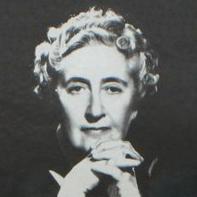
About Agatha Christie

“Dame Agatha Mary Clarissa Christie DBE was a British crime writer of novels, short stories, and plays. She also wrote romances under the name Mary Westmacott, but she is best remembered for her 66 detective novels and more than 15 short story collections (especially those featuring Hercule Poirot or Miss Jane Marple). According to the Guinness Book of World Records, Christie is the best-selling novelist of all time. Her novels have sold roughly four billion copies, and her estate claims that her works rank third, after those of William Shakespeare and the Bible, as the most widely published books.” (Read more on Wikipedia)

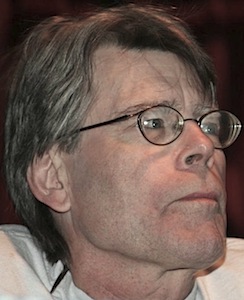
My short stories came up, Stephen King!

About Stephen King

Picture of Stephen King

Photo by Pinguino. CC-BY 2.0

When it comes to my non-fiction articles :

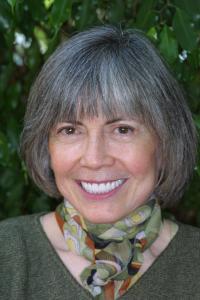
About Anne Rice

Picture of Anne Rice

“Anne Rice is a best-selling American author of metaphysical gothic fiction, Christian literature and erotica from New Orleans, Louisiana. Her books have sold nearly 100 million copies, making her one of the most widely read authors in modern history.”  (Read more on Wikipedia)

So, who do you write like? Find out here and share it with me and all the Cow Pasture Fence Jumpers.You can also share on Twitter, Facebook, and your blog.

I’d love to hear your thoughts on the subject. Join the conversation. Talk to me or tell me your story. I’m all ears. Or, connect with me on Facebook at SheilaMGood,  PinterestBloglovinTwitter@sheilamgood, Contently, and Instagram. You can follow my reviews on Amazon and Goodreads.

To Clara: Regarding Your Critique

I don’t often reblog, not because there isn’t a mountain of beautiful posts out there worth sharing. I tried to offer my readers my thoughts and stories (for whatever that’s worth), but once in a while I come across a post, article, or story that is so profound, so moving, or simply amazing that I must share – not doing so, would be remiss of me.

There are a couple of blogs I will be sharing this week with you and first up is from The Drabble: To Clara: Regarding Your Critique by Keith T. Hoerner. This is one of the most moving and poignant pieces I have ever read, and it’s is something all writers can relate.

The Drabble's avatar

adult-1846488_1280

By Keith T. Hoerner

You shared your writing with me. An extension of friendship, like a handshake. More like the reaching out of hands with the chance to be held – or swatted – open palmed. Sharing … emptying pockets to reveal hidden things among the embarrassment of collected lint, is a dangerous proposition. Your shadows merged with mine, achieving the density of darkness that brings on the dawn. How can I thank you? For selflessly taking my hands and guiding me to an unknown resting place within the pages of you. I spoke in an attempt to reciprocate. My words: sandpaper to your beach of memory.

View original post

Learn How Writers Do It

A treasured pastime, I’ve been reading since early childhood. My mother belonged to the Book of the Month Club, and each month I couldn’t wait to see what selections she’d ordered.

By the time I was a teenager, my sisters and I were devouring books like candy. Instead of plopping in front of the television after school I raced to my room, grabbed my book, and planted myself belly first on the bed. Anxious to find what happened next, I turned to the page I’d dog-eared that morning before hopping on the school bus. I stayed lost among the characters of another world until mom forced me back to reality for dinner or some other household task.

Growing up in a house full of books, the love of words came early and easy. To me, reading was as natural as eating and sleeping. As soon as I finished one book, I picked up another. This small town Southern girl fell in love more than once with characters on a page. Two years ago, I decided to take a more serious approach to writing. Before long, I’d let studying consume all my time and allowed the pleasure of reading to take a back seat.

I’d forgotten how it felt to get lost in a good book. The descriptions so vivid it seemed as if you were standing on the street in the midst of the story. The scenes and dialog creating such tension you found yourself gripping the book cringing, gasping, sometimes crying, or laughing out loud. You couldn’t wait to turn the next page. Then it dawned on me. This is why writers read.

The many magazines and books I’ve read on the craft of writing have given me a wealth of information. They were instructional, explanatory, more like telling” me “How to write.” On the other hand, picking up a classic, best-selling novel, or even a well-written short story, “Shows me how to write.” 

So, I challenge you. Pick up a book for pleasure. Lose yourself in the story. Use the knowledge you’ve gained from the resources on writing, and take the story apart.  How did the author do it? Look at the descriptions, study the dialog, characters, and the plot. After that one, pick up another one. Reading will make you a better writer.

“I love books. I love that moment when you open one and sink into it. You can escape from the world, into a story that’s way more interesting than yours will ever be.” Elizabeth Scott

I’m reading Sister of Silence by Daleen Berry. What are you reading for pleasure? Leave me a comment.

Related articles
Read to Write
Mandatory Reading
What We’re Reading
MORNING PAGES: More or Less Reading?