Anatomy of the Personal Narrative Essay

Photo Courtesy of funnymama.com

Besides writing flash fiction, and working on my novel, I’ve been exploring personal essays. For those of you interested in writing essays and don’t want the frustration of college days, here are a few pointers I’ve learned along the way.

Narrative means a written account of connected events; a story. Written in first person and most often in the past tense, a narrative essay tells the story of an experience and the significance of that event to the writer.

Structure:  A personal essay includes three essential parts: 1) the opening statement or introduction. 2) Body of the essay, and 3) Conclusion.

1. Introduction:  Basic components of the introduction include: Opening statement, scene, and theme.

Opening: The opening is the hook and can consist of a statement of facts, a pertinent quote, or a question. A strong, engaging opening will entice the reader and keep them interested in what you have to say.

Scene: In order for the reader to stay engaged, every essay should include the three W’s: Who, what and where. Set the stage: Who are the characters? What happened and where did the event take place? In addition, clarify whether the story happened to you, someone you know or is fiction.

Theme: Essays can begin with the event itself: The crowd, waiting to board the train, pushed me over the edge of the platform.

Lessons learned: I will never stand close to the platform’s edge again.

How the experience changed your life: When waiting to ride the metro, I stay well behind the safety line, and ta the rowdy crowds of anxious passengers. 

Or to share something more universal: The metro is stressful and dangerous if you aren’t aware of your surroundings.

2. Body:
The body of the essay is where your story begins. Place the readers in your experience by using details and vivid descriptions; show don’t tell. Use all five senses, not just your sight. What sounds were amplified? What did you feel?

 I heard the screeching sound of metal on metal, felt the vibrations and tasted bile as I stumbled toward the edge. 

In other types of essays, corroborating evidence is needed to support your position. But, in a narrative essay, your experience is the supporting evidence. Your story and the lessons learned may be unique, but the events in your essay should support the significance of that experience to you.

The most common narrative format is from beginning to end: first, next and last or, in chronological order with new paragraphs showing a change in action. Either way, transition words are necessary to make sure the reader understands how the event occurred.

Transition words help connect not only the sequence of events, but also the end of one paragraph to the start of the next. Examples include: before, after, when, finally, suddenly and therefore.

Suddenly, the crowd surged, knocking me off-balance and I fell forward toward the tracks as the train entered the tunnel.

3. Conclusion:
Your story ends here by evaluating the event, its significance, how the experience changed you, and the universal message or the moral of the story you want to share.

A stranger saved me when he grabbed the strap of my handbag and pulled me to safety. After my near miss, I approached riding the metro with greater respect and caution. I focused on being aware of my surroundings, staying well behind the safety line, and mindful of other passengers.

The metro, although convenient, is a stressful and crowded form of transportation. Showing respect for others and their personal space reduces anxiety, aggression, and accidents.

Photo Courtesy of immediacy.newschool.com

Want more information on writing essays, check out:

Longreads.com Best of Essay Writing.

Writer’s Digest: How to Write a Reader Friendly Essay by Rachel Scheller ay

Related articles

Helpful How-to’s or a Reason to Procrastinate?

As writers, we often find ourselves collecting as many “how-to” articles and books on writing we can digest, and then some. My library is overflowing. Space won’t allow me to name them all, but  Hooked,  Structuring Your Novel, and Write that Book Already!  are a few  of my favorites.


Some of the books in my library I  reference on a regular basis, The Emotion Thesaurus is one.

However, when we collect how-to-books to the point learning our craft becomes  a distraction or another reason to procrastinate from completing your our own work in progress (WIP), we’ve stopped learning.

If you’ve ever done any of the following, you may be  how-to obsessed, or second guessing your ability as a writer.

Have you ever:

  • Red-inked a story, chapter or novel based on a particular books recommendations.
  • Re-written a story, or chapter based on a books recommendations.
  • Started your novel over completely.
  • Attempted to be a plotter when you’re a panster at heart.
  • Or, used tools that don’t fit your personality because they were recommended.

As a result, your WIP sits unfinished on your desk  which leads to frustration and more procrastination.

Stop it.

I’ve loved self-help books, on any topic, for as long as I can remember. And my kids will tell you receiving  my favorites as a gift are as inevitable as Christmas Day. But, quitting something has never been an option for me. It isn’t who I am. So it’s time for me to close the how-to’s, clean out my mail box and open my Scrivener file. 

In 1908, John D. Swain novelist and screenwriter wrote a letter to his son who was beginning his student life at Yale. Here is what he told his son about quitting.

“…Finally, if you make any of the teams, never quit. That is all the secret of success. Never quit! Quitting, I like to believe, has not been a striking characteristic of our family, and it is not tolerated in our college.
If you can’t win the scholarship, fight it out to the end of the examination.
If you can’t win your race, at least finish—somewhere.
If your boat can’t win, at least keep pulling on your oar, even if your eye glazes and the taste of blood comes into your throat with every heave.
If you cannot make your five yards in football, keep bucking the line—never let up—if you can’t see, or hear, keep plugging ahead! Never quit! If you forget all else I have said, remember these two words, through all your life…”
(Source: The Book of Man: Readings on the Path to Manhood; Image: Yale football team, 1908, courtesy of Manuscripts & Archives, Yale University.)

The past couple of  years has given me any number of reasons to procrastinate, reevaluate my life, priorities and even put writing on the back burner permanently, but I’ve never been a quitter. All of the how-to-books I have are excellent resources. I’ll use them when necessary but for now, I’ll sit my butt down and write.

Know the Details of Your Story

As a nurse with a penchant for all medical fiction, I found the guest post by physician and  medical thriller novelist, Richard Mabry, to be another great article on writing with accuracy.

Check it out at CS Larkin’s LiveWriteThrive.com  Infusing Medical Details into Your Fiction

Feature Photo Credit: mantuir3 via Compfight cc

“For a number of weeks, we’re running a series featuring professionals sharing tips and expertise in order to help novelists convey accuracy in their fiction. Last week we took a fun, hard look at forensics and dead bodies. If you are writing any scenes that include doctor, lawyers, investigators, or law enforcement officials, be sure to study these posts (and print them out for reference).”

Check it out and be sure to check out CS Larkin’s writing tips, editing and critique services.


Truth is Stranger than Fiction

images-4:Ninelin.es

Photo courtesy of : google & ninelin.es

It’s an old saying that’s inspired many a story. The problem can come, however, when the plot line or a particular scene is unbelievable to the general audience. On the Premises talks about this very thing in their latest newsletter.

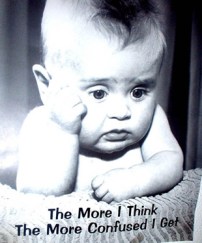
A good example is my own background. I spent the better part of my life in the nursing profession. Medical people have a language of their own and, to this day, I still use many medical abbreviations and terminology. It’s second nature to me, a habit and  the average person, outside of medicine, don’t understand.

confused-baby.jpg:Pixgood

Photo courtesy of: google and pixgood.com

Now, picture the average reader. If I’m going to write a book or story involving medicine, I must be careful to write the story that’s  believable and  understandable to the general audience of readers. Otherwise, they’ll stop reading and or run for a dictionary. Either way, I’ve pulled them put of the story and most likely lost them as a reader.

Do the necessary homework and research when writing, but be cautious. You don’t want the readers eyes to glaze over from info dumps.

Remember the words of Mark Twain.

Truth is stranger than fiction, but it is because Fiction is obliged to stick to possibilities; Truth isn’t.”― Mark Twain

Thanks to On the Premises for this gentle reminder to keep it real or at least believable when we write. Be sure to check out their website for more writing tips and contests.

What do you think?