 I’ve been bogged down this weekend with family and community events. So, I’m sharing an oldie but goodie, with a few tweaks and additional information. Enjoy.
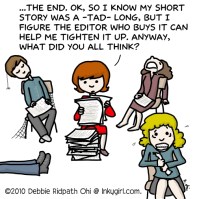
Critiques are a part of every writer’s life. Whether it’s a one on one partner, or a group providing feedback. Having another set of eyes on your stories, essays, or novels is essential for growth and success.
Accomplished writers already understand the value of a good critique partner. For newer writers or those who have yet to take part in a group, I’d like to share my critique cheat sheet. I hope you’ll find the information provided here helpful.
A Few Things to Remember:
- The format and function may differ from group to group.
- Know the rules before joining to ensure the commitment is one you are willing to make.
- If you don’t know the group’s process, ask before your first meeting.
- Don’t rubber stamp each submission presented with, “I loved it,” without providing further constructive feedback. Doing so is unfair to the author. Those who submitted work want and deserve a genuine response and critique.
- Critique groups are not about safeguarding a writer’s feelings. It’s about providing quality feedback.
- If this is your first group, familiarize yourself with the terminology groups use. (genre, protagonist, antagonist, point of view (POV), voice, conflict, backstory, info dump, pacing, opening and resolution).
My Cheat Sheet for the Short Story Critique and Things to Consider:
- Did you enjoy the story? If not, why.
- Could you identify the story’s setting? Or, did you get lost in too much backstory?
- Did the story engage you and draw you in? Did you want to keep reading?
- What about the opening sentence or paragraph? Did they make you want to read further. If not, why? What made you hesitate?
- Was the protagonist clear to you? Did you understand the goals? Did you have enough information about the main character? Did you like the character or care about his/her situation (goals versus conflict).
- Were the stakes facing the protagonist, high enough to make you care?
- Did you find the dialog believable? Too much internal dialogue?
- Were you able to identify the genre?
- Did the story progress in a natural flow, or were there places that left you confused? Explain.
- Was there a resolution? Did the ending make you happy or, leave too many unanswered questions?
- Could you identify the theme?
- Explain the things that gave you pause. Make notes in the margins of the submitted piece indicating pertinent information. It could be a wrong word choice, sentence length, credibility, pacing, or something else.
Articulating your impressions provides the author with specific feedback. They can then decide to use or not use the information to strengthen their story. Sometimes, we’re too close to our work to see the flaws. Another set of eyes helps point out the weaknesses or holes in our story.
Good critique partners are an invaluable resource and asset to writers of all levels and I encourage you to find one in your area or online.
Want more information on critique partners and groups? Ryan Lantz gives excellent pointers, in his post, Critique Partners 101: Everything You Need to Know Before Pairing Up.
Interested in starting a group? Janice Hardy, from Fiction University, provides the lowdown on how to start a group, Are You Looking for a Critique Group or Partner?
Here’s to wonderful critique partners.
I’d love to hear your comments. Talk to me. Tell me your story. And as always, you can follow me on Facebook at SheilaMGood, Pinterest, Bloglovin, Twitter @cofcmom, and Contently.





 So, what a pleasant surprise to discover, via


 COW PASTURE CHRONICLES