Guest Blogging

 Day 7: 

Have you considered guest blogging but don’t know where to begin? The first step is to determine what you want to accomplish.

What is your goal?

  1. Do you have expertise in an area and want to share it?
  2. Do you want to create more traffic to your blog or increase followers?
  3. Want to see an increase in backlinks to your content?
  4. Or, establish yourself as an authority?

Where to Find Guest Blogging Opportunities:

Once you know your motivations, it’s time to find the opportunities, and there are many.

  1. Begin with a simple keyword search for “guest post” on Google, Twitter, or preferred search engine.
  2. Utilize the connections you’ve already established – favorite blogs or other social networking sites.
  3. Look for blogs that best match your area of interest or expertise, have engaged readers, and is active on social networks.
  4. Check out sites like Contently, Huffington Post, or Angie’s Diary.

Things to do before pitching a guest post:

  1. Familiarize yourself with the blog; it’s content and readership.
  2. Have guest posts been featured before?
  3. Who were the guest bloggers? Authors? Other bloggers? Freelancers? Read their bios and get to know them.
  4. How did the guest post do? Was there a lot of reader engagement?
  5. Become a familiar face in the blogging community.

When to pitch:

  1. When someone mentions your blog on, Twitter, LinkedIn, Facebook, or Google.
  2. When a blogger advertises, they are seeking guest posts.
  3. When a guest post is featured on another blog.

How to Pitch:

  1. Read the guidelines.
  2. Introduce yourself. Craft a guest post bio and include links back to your blog or author websites that show your work.
  3. As with any pitch, personalize your email.
  4. Explain what you can offer in a guest post.
  5. Provide links to your blog and other sites on which you have published.
  6. Format your guest post the same as the site in which you are submitting.
  7. Provide valuable and relatable information.
  8. Do not self-promote except within the author bio.
  9. Utilize internal links to some of the owner’s posts.
  10. Create a call to action for comments.

Want to know more about guest blogging? Check out these resources.

 Guest Blogging Opportunities:

Does guest blogging interest you? Have you been a featured guest blogger in the past?

I’d love to hear your comments. Talk to me. Tell me your story and look for me on Facebook at SheilaMGood,  PinterestBloglovinTwitter@sheilagood, and Contently.


The Value of Blog Comments

leavecommetgifWritten in response to the Writer’s Digest 2015 October Platform Challenge

Blogging is an excellent way to express ourselves, improve skills, impart knowledge and expertise, or share stories. But, what role do comments, both given and received, play? Are they important?

When I began blogging in 2008, I had no aspirations beyond using my blog as a way to express grief after the sudden loss of my best friend. But, then people began to respond. I made connections, my grief lessened, and my writing evolved. Without their encouragement, I’m not sure I would still be writing.

The Value of Blog Comments: 
  • They are the lifeblood of any blog – connecting us to others.
  • Tell us our words have resonated with someone.
  • Sometimes, they express gratitude.
  • Other times, they offer us a different opinion to consider.
  • An avenue to share resources, give recognition, or validate information.
  • Provide ideas for future topics.
  • Creates a network of bloggers, writers, classes, and groups.

Given these benefits, how can we create an atmosphere of interaction?

Ways to Invite Reader Participation:
  • Lead the way – Comment on your favorite blogs. Make sure what you have to say will add value to the conversation.
  • Keep it simple – spam is a valid concern. However, CAPTCHA’S can actually discourage readers from leaving comments. Trying to match blurred letters or numbers in little boxes is more annoying than trying to read the fine print on the back of a medicine bottle.
  • Do away with registrations. Requiring readers to fill out a form before leaving a comment is a sure-fire way not to get one.
  • Readers respond more often to a call-to-action or questions.
  • Be an active participant on your own blog – respond and interact with those who have taken the time to read and respond.

Not only is replying to comments, the polite thing to do, but doing so helps create a network of like-minded bloggers and writers, which adds value to all of us.

People blog for different reasons and the topics are as varied as the names. We want to believe our blogs provide valuable information or entertaining stories, but without reader participation, how will we know?

I’d love to hear your comments. Talk to me. Tell me your story. And as always, you can follow me on Facebook at SheilaMGood, PinterestBloglovin, Twitter @cofcmom, and Contently.


Tips for the Floundering Tweeter

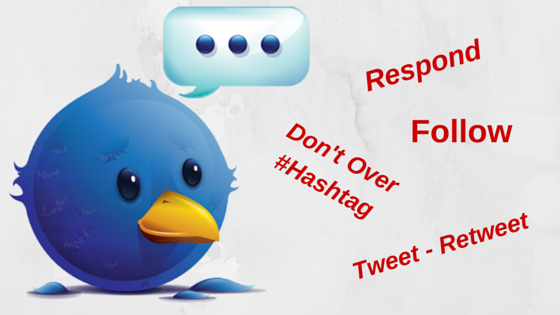
Tips for the Floundering TweeterAlthough, I’ve had a Twitter account for awhile now, I admit I’m not proficient in the use of Twitter. For one, it can be addictive and it’s hard for me to say anything in a 140 characters.  I’ve been working on my Twitter presence and thanks to Kevan Lee at Buffer for his article, Twitter Tips for Beginners, I have a number of tips to share with those of you who, like me, are still floundering beginners or,  just floundering.

Twitter Tips
  1. Unless you don’t want to get anything else done -Don’t read every tweet. According to Kevan, “If you’re following 100 people, you could see 2,200 tweets per day.”  I don’t have that kind of time.
  2. Use Lists: This is something I’ve used for some time now. I currently have nine lists, from writing to politics.
  3. Talk to people. If they tweet, re-tweet, mention, or favor a tweet – recognize them. Say something, after all, Twitter is about connecting with people. In the South, we call not responding – rude!
  4. Use a scheduler. I use Buffer and have for a long time.
  5. Make sure your profile is up to date, professional and says something real about who you are.
  6. Follow as many as you want and more if you can. You follow me, I’m gonna follow you. And, by the way, you can find me on Twitter @cofcmom.
  7. And, Thanks Kevan for this: No. 1 Rule of Tweeting: If you want everyone to see your tweet, don’t start it with an @ symbol. I didn’t have a clue.
  8. You’re not going to be shunned or cut off from Twitter world if you repost a Tweet more than once. Go for it. It’s okay. You might pick up a follower or two.
  9. Don’t forget the # hashtag, but don’t overdo it either. According to Kevan, when you use more than two #’s, engagement drops by 17%. Who knew you could # someone to death. Kevan has a whole article on the science of #hashtags. You can check it out here.

Here’s to Tweeting. I’ll see you on the Twitter playground. I’d love to hear your comments. Talk to me. Tell me your story. And as always, you can follow me on Facebook at SheilaMGood,  Twitter @cofcmom, Tumblr, and Pinterest.


Is Your Social Media a Platform or Just another Tracking Tool?

A couple of weeks ago the news hit the fan. NSA has been tracking our emails. Or, so they said. Everyone became a little paranoid about what else was being tracked. Then today, I pick up the paper and read, Facebook says a bug in its system caused 6 million users contact information to be inadvertently exposed.”

This is nothing new, remember the Hoover files?  If you don’t, one of my all time favorite books by Robert Ludlum, The Chancellor Manuscript, can fill you in.  It’s an old book, but if you can find a copy, it is well worth the read.

I’m not here to get into a political discussion, spying by our government has been around a long time. I understand the argument – safety versus liberty, and, there in lies the rub.

As writers, we’ve all been encouraged to build and engage in a healthy social network. Open up a Twitter account, an Author Facebook Page, join LinkedInPinterest, start a Blog, and network on a regular basis. The purpose is to exchange ideas, knowledge, and get to know others interested in the same things you are.

The more name recognition you have and people you know in the industry, the more mentors available to you. Writers of all genres, beta readers, editors, critique and writing groups, all are a part of the social media network to assist writers in improving their craft. Or, so they say.

For me, I find all social media to be time eating suckers. I sit down planning to spend fifteen minutes and waste a morning scrolling through other peoples dramas. True, I’ve met many talented people and made wonderful connections at times, but Twitter will eat your soul.

And Facebook? I’m not sure what has happened to that site. Lately, all I see are pictures of food, which make me hungry, pictures of pets, or other stupid things.  I receive more requests from people asking for endorsements on LinkedIn than you can shake a stick at, and what the hell is candy crush? I don’t  have a clue.

Technology is creating the surveillance state
By John R. Quain Personal Tech Published June 19, 2013, FoxNews.com

It isn’t the NSA you need to worry about. We’ve all had a hand in this via social media.  Google, has lured us down the path as easily as the Pied Piper led children. We thought it was cool Google maps could show us a location, by satellite, right down to the house, until we learned it was our house. Or that, Google was supplying the government information, along with Verizon and the smart phones we can’t live without. Some call it security others marketing.

With every click of your button, the technology you love, track and register information about your habits likes and dislikes, online orders, and Apps. The books you download on your shiny new Kindle, including the words you highlight are a captured, categorized and tailored to market and advertise specifically to you. Their aim is to influence the way you shop, think, sway social values, and, yes vote. Think subliminal advertising on steroids.

They call it marketing, developing a platform and teach you how through  SEO, keywords, Google analytics, etc. to reach the biggest audience. It sounds as if we may all have larger audience than we realized.

I didn’t like mama looking over my shoulder when I was growing up either. The least they can do is leave a comment. I don’t know about you, but I’m almost ready to go back to hardback books, paper billing, and old-fashioned pen and paper.  What about you? What do you think?