Stories to Share and Author Highlights

Time to ShareIt’s time again to showcase writers and their stories. I read many publications and when I find a story that moves me, makes laugh, or stays with me for days – I like to share it with everyone.

First up are two authors from Carver Magazine, Summer 2016.

Restoration by Ann Joslin Williams – She is the author of the novel Down From Cascom Mountain, the short story collection The Woman in The Woods, which won the Spokane Prize for Short Fiction, and the  director of the MFA Program in Writing at the University of New Hampshire. (Carver Magazine).

Daughters by Tayler Heuston – Taylor received her MFA from North Carolina State University. The winner of the 2015 Kore Press Short Fiction Award, her fiction has appeared in At Length MagazineTwo Serious Ladies, and NANO Fiction. (Carver Magazine).

From Oxford American Magazine – BLAISE ST. CLAIR By  Rebecca Wells. She is the author of one of my all time favorite books and movies, Divine Secrets of the Ya-Ya Sisterhood. The story I’m sharing today is an excerpt from her novel in progress,  Blaise St. Clair’s Book of Being, (Oxford American Magazine).

I loved this story and if this line doesn’t intrigue you, nothing will.

“When Blaise St. Clair was able to breathe past her fear, the conversations were as gorgeous and as fragile as monarch butterflies at dusk on the Eastern Shore of Maryland. They were lamentations. They were lullabies. They were reveilles.” 

A Shirt Tale By Supie DunbarWOW 2016 Flash Fiction, Runner up. I liked this story. Sometimes we need a sign, a bit of encouragement to make us do something, even if it’s an empty shirt.

Supie became a writer after she retired. Her poetry and flash fiction are published in print  (Vine Leaves Literary JournalBlotterature Literary Magazine) and online (A Quiet CourageThe Voices Project).

If you enjoyed these stories as much as I did, please share your thoughts with the authors and pass them on for others to enjoy. Don’t forget to check out the Call for Submissions in the sidebar. Maybe your story will be the next one I highlight. How did you like the stories?

I’d love to hear your comments. Talk to me. Tell me your story and look for me on Facebook at SheilaMGood,  PinterestBloglovinTwitter@sheilamgood, Contently, and Instagram. You can follow my reviews on Amazon and Goodreads.

Queries Can Make Your Knees Shake

Day 17 :  #atozchallenge

Writing a query for the first time can make your knees shake and tremble, or so I’ve heard.

What is a query?

It is a letter of communication pitching either a short form or long form manuscript to a publisher or agent. Short forms include magazine articles, short stories, or poems. Long form – novels, screenplays, non-fiction books, or a collection.

What does a query include?

Essential components of a successful query should include these three things.

  1. The hook – a one-sentence summary of the book.
  2. The pitch – 2 to 3 paragraphs which support your hook and should include who (the protagonist), what (the conflict they face), where (setting), when (time frame), why (stakes) and resolution.
  3. A bio – one paragraph or less, to describe your writing credits and platform.

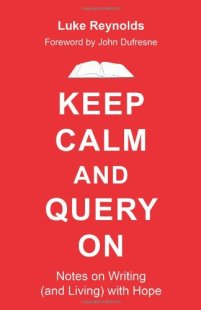
I had the privilege of working on the query for my first novel with Luke Reynolds, author of Keep Calm and Query On (perfect title). His input and direction were invaluable. 415aJ0aVUiL

Where to send it:

Finding the correct agency to send your query will take some research. You want to make sure you’re sending your query to the correct agency and agent. Visit Barnes & Nobles, the library or Amazon and check out books similar to yours. Knowing the competition is key to getting your query and book to the right person and place. And remember, always address the agent by name, never “To Whom it may concern.”

To find the agents best suited for your book, check out Writer’s Market and Land a Literary Agent

Are you ready to query? Want to know more about writing the perfect Query? Stay calm and check out these resources.

If you want to know more about Luke , check out his guest blog for the Cow Pasture Chronicles. You can check it out here: Walking the Walls of a Writer’s Life.

I’d love to hear your comments. Talk to me. Tell me your story and look for me on Facebook at SheilaMGood,  PinterestBloglovinTwitter@sheilamgood, and Contently.


Forget About Getting Rich

via The Average Earnings of Authors | A Writer’s Path and Guest post contributed by Sara Wolf at the Blooming Twig. The Blooming Twig is an independent publishing house that also produces writing blog posts. For more information, check out the Blooming Twig and A Writer’s Path

A big thanks to Ryan Lanz and Sara Wolf for bursting my bubble. I’m no Stephen King or J.K. Rowling, but hey, I have aspirations for my still unfinished novel. I imagined my book on the New York Times bestselling list and after selling the movie rights, visions of rolling in money. But, according to a report by the University of London, it ain’t gonna happen.

Photo Courtesy of toonbarn.com and Google

Here are the highlights of the University’s study  (based on 2,500 working writers):

  • 54% of traditionally published authors and 80% of self-published authors earn less than $1,000 a year.
  • In 2013, 17% of authors made no money writing.
  • Less than 1% of self-published and more than 5% hybrid writers earn more than $100,000 per year. (Hybrid writer -an author who utilizes both the traditional and self-publishing systems in order to retain control of  her own work).
  • According to award-winning author, Phillip Pullman, over the past ten years, publisher’s earnings have remained steady; writers incomes have decreased an average of 29%.
  • Fiction authors make more money than non-fiction or academic writers.
  • Women writers make 80% of what male writers make. (What! Who’s surprised?)
  • The report summed it nicely, “It appears that writing is a profession where only a handful of successful authors make a very good living while most do not.”

There you have it; not many of us will become rich from writing. Most of us write because we love to; it’s part of who we are.

I published my first article in 1989 and the excitement I felt is hard to describe. It’s an accomplishment of which I am still very proud. That first article happened a long time ago, but each time a story or article of mine is published, I get those same feelings. There’s something special about knowing other people are reading and enjoying the words I have written.

What about you? Do you write for fame and riches? Have you earned income from your writing? Share your success. Want to read the full article? You can find it here.

I’d love to hear your comments. Talk to me. Tell me your story. And as always, you can follow me on Facebook at SheilaMGood, PinterestBloglovin, Twitter @cofcmom, and Contently.

Learn How Writers Do It

A treasured pastime, I’ve been reading since early childhood. My mother belonged to the Book of the Month Club, and each month I couldn’t wait to see what selections she’d ordered.

By the time I was a teenager, my sisters and I were devouring books like candy. Instead of plopping in front of the television after school I raced to my room, grabbed my book, and planted myself belly first on the bed. Anxious to find what happened next, I turned to the page I’d dog-eared that morning before hopping on the school bus. I stayed lost among the characters of another world until mom forced me back to reality for dinner or some other household task.

Growing up in a house full of books, the love of words came early and easy. To me, reading was as natural as eating and sleeping. As soon as I finished one book, I picked up another. This small town Southern girl fell in love more than once with characters on a page. Two years ago, I decided to take a more serious approach to writing. Before long, I’d let studying consume all my time and allowed the pleasure of reading to take a back seat.

I’d forgotten how it felt to get lost in a good book. The descriptions so vivid it seemed as if you were standing on the street in the midst of the story. The scenes and dialog creating such tension you found yourself gripping the book cringing, gasping, sometimes crying, or laughing out loud. You couldn’t wait to turn the next page. Then it dawned on me. This is why writers read.

The many magazines and books I’ve read on the craft of writing have given me a wealth of information. They were instructional, explanatory, more like telling” me “How to write.” On the other hand, picking up a classic, best-selling novel, or even a well-written short story, “Shows me how to write.” 

So, I challenge you. Pick up a book for pleasure. Lose yourself in the story. Use the knowledge you’ve gained from the resources on writing, and take the story apart.  How did the author do it? Look at the descriptions, study the dialog, characters, and the plot. After that one, pick up another one. Reading will make you a better writer.

“I love books. I love that moment when you open one and sink into it. You can escape from the world, into a story that’s way more interesting than yours will ever be.” Elizabeth Scott

I’m reading Sister of Silence by Daleen Berry. What are you reading for pleasure? Leave me a comment.

Related articles
Read to Write
Mandatory Reading
What We’re Reading
MORNING PAGES: More or Less Reading?