Short Story Collections – A Good Investment?

word-cloud-compressorI realize it’s been a few days since my last post, but I’ve been busy working on a short story collection. At present, the collection is out to beta readers which has given me time to toy with cover designs (via Canva) as well as consulting with profession designers.

This is my first foray into self-publishing, and while I’m excited about the prospect, I’ve also discovered the process can be costly, especially when you factor in ISBN’s, Editors, and cover designers (if you choose to go the professional route).

Which brings me to my question – Is it a worthwhile investment?

Short story collections are a huge category on Amazon, ranging from literary, romance, erotica, Christian to crime. You’ll find collections and singles from classic authors like F. Scott Fitzgerald,  Mark Twain, and Ernest Hemingway, to name a few and a large selection of Kindle Singles and Kindle Short Reads listed by reading times (from 15 minutes to 2 hours or more). How cool is that?

In doing my research, prices ranged from free to $9.99 for the Kindle version with other formats running as high as $22.47.

Now, I’m no Fitzgerald or Hemingway and probably won’t break even for a long time to come, but it’s not about the money – it’s about sharing my stories.

I’ll tell you more about my short story collection in the coming weeks but in the meantime, here’s a hint.

“Darkness dwells within even the best of us. In the worst of us, darkness not only dwells but reigns.”Dean Koontz  (Tweet This).

What do you think? Short story collections- are they a good investment?

I’d love to hear your comments. Talk to me. Tell me your story and look for me on Facebook at SheilaMGood,  PinterestBloglovinTwitter@sheilamgood, Contently, and Instagram. You can follow my reviews on Amazon and Goodreads.

You Asked: Are Song Titles Copyright Protected?

sealWelcome to another, You Asked, the Experts Answer, segment. This week ‘s question: Can I use the title of a popular song and the artist name in a fictional story?

This week’s question is of particular interest to me. I’ve written a short story in which a song plays an integral role in the story. But, is it legal? So, what do the experts say?

Songwriters and the songs they create are protected by copyright law, the same way other creative works are protected. Yet, we’ve all read books that incorporate songs, lyrics, or the artist’s name in the storyline. So, it’s possible, but is it advisable? The answer depends on whether the song is under public domain or still copyright protected.

Most of us are familiar with the general definitions related to copyright law, but let’s look at the legal definition.

Definitions:

Public domain (as it pertains to copyright): the right of anyone to use literature, music, or other previously copyrighted materials, after the copyright period has expired. A rule of thumb would be that the last possible date for copyright protection would be 50 years after the death of the author. (See: Copyright)

Copyright: A copyright is a legal device that gives the creator of a literary, artistic, musical, or other creative work the sole right to publish and sell that work. Copyright owners have the right to control the reproduction of their work, including the right to receive payment for that reproduction. An author may grant or sell those rights to others, including publishers or recording companies. Violation of a copyright is called infringement.

Fair Use Doctrine: Fair use is a judicial doctrine that refers to a use of copyrighted material that does not infringe or violate the exclusive rights of the copyright holder.

What the Law Says:

  1. Creative works listed in the public domain are not protected by copyright. However, determining which are and which are not, can be time-consuming and expensive.
  2. Generally speaking, songs written and published before 1922 are public domain.
  3. Songs after 1977 do not fall under public domain and are protected by copyright.
  4. Songs that fall between the years, 1923-1977  will require research to determine their protection status.
  5. It’s possible to use creative works under the Fair Use Doctrine. However,    in order to claim Fair Use, very specific criteria must be met.
  6. Artists names and titles are considered public domain and are not protected by copyright. But, if you want to make the artist a character, watch out. There are very specific guidelines for doing so and not following or seeking advice can be extremely costly.

What are the Options?

  1. Ask Permission – You’ve heard the adage, “It’s easier to ask  forgiveness than permission,” but in this case, asking permission is the best policy.
  2. Seek legal counsel You might want to start with Hal Leonard, one of the biggest names in the music publishing industry.
  3. Decide to go another route – Instead of using the song or lyrics, depict the emotions the song evokes.

Copyright law is complicated, but it’s something in which, as writers and artists, we all need to be well versed. I have the answer for my story, but what about you? Still unsure? Before you take the chance, check out all the excellent resources below.

Resources:

  1. Public Information Project – a compiled list based on USA Copyright Law and is available to help you research public domain music.
  2. Copyright Term and Public Domain – Research the copyright history.
  3. How to Use Lyrics Without Paying a Fortune or a Lawyer and a Sample Permission Letter – From The Book DesignerHelen Sedwick.
  4. How to Use Celebrities and Other Real People in Your StoryBetter Novel Project, Guest post by Kathryn Goldman, Attorney for writers, artists, and businesses to protect their intellectual property.
  5. Is It Fair Use? 7 Questions to Ask Before Using Copyrighted MaterialJane Friedman – Guest post by Bradlee Frazer, Attorney.
  6. When Do You Need to Secure Permission?Jane Friedman
  7. Copyright Office – Frequently Ask Questions
  8. Copyright Litigation Blog
  9. A Writer’s Guide to Fair Use

I’d love to hear your comments. Talk to me. Tell me your story and look for me on Facebook at SheilaMGood,  PinterestBloglovinTwitter@sheilagood, and Contently.

My Top 5 Gift Subscriptions For Every Writer

It’s that time of year when we’re all trying to figure out the perfect gift for friends and loved ones. And, gifts for the writer in our circle is one of the hardest to find. Here are my top five recommendations to make your shopping easier. Enjoy.

51NYqYBHXsL._SY300_1. Writer’s Digest – An excellent resource for writers at all levels. Covering all genres, this magazine is your go-to-resource on writing. Available in print or digital,  a year’s subscription will cost $19.96 (8 issues).

issue_95_cover_450x6752. Glimmer Train Stories – One of the best magazines in print, this magazine loves to showcase emerging and new writer’s.  Forty percent of stories last years was from first time authors. Represented in  the Pushcart Prize: Best of the Small Presses Henry Prize StoriesNew Stories from the South, and Best American Short Stories. A year’s subscription will cost you $35.00.

Crazyhorse_88_cover-1025x10243. Crazyhorse – This College of Charleston literary magazine, located the beautiful coastal city in  South Carolina has published the works of established and  emerging writers for the last 50 years. Work from the journal’s pages has been reprinted in the Best American PoetryBest American Short StoriesBest American Nonrequired Reading and The Pushcart Prize annual anthologies. Issues and stories are available online and in print.  Offering 25% off a one year subscription – $15.00 USD, $25.50 USD; ends 12/31/2015.

Issue60ForWeb-14. American Short Fiction – Publishes work from both emerging and new writers. Stories published by American Short Fiction are anthologized in Best American Short StoriesBest American Non-Required ReadingThe O. Henry Prize Stories, and The Pushcart Prize: Best of the Small Presses, and elsewhere. A year’s subscription will cost $25.00. Current issues and back issues available for $7.00 – $10.00.

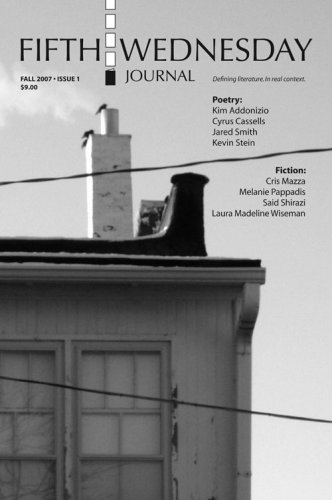
41BSSXcYaSL5. Fifth Wednesday Journal– An independent print literary magazine published twice a year. Focusing on contemporary literary and photographic arts, this magazine accepts contributions of short fiction, poetry, essays, interviews, book reviews, and black and white photography.    A one-year-subscription will cost you $20.00 per year. Individual issues, $11.00 each.

Happy shopping!

I’d love to hear your comments. Let’s have a conversation. Talk to me. Tell me your story. And as always, you can follow me on Facebook at SheilaMGood, PinterestBloglovinTwitter@sheilagood, and Contently.


You Asked: Secrets That Will Help You Get Published

Welcome to another, You Asked, the Experts Answer, segment. This week ‘s question is: Is there a secret to getting published in literary magazines?

Well yeah, sort of.  Lincoln Michel, a Buzzfeed contributor, takes us behind the scenes in his two-part article, The Ultimate Guide To Getting Published in a Literary Magazine.

This is one of  the most in-depth articles on getting published I have ever read. We’ve all heard the tips :

  • Submit often
  • Read the magazines
  • Follow the guidelines
  • Proofread

But, we’ve never understood what happens behind the scenes or how literary magazines actually select those they choose to print. Well, now you will. Lincoln goes into great detail about editors, readers, the slush pile, solicited and non-solicited work, and even “carpet bombing.”

“Most editors would probably consider at least 60% of the slush pile to be unpublishable, period. Twenty percent shows promise but needs some work, and 10% is publishable but not in the journal being submitted to. That leaves 10% of work that might deserve real consideration.”

Here’s a few important things I gleaned from the article, but I still encourage each of you to read it in its entirety.

  1. Submissions go first to the slush pile.
  2. 60 % of those in the slush pile are unpublishable.
  3. Acceptance rates are about 1% for good magazines.
  4. Submissions are sometimes solicited by editors or through agents (I had no idea).
  5. 20-100% of works published come from the slush pile.
  6.  Connections are important.
  7. Editors are not the first to read your work, readers are (typically 2).
  8. Readers are volunteers, or students.
  9.  The first paragraph and page is important in making it past the readers.
  10. Persistence in submitting is one of the main keys to success.
  11. Know the Cover letter No-No’s (see the article).
  12. Selective your top 3 to 5 magazines and go for it; again & again.

Where to Find the Right Market for Your Story?

Many sites offer information on Magazines open for submission. Here are my top five resources.

  1. Every Writer’s Resource 
  2. Duotrope
  3. The Review Review
  4. The Writer’s Database
  5. Clifford Garstang’s Pushcart Rankings

I’ve only given you the teasers from the article, but I can tell you it’s one worth keeping for the files. What do you think? Are you seeing submission success? Do you have a favorite market site?

I’d love to hear your comments. Talk to me. Tell me your story. And as always, you can follow me on Facebook at SheilaMGood, PinterestBloglovinTwitter@sheilagood, and Contently.