Take Your Best Shot

And no, I am not referring to a gun, but to an old idiom. You know like: Roll up your sleeves and give the old college try. I’m talking about writing. It’s been quite a while since I have been able to pen to paper, so to speak. I won’t bore you with the details or the excuses; suffice it to say –– sometimes curling up under the covers is all you can do.

I’ve thrown off the covers for now, and I’m trying to get back to my routines, responsibilities, and to the business of figuring what the hell I’m going to do with this new reality called my life. I have a feeling it might take me a while to find my footing, but I’m ready to pull up my big girl panties, slap on some lipstick, and get on with living –– on my own terms.

I was finally able to write, and I’m submitting the essay to the Q2 WOW – Women on Writing Essay Contest. What the hell, maybe I’ll send it to more than one contest.

Perhaps you would like to start 2019 with a submission of your own –– Jump in and take your best shot.

Contests Open Now:

  1. Q2 WOW- Women on Writing Essay Contest
  2. Glimmer Train ( 2019 (and FINAL) Submission Calendar:   Jan/Feb: Very Short Fiction Contest and Fiction Open; Mar/Apr: Short Story Award for New Writers and Family Matters

Good luck and here’s to a new, different, and exciting 2019!

I’d love to hear your comments. Talk to me. Tell me your story. I’m all ears and look for me on Facebook Page  at SheilaMcIntyreGood, PinterestBloglovinTwitter@sheilamgood, Contently, and Instagram. You can follow my reviews on Amazon and Goodreads.



What I’ve Learned About Querying

Querying tips

I’ve been as invisible as a ghost over the last month because I entered the maze of querying agents for my manuscript, Hello Hell. Let me tell you, it can be a scary place if you don’t know what you’re doing or follow the process as outlined by every, single, agent. So, here’s a few tips, I’ve learned aloong the way. Feel free to share your own.

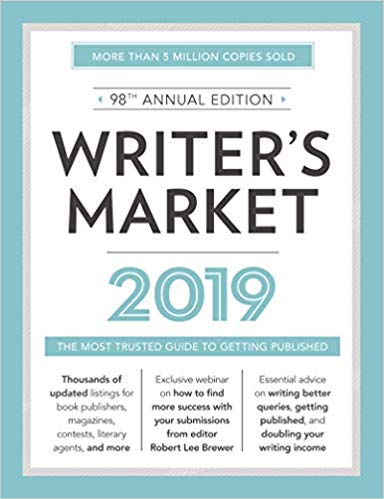
  1. Pick your resources: Writer’s Digest, MSWL, Querytracker, or Writer’s Market.
  2. Identify those agents open for submissions and who are requesting manuscripts in your genre.
  3. Publications don’t always tell the whole story related to a specific agent, so do your reasearch.
  4. Make a list. Note siginifcant specifics about each agent.
  5. Read the agents profile, website, Twitter account and any other site they provide to get a good feel for whether he/she might be a good fit. For example, a profile may list they are interested in womne’s fiction but when you did deeper, there is a very specific type of women’s fiction they are interested in. Unless your manuscipt fits within that narrow scope, mark them off your list.
  6. Read through the agency, research all the agents listed, the books they have published, and their submission guidelines. 
  7. Perfect your query again and again. Don’t write one and think it will serve all. Some agents are very particular regarding what they want to see in a querying and the layout. So, be prepared to have numerous versions as you gothrough the process.
  8. Keep track of each query sent to each agent. This is important because you can’t querying more than one agent within an agency. So, pay attention to your list. I use Query Tracker which provides valuable insight into an agent:  response times, genre reports, percentage of responses, and the number of negative and positive responses. 
  9. Setup reminders to followup (nudge an agent) or to mark a query as closed. Some agents specify that after x number of weeks, “assume we have reviewed your work and are going to pass on it.”
  10. Understand querying is a process. It’s takes time, patience, and a thick skin. Whether an agent likes your work or not is often subjective. So keep things in perspective and don’t take a rejection personally.

Hope these tips help and if you have a tip, please share with us in the comment section. Good luck.

I’d love to hear your comments. Talk to me. Tell me your story. I’m all ears and look for me on Facebook Page  at SheilaMcIntyreGood, PinterestBloglovinTwitter@sheilamgood, Contently, and Instagram. You can follow my reviews on Amazon and Goodreads.

Formatting and Sending Queries

When I began this process I had no idea there were so many options for submitting a query to an agent. Call me naive. So, I’m here to give you all a heads up and a few tips.

Sending Queries:

There are a number of ways agents and publishers receive queries, synopsis, and manuscript samples.

  1. Snail mail with or without SASE (self-addressed & stamped envelope)
  2. email (the majority)
  3. Online form specific to the agent and/or publisher

We’ll Cover the Snail Mail or Postal /mail Query in this Post.

POSTAL MAIL QUERY.

  • Paper:
    • Use better paper than average. Recommendations: a minimum of 20-22 weight and 90 plus brightness.  White or cream color only.
  • Margins:
    • standard margins of 1′ for the top and bottom margins and 1-14″ for left and right margins.
  • Fonts, and Font Size:
    • Standard is 12 – point Times New Roman or New Courier.
  • The header for the postal mail query:
    • On the header portion of your sheet and centered is your contact information.

Your Full Name
Your Business Address if Applicable
Your Street Address
Your City, State, and Postal Zip Code
Phone:(xxx) – xxx-xxx
Yourname@emailaddress.com
http://www.yourwebsiteaddress.com

  • Addresses:
    • Normally you would include a recipient’s complete address after your contact information in a business letter. However, when your query letter is limited to 1 page, it is better to skip it.
  • Date:
    • After your contact information, skip a line and add the date; align to the right.

September, 19, 2018

  • Salutation:
    • This is where the research on each agent pays off. Include each literary agent’s name in your query letter and spell it correctly. Use a colon after the name, not a comma.

Dear Mr. or Ms. Agent Name:

  • Body of the letter:
    • You may indent your paragraphs but it is not necessary
    • left justify all text in body.
    • Add a space between paragraphs
    • When talking about your book either ALL CAPS or Italicize it.
  • Closing:
    • A simple and time-honored closing is best.
    • “Thank you for your consideration,” or “Thank you for your kind consideration.”
  • SASE (self-addressed & stamped envelope) –
    • It is standard practice when submitting agent queries that you include a return envelope with your query. The agents use it to respond with either a rejection letter, invitation to submit additional material, or better.
    • Requires a #10 business size envelope.
    • When you include your SASE fold it into thirds so it fits.
    • The SASE is addressed to you.
    • Include sufficient pre-paid postage to cover the cost of
      • a rejection letter
      • rejection letter with original material returned (if requested).
      • acceptance letter or request for additional material.
    • another option is to enclose a self-addressed, stamped postcard instead of a SASE.  Imprinted with something similar to the following:
      • ____Please send the completed manuscript
      • ____Please send the first five chapters
      • ____Thank you for your interest but this is not quite right for us.

There you have it. How to send out a snail mail query. I hope you found it helpful. a word of caution, always follow the agencies guidelines, regardless of the method you are sending.

I’d love to hear your comments. Talk to me. Tell me your story. I’m all ears and look for me on Facebook Page  at SheilaMcIntyreGood, PinterestBloglovinTwitter@sheilamgood, Contently, and Instagram. You can follow my reviews on Amazon and Goodreads.


Ask the Experts: Time to Query

It’s time to write and perfect your query letter, but where to start? How long should a query be and what do I need to include?

What is a Query?

The purpose of the query letter is to entice an agent or editor to read and/or request your manuscript. 100-200 words are sufficient for most novels. Plain and simple – it’s a sales pitch.

Some Do’s and Don’ts:

Do’s:

  • Your research. Make sure you are sending your query to the right agent, and the reason is for sending it to her/him is clear. “According to your agency’s  website, you are actively seeking…”
  • Set up your story by conveying what your main character wants above all else and what’s preventing her/him from getting it.  Show who your character is. What are they up against and what they’re made of.
  • Show strong actions, consequences, and emotions.
  • Include a concise summary of your novel’s statistics and appropriate comparative works.
  • Close with a short and bio paragraph.

Don’ts: 

  • Be careful with accolades or listing accomplishments. If you include any, include only the most relevant.
  • Make sure your comp title only if it gives the agent a clear sense of your story and style.
  • Be vague.
  • Forget to thank the agent
  •  Stories are subjective. One agent may love it, another hate it, but don’t give up. Be patient and query on.
Five Essential Elements of a Query:
  1. What you’re selling: genre/category, word count, title/subtitle
  2. Hook – Protagonist, the stakes, and the thing that sets your story apart.
  3. Bio: an option for unpublished fiction writers
  4. Personalization – customize the letter to the agent or editor
  5. Closing – ‘thank you.’

Remember, this will be, perhaps, your one and only chance with this agent to draw them into your story and ask for more. So, do your homework.

Where to find the Right Agent

Resources:

What are your tips on writing queries?

I’d love to hear your comments. Talk to me. Tell me your story. I’m all ears and look for me on Facebook at SheilaMcIntyreGood, PinterestBloglovinTwitter@sheilamgood, Contently, and Instagram. You can follow my reviews on Amazon and Goodreads.