The Dreaded Synopsis

If you’ve ever renovated or built a house from the ground up, you understand what a  monumental pain in the butt is.

Finally, after months of hard work and anticipation, you see the finish line. You’re certain once the paint goes on the walls, the finishing touches will go quickly and you’ll be moving furniture in place and hanging pictures on the wall.

Only, you soon discover the most tedious part is the finishing work. Weeks of wading through catalogs, and home improvement stores made it clear, light fixtures, switch plates, countertops, cabinet hardware, plumbing fixtures, made it clear, building the structure was only half the game. The magic lay in the details.

Writing a novel is much like building a house and writing the synopsis is the finishing work. Next to editing, writing the dreaded synopsis can be the most difficult.

Creating a riveting, one-page summary out of nearly 80,000 words is not as easy as picking out light fixtures, but it doesn’t have to be difficult. I’ve done my homework and here’s what I learned.

Here Are A Few Tips, I’ve Learned About Writing The Dreaded Synopsis:
  1. It’s not rocket science. Don’t make it harder than it is.
  2. Write in an active voice – third person, or present tense.
  3. Introduce your character and the main storyline in the opening paragraph.
  4. It should be 500-600 words, single space – unless submission guidelines request otherwise.
  5. Use the same font as your novel – New Times Roman or Courier.
  6. Only explain character details relevant to the story.
  7. Avoid using names and places that are not significant to the whole story.
  8. Don’t highlight subplots that don’t move the story forward.
  9. Avoid anything that requires more information.
  10. Avoid long character, setting, too many names, long explanations, or dialogue.

What You Need to Include: (From How to Write a Sizzling Synopsis by Bryan Cohen)

  1. Introduce your main character.
  2. Establish what is at stake for your character.
  3. Increase the tension.
  4. Additional main characters? Repeat the above steps.
  5. Bring the characters together
  6. Raise the stakes for the characters
  7. Place the character in the worse case scenario of failing.
  8. End with a bang.

Other Resources

SaveSave

SaveSave

SaveSave


SaveSave

Tidbits and Nuggets – Editing

Editing Tip:

R.U. E

Or, better known by editors as, “Resist the Urge to Explain.”

“It’s best to resist the urge to explain. If the emotion isn’t shown, rewriter the passage so that it is.”

Self-Editing fot Fiction Writers
Renni Browne & Dave King


I’d love to hear your comments. Talk to me. Tell me your story. I’m all ears and look for me on Facebook at SheilaMGood,  PinterestBloglovinTwitter@sheilamgood, Contently, and Instagram. You can follow my reviews on Amazon and Goodreads.


Some Hard Truths About Blogging

When I began blogging, I will admit I had no idea what I was getting into. I just wanted to write.
I discovered a few things along the way:


  • Blogging is hard work.
  • It takes time, lots of time.
  • Blogging and writing my novel was a difficult balance.

 has written a great article on this very subject. 5 Ways an Author Blog Could Kill Your Writing (and What to Do Instead). Here are some highlights.

  1. Blogging is a huge investment in time and effort.
  2. It robs you of valuable writing time.
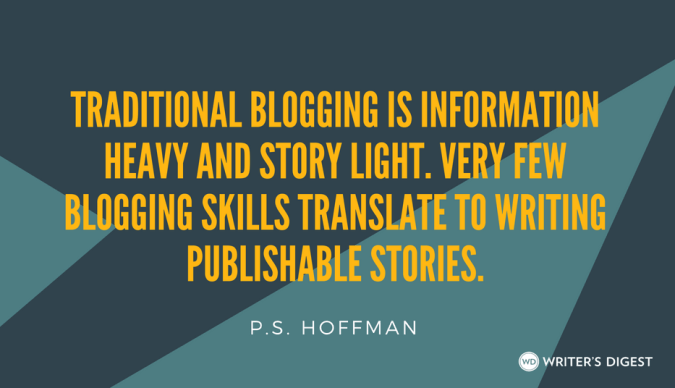
  3. If you want to write a novel, blogging teaches the wrong skills.
  4. Blogging is “information heavy and story light.”
  5. If you want to build your storytelling skills – write stories. Readers want to read your stories.
  6. Author blogs don’t sell books.
  7. To blog well, you must love blogging.

I enjoy sharing with my readers my stories and the tips or resources I come across as I strive to learn the craft of writing. I discovered, however, that to focus on my novel, I had to put my blog on the back burner.

At first, I felt guilty for abandoning my readers, even if for a short while; but, I had to decide – Did I want to be a writer or a blogger? The answer was clear, I wanted to write. I set aside the focus on my blog and for more than three months, turned my attention to my novel. It is now complete and out to beta readers and editors.

For now, I can focus on sharing some of what I learned during the process of completing my novel and what happens as I go through the process from draft to publication.

The question is still an important one to ask? What’s your goal? Writer? Blogger?

Check out  post,  5 Ways an Author Blog Could Kill Your Writing (and What to Do Instead)and let me know what you think.


I’d love to hear your comments. Talk to me. Tell me your story. I’m all ears and look for me on Facebook at SheilaMGood,  PinterestBloglovinTwitter@sheilamgood, Contently, and Instagram. You can follow my reviews on Amazon and Goodreads.

SaveSave

How to Deal With Manuscript Critiques

ANNABEL SMITH

I have my manuscript out to my first beta readers and am anxiously awaiting their feedback and critiques. I’ll admit, it’s nerve-wracking. Will they like it? Were my characters well-developed? Was the plot cohesive? Was the story compelling? 

I really want to hear what they have to say. I want honest opinions, but how do I handle the comments and critiques? What if it simply wasn’t their favorite genre? What if I disagree? What if, what if, what if…

Janice Hardy gives us 8 tips in her post, 8 Tips for Reviewing a Manuscript Critique.

  1. Here’s a sneak peek:
  2. Take comments seriously
  3. If you agree, change it; if you don’t agree, don’t.
  4. Not sure? Give it consideration. Why did the reviewer think or make that comment?
  5. Grammar or punctuation – look it up. The Elements of Style by Strunk & White
  6. If something is confusing, fix it. Clarity is essential to the story.
  7. Do what makes your story the best.
  8. Be objective.

Janice covers each of these in more details and provides additional resources. So, stop by and check out her post,
8 Tips for Reviewing a Manuscript Critique.


I’d love to hear your comments. Talk to me. Tell me your story. I’m all ears and look for me on Facebook at SheilaMGood,  PinterestBloglovinTwitter@sheilamgood, Contently, and Instagram. You can follow my reviews on Amazon and Goodreads.


SaveSave

SaveSave

SaveSave